
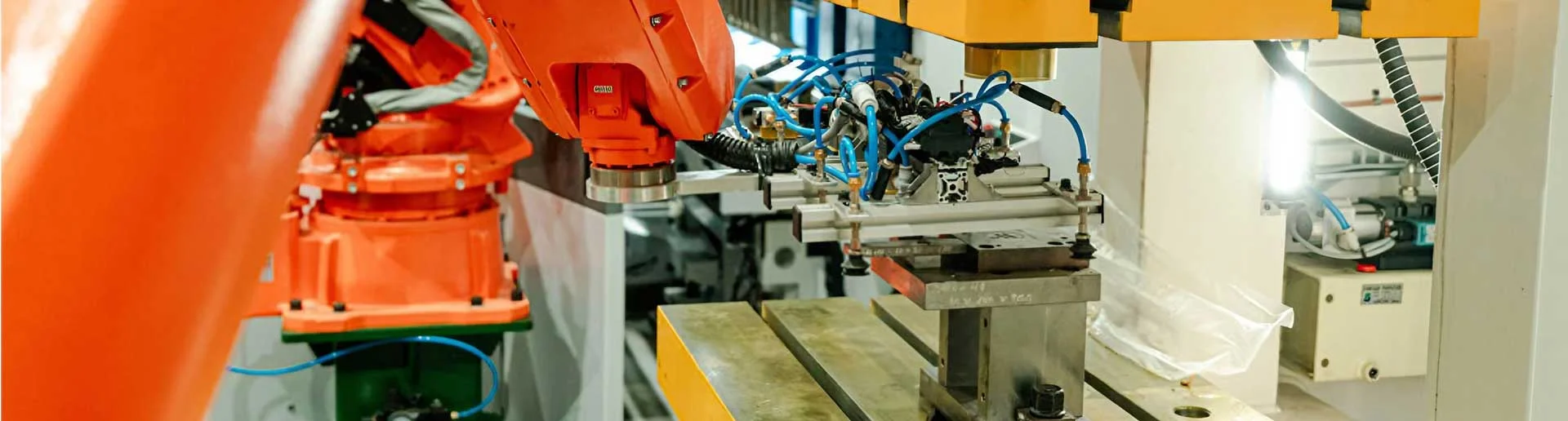
Stamping Machine
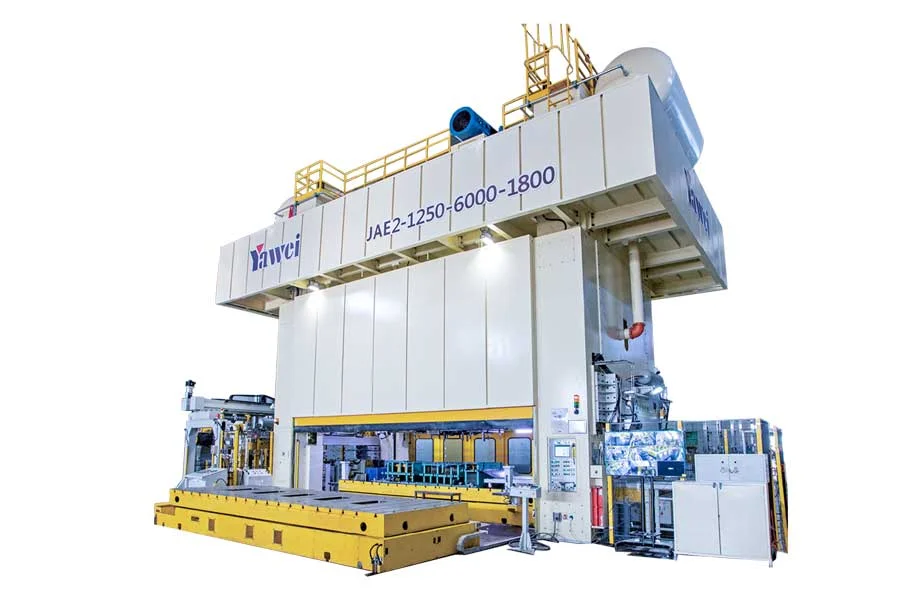
Design of a 2-point force closed frame press - JAE2 SERIES standardized – modular – universal, optimized for maintenance and configuration expansion. High rigidity structure, using large torque ...
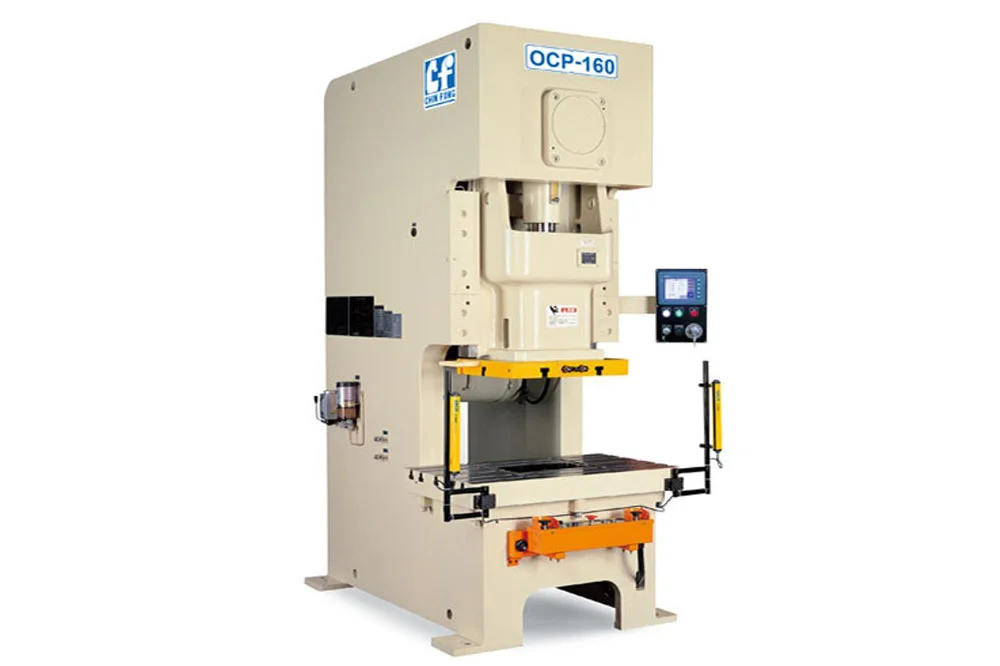
A C-frame mechanical press with a single crankshaft is an OCP series with an open back, a single crankshaft, and a "C" frame, generally designed for stamping applications such as broaching, bending, ...
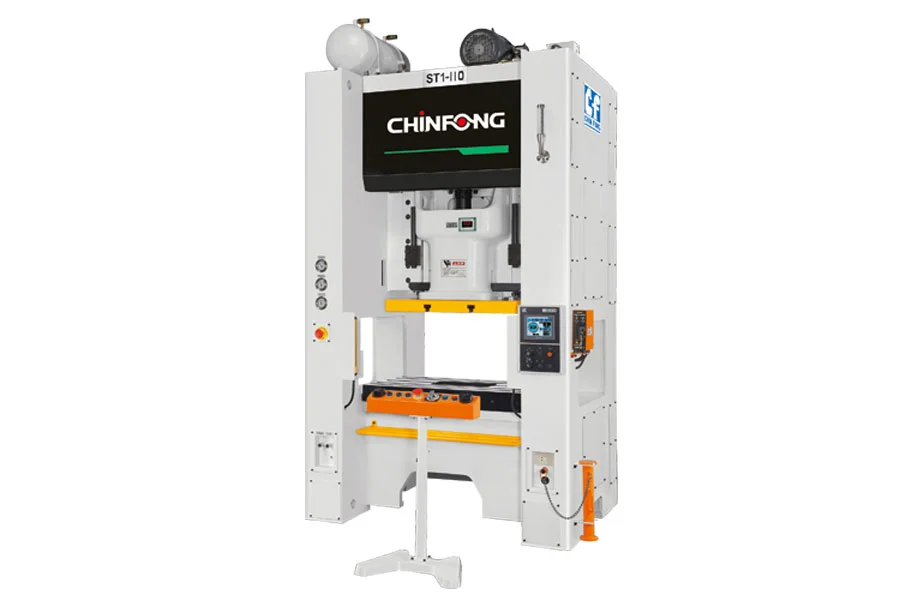
The ST1 series single crank H-frame mechanical press can be widely used in the manufacturing process, including stamping, bending, punching, etc. Moreover, it can also apply single or continuous ...
The G2 series two-crank C-frame mechanical press is designed to resist bending and provide precision for stamping, increasing die life. The heavy-duty welded steel frame is designed to reduce ...
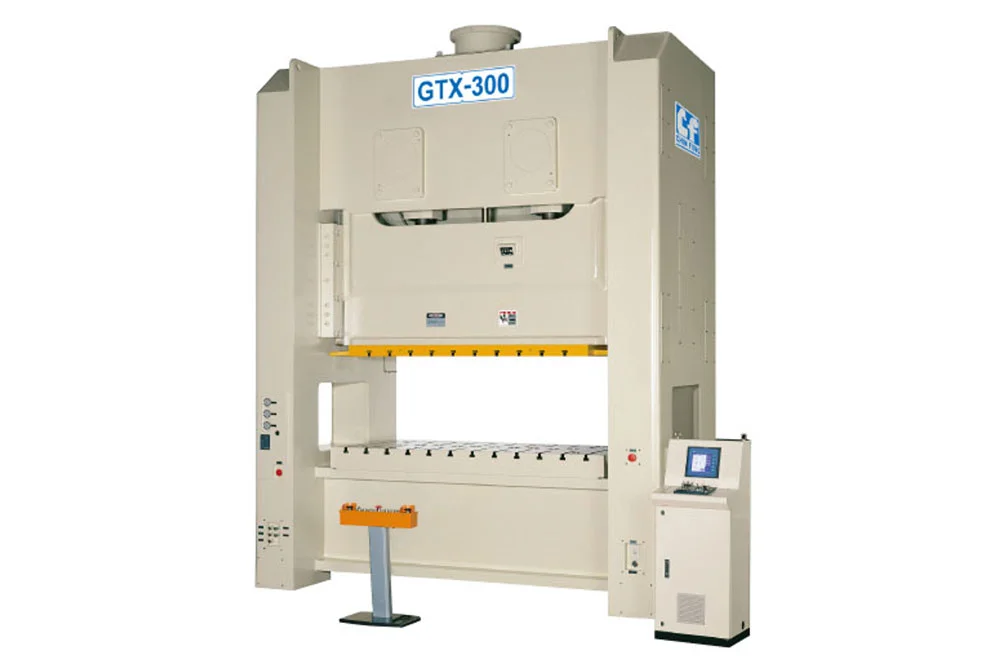
The GTX series double crank H-frame press is designed for high-precision applications, heavy metal stamping such as motorcycle parts, bicycle parts, and household appliances. In terms of automation, ...
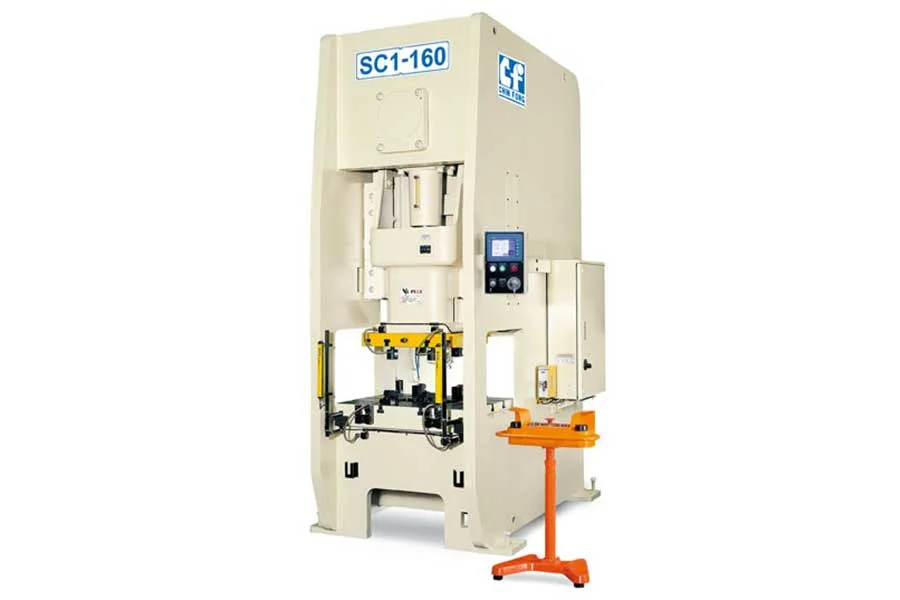
The main configuration of the SC1 single crank H-frame press is reinforced to minimize deflection, thereby increasing stamping accuracy and extending die life. The heavy-duty monolithic welded die is ...
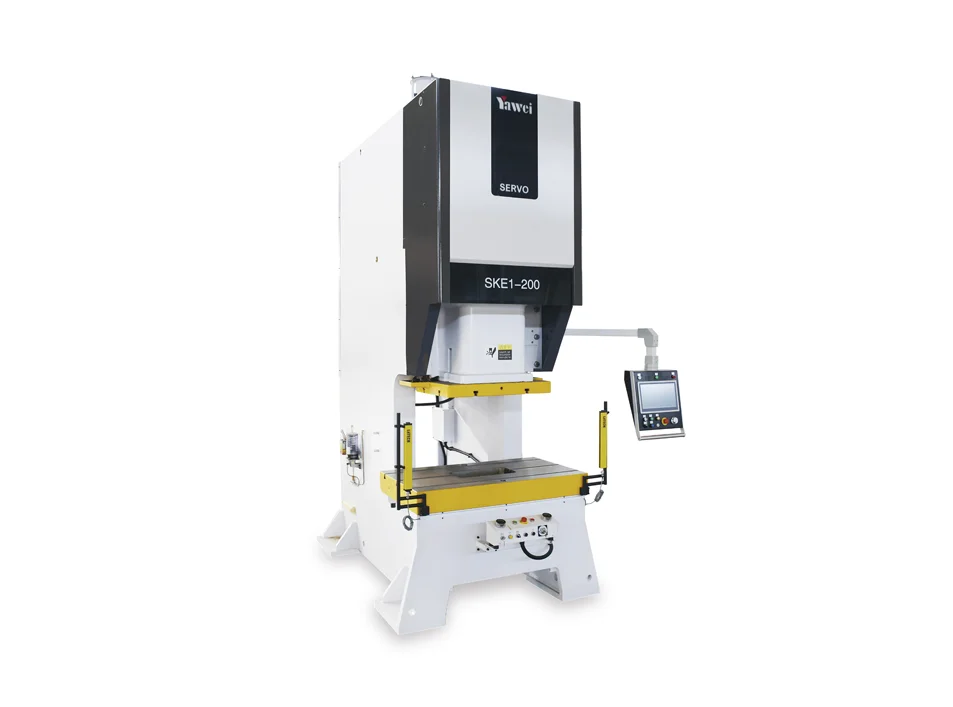
Yawei C-frame servo press with 1 crankshaft integrates a Servo system that can freely control sliding motion to meet the demands of many hard-to-machine forming materials with high precision and ...
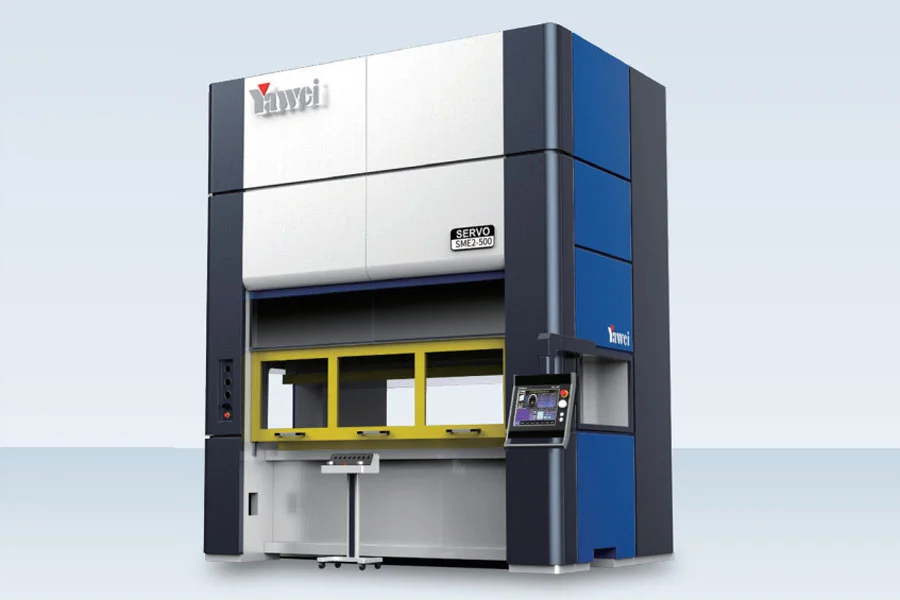
The H-frame servo press with a two-crankshaft system uses advanced servo motor technology, equipped with a high-torque servo drive motor to generate maximum pressing force, even at low speeds. With ...
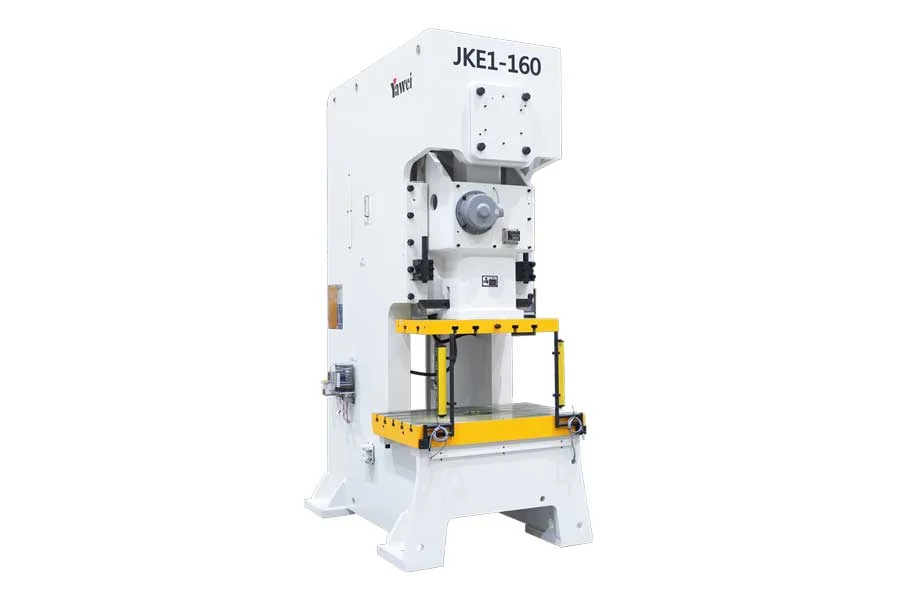
Achieves JIS Level-1 accuracy for the entire machine, ensuring high stability and repeatability during stamping. The machine body has high rigidity, welded from quality steel plates, capable of ...
In the field of mechanical engineering and metal processing, Stamping machines are indispensable equipment in the stages of shaping, cutting, bending, and deep drawing of metals. With the ability to generate large pressing forces and high precision, Stamping machines help businesses increase productivity, synchronize processes, and ensure product quality. Currently, mechanical Stamping machines are widely applied in automobile manufacturing, steel structures, home appliances, and mechanical manufacturing with various technologies such as mechanical presses, hydraulic presses, and modern servo presses.
1. What is a Stamping machine?
- Stamping machines are devices that use mechanical or hydraulic force to shape, cut, bend, or deep draw metal sheets according to predetermined molds.
- During operation, the Stamping machine exerts a strong force from the upper mold down to the lower mold, causing the material to deform into the desired shape, creating precise and uniform details.
- Thanks to its ability to work continuously at high speed and stable precision, the Stamping machine is considered the heart of metal processing lines, especially in the automotive, steel structure, home appliance, and mechanical manufacturing industries.
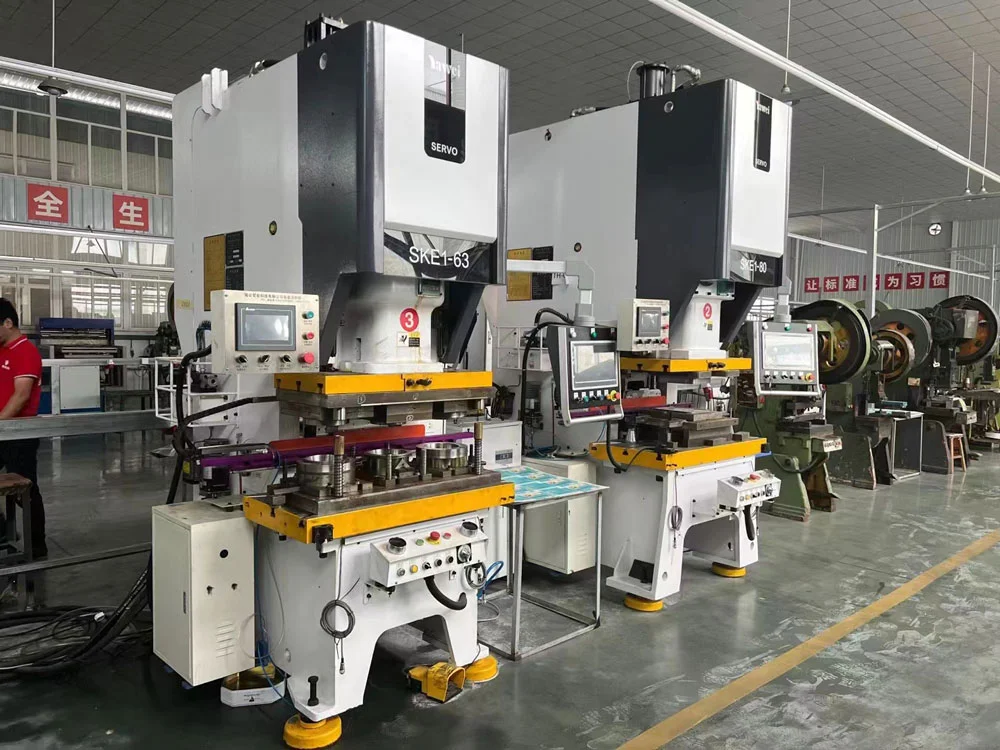
2. Basic structure of a Stamping machine
A standard Stamping machine is usually composed of the following main parts, ensuring strong pressing force, stable and precise operation in an industrial environment:
2.1. Stamping machine frame (Frame)
- As the main load-bearing structure of the entire equipment, the Stamping machine frame is usually made of solid welded steel or cast iron to ensure rigidity, reduce vibration, and deviation during operation.
- Depending on production requirements, the machine frame can be in the form of a C-frame, H-frame, or 4-column frame.
2.2. Transmission system
- For mechanical presses, transmission through flywheels, crankshafts, and connecting rods helps create quick and strong pressing force.
- For hydraulic presses, using hydraulic cylinders and high-pressure oil pumps provides stable and easily adjustable pressing force.
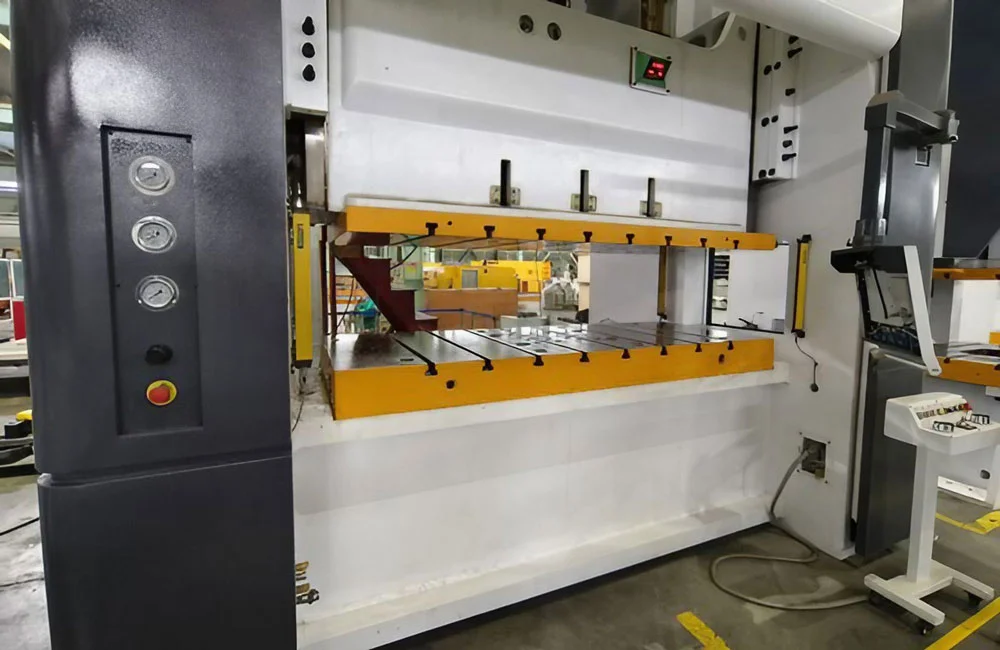
2.3. Ram & Table
- Ram: Carries the upper mold, moves linearly according to the pressing force.
- Table: Fixes the lower mold, bears the entire reaction force when pressing.
These two parts of the Stamping machine are precisely machined to ensure high parallelism and flatness.
2.4. Die set
- It is the part that determines the shape of the product.
- The upper and lower molds are usually made of hardened alloy steel, which can be flexibly changed according to the type of detail to be stamped.
2.5. Control system
The Stamping machine control system includes an electrical – pneumatic – hydraulic or CNC control panel, helping to:
- Adjust pressing force, stroke, and stamping speed.
- Program working modes: single, continuous, automatic.
- Integrate sensors and overload protection to ensure operational safety.
Thanks to its synchronized structure and precise design, the Stamping machine can operate continuously, producing uniform products with high precision, meeting the requirements of mass production.
3. Operating principle of a Stamping machine
The Stamping machine operates based on the principle of plastic deformation of metal under the action of pressing force, through a transmission mechanism or hydraulic system.
3.1. Basic working cycle
- Feeding: The metal sheet is placed between the upper and lower molds.
- Creating pressing force: The transmission mechanism (crankshaft, flywheel, or hydraulic cylinder) exerts force on the ram.
- Stamping: The pressing force causes the material to deform, shaping according to the mold profile.
- Holding pressure – returning stroke: After completing the pressing cycle, the ram returns to its original position, and the detail is removed.
3.2. Differences by type of Stamping machine
- Mechanical press: uses the rotational energy of the flywheel, suitable for high-speed mass production.
- Hydraulic press: uses oil pressure to create stable and precise pressing force, suitable for deep drawing or complex shaping.
- Servo press: combines the advantages of both types, providing high precision, flexible control, and energy savings.
Thanks to the ability to control pressing force, speed, and flexible stroke, modern Stamping machines can meet various stages in mechanical production, steel structures, and the automotive industry.
4. Common types of Stamping machines today
Stamping machines are classified according to various criteria such as operating principle, frame structure, processing material, or specific applications. Understanding the machine groups helps businesses choose the right equipment for each production need.
4.1. According to the operating principle of the Stamping machine
| Type of Stamping machine | Main characteristics | Suitable applications |
| Mechanical press (Crankshaft) | Uses flywheel and crankshaft for transmission, high speed. | Cutting, continuous stamping, bending small details. |
| Hydraulic press | Creates force by oil pressure, stable pressing force. | Deep drawing, mold pressing, shaping thick materials. |
| Servo press | Controlled by servo motor, precise motion programming. | Fine stamping, high precision pressing, automatic production. |
4.2. According to the frame structure of the Stamping machine
| Frame type | Characteristics | Outstanding advantages |
| C-frame press | Open type, easy to operate, suitable for small spaces. | Compact, convenient for mold change, maintenance. |
| H-frame press (Double Column) | Two parallel columns, high rigidity. | Good load-bearing, suitable for large details, long-term stability. |
| Four-column press | Even force distribution, maintains parallelism under load. | Suitable for deep drawing, complex mold pressing. |
4.3. According to the material processed by the Stamping machine

- Iron and steel Stamping machines: used in heavy industry, steel structures.
- Stainless steel and aluminum Stamping machines: production of household appliances, automotive components.
- Sheet metal, copper, and alloy Stamping machines: applications in construction and electronics.
Thanks to this diversity, Stamping machines can meet the production of small details to large-scale industrial sheet processing, ensuring flexibility and efficiency in equipment investment.
5. Advantages and disadvantages of different types of Stamping machines.
Depending on the transmission principle and force generation mechanism, Stamping machines are divided into three main groups: mechanical presses, hydraulic presses, and servo presses. Each type has its own advantages suitable for different production needs.
5.1. Mechanical press
Advantages of mechanical presses:
- Fast stamping speed, short working cycle, suitable for mass production.
- Mechanical presses have a simple structure, easy to operate and maintain.
- Low investment cost, easy to replace components.
Disadvantages of mechanical presses:
- Unstable pressing force throughout the stroke.
- Mechanical presses are difficult to control the exact stamping depth.
- Causes vibration and loud noise during operation.

5.2. Hydraulic press
Advantages of hydraulic presses:
- Stable pressing force, can hold pressure for a long time and adjust as needed.
- Hydraulic presses are suitable for deep drawing, mold pressing, and shaping complex products.
- Better mold protection, high equipment durability.
Disadvantages of hydraulic presses:
- Slower working speed than mechanical presses.
- Hydraulic presses require regular maintenance of the oil system and cylinders.
- Higher initial investment cost.
5.3. Servo press
Advantages of servo presses:
- Combines the advantages of both mechanical and hydraulic: fast speed, precise pressing force, energy-saving.
- Allows programming of motion profiles, optimized for each product.
- Quiet operation, low noise, less mechanical wear.
Disadvantages of servo presses:
- High cost, requires specialized operation and maintenance skills.
Thanks to the diversity in structure and technology, businesses can choose the type of Stamping machine that suits their production needs, balancing productivity – precision – investment costs.

6. Applications of Stamping machines
Thanks to their ability to shape accurately, high productivity, and suitability for various materials, Stamping machines are widely applied in almost all fields of mechanical production and manufacturing industries today.
6.1. Automotive – motorcycle industry
- Stamping body panels, hoods, fuel tanks, frames, and frame brackets.
- Application in continuous stamping and shaping complex details with high precision.
6.2. Steel structure – construction mechanics industry
- Stamping machines contribute to the stamping process of brackets, connecting plates, beams, ribs, and structural components.
- Suitable for the production of workshops, steel bridges, wind power towers, or heavy industrial projects.
6.3. Electrical – electronics industry
- Processing electrical cabinet enclosures, equipment frames, circuit board enclosures, protective covers.
- Requires high precision, smooth surface, and stable profile.
6.4. Household appliances – stainless steel equipment industry
- Stamping sinks, pots, pans, containers, washing machine enclosures, stove enclosures.
- Hydraulic or servo presses help products avoid edge wrinkles and surface cracks.
6.5. Mold – new material industry
- Molding rubber, composite, metal powder, or engineering plastic materials.
- Application in shaping, compressing, or creating test samples.

With a wide range of applications, Stamping machines have become core equipment in modern sheet metal processing lines, helping businesses increase productivity, synchronize production, and optimize costs.
7. How to choose the right Stamping machine
Choosing the right type of Stamping machine directly affects product quality, production efficiency, and investment costs. Here are important criteria to consider before making a decision:
7.1. Determine processing needs
- Determine the type of work: Cutting, bending, deep drawing, or continuous stamping.
- Determine the processing material: Steel, stainless steel, aluminum, copper, or alloy.
This is the basis for selecting a Stamping machine with suitable capacity (Tons) and stroke.
7.2. Choose the type of Stamping machine
- Mechanical press: Suitable for mass production, high speed.
- Hydraulic press: Suitable for large details, complex shaping.
- Servo press: For products requiring high precision and productivity.

7.3. Choose structure and size
- C-frame press: Compact, easy to operate, suitable for medium and small workshops.
- H-frame, 4-column press: High rigidity, stable pressing with large details.
Pay attention to the size of the machine table, stroke, and mold height to be compatible with the product.
7.4. Prioritize modern control technology
- Stamping machines with servo or CNC control systems help control pressing force, stroke, and holding time accurately.
- Choose machines with safety valves, overload sensors, and electronic mold locks to ensure operational safety.
7.5. Choose a reputable supplier
- Prioritize distributors of genuine Stamping machines with warranties and local spare parts warehouses.
- Evaluate technical support policies, operation training, and maintenance.
- Choose partners with experience in implementing synchronized stamping – bending – welding lines.
Choosing the right Stamping machine not only ensures product quality but also optimizes investment efficiency and long-term production capacity for businesses.
8. Weldcom - Official Stamping machine supplier in Vietnam

- With over 20 years of experience in the field of metal processing equipment, Weldcom is a leading reputable distributor of crankshaft mechanical presses, hydraulic presses, and servo presses serving the automotive, steel structure, mechanical manufacturing, and supporting industries.
- Weldcom also implements synchronized line solutions: Stamping – Bending – Welding – Painting – Automatic Robot, helping businesses increase productivity and optimize investment costs.
Contact Weldcom for advice and receive the most suitable Stamping machine quote for your production needs.