
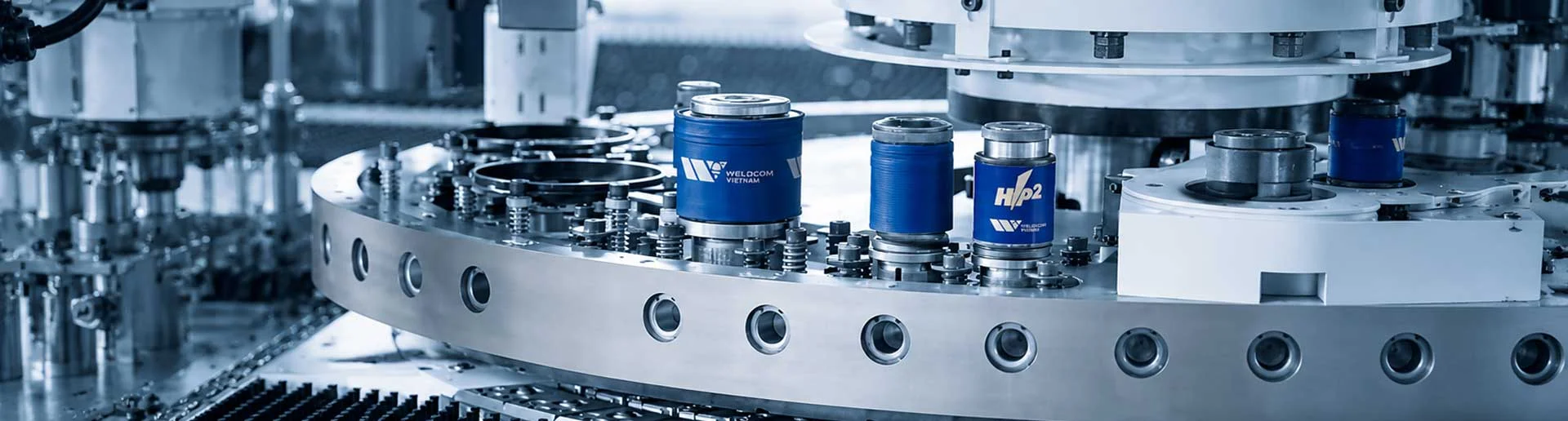
Punching machine
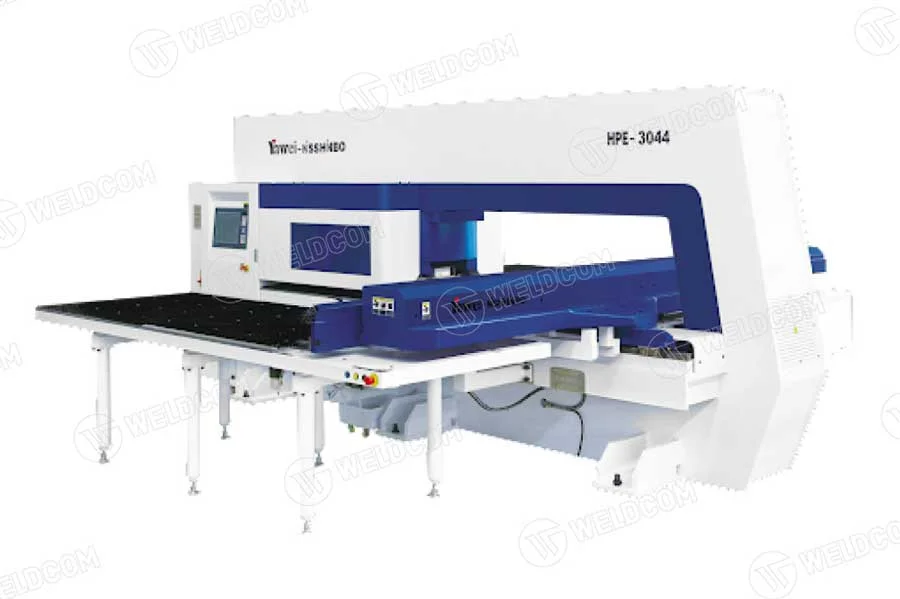
Production technology and quality management according to Nisshinbo standards - Japan. The servo motor creates punching force for fast speed, reaching up to 1500 times/minute. The punching station ...
In the trend of smart manufacturing and automation, CNC punching machines have become indispensable equipment in modern metal sheet processing lines. Thanks to their flexible programming capabilities, high speed, superior accuracy, and optimal operating costs, CNC punching machines not only help businesses increase productivity but also contribute to shaping new standards of efficiency and quality in the mechanical industry. Compared to traditional mechanical or hydraulic machines, CNC punching machines stand out for their fast processing speed, absolute accuracy, and flexible integration capabilities with robots or automatic feeding systems. This is the optimal solution for metal processing plants, electrical cabinet production, and furniture aiming for smart manufacturing and comprehensive automation.
1. What is punching?
- Punching is a pressure machining process in which a punch exerts a large force on a metal sheet, causing the material to be cut according to the shape of the die. This process helps create holes, slots, grooves, or special profiles without deforming the entire sheet.
- Essentially, punching is a step of cutting through material by applying a force that exceeds the tensile strength of the metal. This is one of the most common stages in sheet processing, appearing in most manufacturing industries such as mechanical engineering, automotive, electronics, electrical equipment, control panels, and steel structures.
2. What is a punching machine?
- Punching machines are devices that use the force from punches and dies to create holes, slots, or profiles on metal sheets. In modern machines, especially CNC punching machines, the entire punching process is controlled by a numerical program (CNC – Computer Numerical Control), allowing for fast, accurate, and completely automatic processing.
- CNC punching machines are often integrated with automatic workpiece clamps, a worktable that moves along the X – Y axis, and a multi-position turret punch and die system that allows for flexible tool changes during operation. As a result, the punching machine can process hundreds of details on a single metal sheet in just one cycle, effectively meeting mass production needs in mechanical, electrical – electronics, automotive, steel structure, and industrial equipment industries.
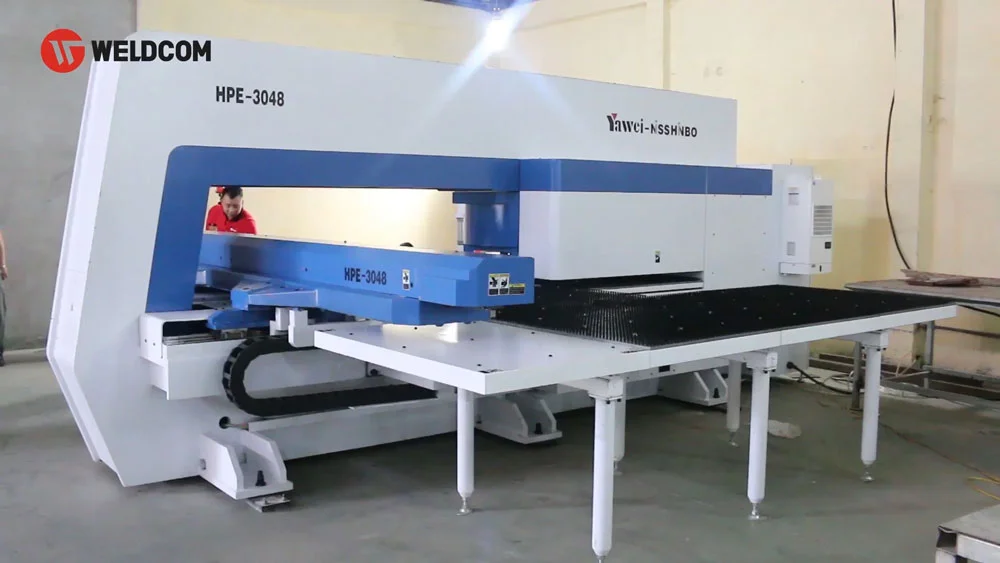
3. Basic structure of a punching machine
A CNC punching machine is designed with multiple synchronized detail clusters, ensuring high accuracy and stability throughout the machining process. The basic structure includes the following main components:
3.1. Machine frame (Frame / Body)
This is the main load-bearing part, made of solid steel or cast iron with high rigidity. The punching machine frame determines the anti-vibration capability and accuracy throughout the punching process.
3.2. Punch & Die cluster
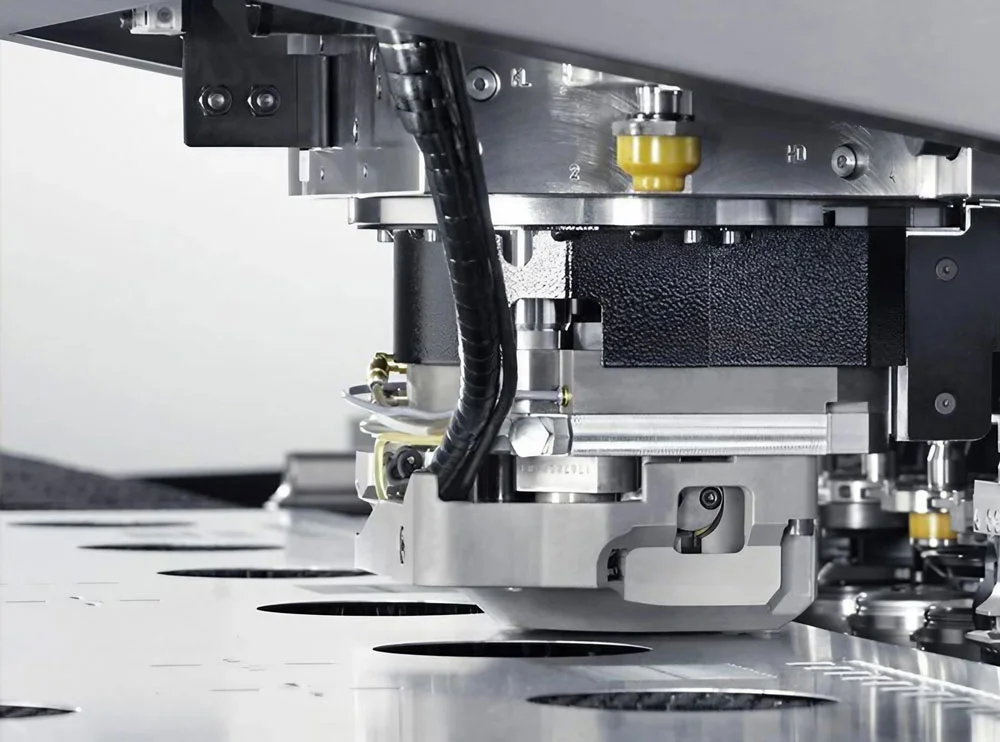
The punching machine includes punches and dies – two components that directly shape holes or slots on the metal sheet. Depending on the machining shape (round, square, oval, long slot...), punches and dies are designed with different sizes and materials.
3.3. Worktable and workpiece clamping system
The worktable is flat and automatically controlled to move along the X – Y axis. The workpiece clamping cluster helps hold the sheet tightly throughout the punching machine's operation, ensuring precise positioning and avoiding profile deviations.
3.4. Drive system
Depending on the punching machine model, the drive system varies. Specifically:
- Mechanical machines: Driven by camshaft – flywheel.
- Hydraulic machines: Create pressing force using hydraulic pistons.
- Servo/CNC machines: Use servo motors to control the main shaft, providing higher stability and energy savings.
3.5. CNC control system
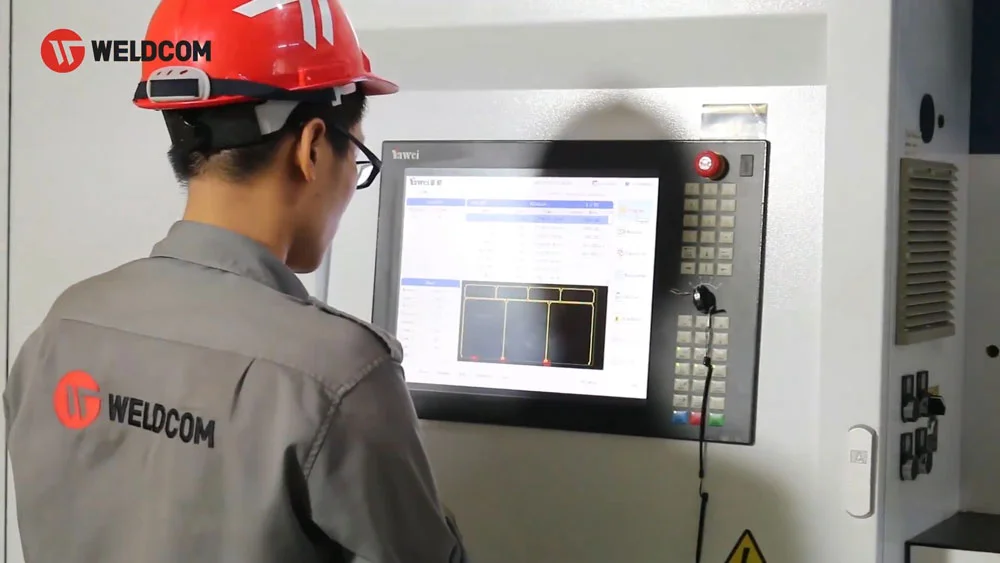
- It is the "brain" of the punching machine, accurately controlling the position, speed, and punching sequence according to the CAM program.
- The control system also has functions for automatic punch change, pressure control, error warning, and production program storage.
3.6. Auxiliary system
The auxiliary system of the punching machine includes lubrication, cooling, scrap extraction, and chip discharge, helping to increase mold life, reduce wear, and ensure a smooth, clean product surface.
4. Operating principle of the punching machine
The CNC punching machine operates on the principle of cutting through material using pressure. In this process, the punch exerts force down on the metal sheet fixed on the die, causing the material to be cut exactly according to the punch and die profile.
The basic operating process of the punching machine includes the following steps:
- Loading the workpiece: The metal sheet is placed on the machine table and fixed with an automatic workpiece clamp.
- Positioning: The CNC control system moves the worktable along the X – Y coordinates to bring the sheet to the precise punching position.
- Punching: The punch cluster descends to exert a large force on the metal sheet, cutting the material through the die to create the desired hole or slot.
- Scrap discharge: The cut-off metal part is discharged through a chip tube or automatic extraction system.
- Moving to a new position: The machine table continues to move to the next position to perform a new cycle according to the pre-programmed setup.
With turret-type CNC punching machines, the system automatically selects the appropriate tool (round, square, oval, long slot, logo engraving...) without stopping the machine, allowing for the processing of hundreds of holes or complex profiles in a single continuous cycle. Servo and CNC technology allows for control of speed, pressing force, punch dwell time, and position accuracy to ±0.1 mm, providing superior stability and performance compared to traditional mechanical or hydraulic punching machines.
5. Punching force calculation formula
When designing or selecting a CNC punching machine, one of the important factors to determine is the punching force (F) — the force required for the punch to cut through the material. Accurate calculation of the punching force helps choose the right machine power, suitable molds, and ensures equipment longevity.
5.1. General formula
F=L×t×τₛ
Where:
- F – Punching force (N or tons).
- L – Perimeter of the profile to be punched (mm).
- t – Thickness of the metal sheet (mm).
- τₛ – Shear stress of the material (N/mm²).
5.2. Reference shear stress by material
| Material | Average shear stress (τₛ) (N/mm²) |
| Carbon steel (SS400, SPCC) | 350 – 450 |
| Stainless steel (SUS304, 201) | 600 – 800 |
| Aluminum | 250 – 300 |
| Copper, brass | 200 – 250 |
5.3. Example of punching force calculation
Suppose a round hole Ø20 mm needs to be punched on a 3 mm thick steel sheet, with an average shear stress of τₛ = 400 N/mm².
F=π×D×t×τₛ=3.14×20×3×400=75,360N≈7.7 tons
Thus, to punch stably, the machine needs a minimum pressing force of 8 tons, not including the safety factor (usually multiplied by 1.2–1.3 times). Note:
- When using a servo CNC punching machine, the punching force is automatically adjusted according to the material type and sheet thickness, optimizing energy and reducing punch – die wear.
- Modern punching machines also integrate pressure sensors and actual load monitoring, supporting operators in tracking and controlling machining quality more accurately.
6. Advantages and disadvantages of punching machines
Here are the advantages and disadvantages of CNC punching machines to help users understand before considering an investment:
6.1. Advantages of punching machines

- Superior accuracy and stability: Punching operations are fully controlled by software, minimizing deviations, edge deformation, and ensuring consistent quality between products.
- High processing speed: Thanks to the servo drive mechanism and CNC control, CNC punching machines can perform hundreds of punches per minute while maintaining repeat accuracy up to ±0.1 mm.
- Comprehensive automation: Can be integrated with feeding robots, conveyors, or bending – cutting – welding systems to form an intelligent sheet processing line, operating continuously without manual intervention.
- Cost savings on labor and setup time: Instead of changing molds and making mechanical adjustments, with CNC punching machines, operators only need to load the program, select tools, and start.
- Flexibility in machining shapes: The turret system allows for quick punch – die changes of various sizes, enabling the machine to punch round, square, oval, long slots, characters, or decorative patterns in a single setup.
- Energy savings & environmentally friendly: Servo punching machines eliminate the hydraulic oil system, reducing power consumption and maintenance costs while ensuring a cleaner production environment.
6.2. Limitations of punching machines
- High initial investment cost: The price of CNC punching machines and auxiliary systems is much higher than traditional mechanical or hydraulic machines.
- Requires operational and programming skills: Personnel with CAD/CAM knowledge and a clear understanding of punching technology parameters are needed.
- Mandatory periodic maintenance: To maintain accuracy, punch – die clusters, servo shafts, work clamps, and sensors need regular inspection and calibration.
7. Popular types of punching machines today
Punching machines on the market today are very diverse, classified according to various criteria depending on structure, drive mechanism, machining material, or automation level. Understanding each group helps users choose the right equipment for their production needs.
7.1. Classification of punching machines by drive mechanism
| Machine type | Outstanding features | Common applications |
| Mechanical punching machine | Uses camshaft and flywheel, direct mechanical force transmission. Simple structure, low cost but high noise. | Small processing facilities, low output. |
| Hydraulic punching machine | Creates force using hydraulic pistons, large, stable, and even pressing force. | Thick sheet production, requiring large cutting force. |
| Servo punching machine | Uses servo motors to replace the hydraulic system, smooth control, energy-saving. | Thin sheet processing, requiring high speed. |
| CNC punching machine | Fully automated, controlled by CAD/CAM programs, capable of punching hundreds of profiles on a single sheet. | Mechanical, electronics, electrical cabinet, industrial equipment factories. |
7.2. Classification of punching machines by machining material
| Machine type | Features | Application range |
| Iron/steel punching machine | Average punching force, sturdy frame structure. | SS400, SPCC steel sheets, 0.5–6 mm. |
| Stainless steel punching machine | High power, wear-resistant structure, high accuracy. | SUS201, SUS304 stainless steel. |
| Tin punching machine | For thin sheets, high speed, good surface finish. | Galvanized tin, cold tin. |
| Aluminum/copper punching machine | Small pressing force, prioritizes smooth surface. | Electrical board processing, light equipment. |
7.3. Classification of punching machines by automation level
- Manual: Table punching machines or hand lever machines, low productivity.
- Semi-automatic: Hydraulic or foot pedal punching machines, semi-mechanical operations.
- Automatic CNC: Fully programmed CNC punching machines, capable of continuous operation without intervention.
- Integrated line: Punching machines combined with feeding robots, conveyors, bending machines, cutting machines, forming an intelligent sheet processing system.
7.4. Classification of punching machines by punching function
| Function group | Description | Example |
| Hole punching machine | Punches round, square, oval holes as required. | Punching electrical cabinet panels. |
| Profile/slot/engraving punching machine | Processes special profiles or characters. | Punching cooling slots, logos, symbols. |
| Combined punching machine (punching – cutting – engraving) | Combines multiple operations in one machine. | Turret punch press. |
| Turret CNC punching machine | Automatic rotating punch turret, quick tool change. | High automation mechanical factories. |
8. Applications of punching machines in practice
CNC punching machines are widely used in most metal sheet processing fields, thanks to their flexible shaping capabilities, high speed, and stable quality. Here are some typical applications:
8.1. Electrical – electronics industry
- Punching machines participate in processing electrical cabinets, control panels, cable trays, and electronic device enclosures.
- Punching installation holes, punching cooling slots, engraving symbols or logos directly on the sheet.
8.2. Mechanical and equipment manufacturing industry
- Manufacturing frames, enclosures, covers, machine bases, brackets, and precise components.
- CNC punching machines participate in mass processing of components requiring uniform dimensions and complex profiles.

8.4. Automotive, motorcycle, and industrial equipment industry
- Punching body shell parts, shields, brackets, protective covers.
- Punching machines combined with welding robots, feeding robots, forming a closed automatic production line.
8.5. Metal furniture industry
- Creating patterns, decorative holes, bending slots on stainless steel, powder-coated steel, aluminum sheets.
- CNC punching machines help products achieve high aesthetics while ensuring mass production productivity.
Thanks to flexible programming capabilities and high accuracy, CNC punching machines are now indispensable equipment in factories aiming for automation and smart production.
9. Experience in choosing the right punching machine
Choosing the right CNC punching machine not only helps optimize production efficiency but also ensures equipment longevity and output product quality. Here are important criteria to consider before investing:
9.1. Determine production needs
- Type of components to be processed: Electrical cabinets, steel frames, panels, or decorative details.
- Expected output: If mass production → prioritize CNC turret machines or automatic servo punching machines.
- Thickness and type of material: Each machine model has different pressing force and punching thickness limits (usually up to 6–8 mm for steel sheets).
9.2. Choose power and stroke
- Punching force (Tons): Calculated based on the formula F=L×t×τs, plus an additional 20–30% safety factor.
- Worktable size: Choose a punching machine suitable for the sheet size according to the production requirements from the enterprise (Common sheet size 1250×2500 mm or 1500×3000 mm).
- Stroke speed: High speed means increased productivity, but it needs to be balanced with mechanical stability.

9.3. Prioritize control technology and software
- Choose punching machines with popular CNC control systems (Fanuc, Siemens, Yawei CNC Control) for easy programming and maintenance.
- Support importing DXF, DWG files, optimizing automatic path, nesting to reduce material waste.
9.4. Evaluate turret system and tools
- Number of turret stations: The more → the more flexible when punching multiple shapes.
- Automatic tool change capability (Auto Index): Helps save setup time and reduce operational errors.
- Quality of punches and dies: Choose HSS or Tungsten Carbide materials to ensure high longevity.
9.5. Technical service & spare parts
- Prioritize CNC punching machine suppliers with warranty centers, dedicated operation engineers, and the ability to provide replacement parts domestically.
- Check policies: operational training, technology transfer, electronic warranty, and periodic software updates.
Summarizing these factors will help businesses choose the optimal CNC punching machine for production scale, material type, and investment goals, while ensuring the ability to expand the production line in the future.
10. Comparing CNC punching machines with other equipment
To choose the optimal sheet processing solution, many businesses often compare CNC punching machines with other equipment such as laser cutting machines or press brakes. Each technology has its own advantages, suitable for different production goals.
10.1. Comparing CNC punching machines and laser cutting machines
| Criteria | CNC punching machine | Laser cutting machine |
| Principle | Punching through material using punches and dies, creating holes, slots, profiles. | Cutting material using a high-energy laser beam. |
| Accuracy | ±0.1 mm | ±0.05 mm |
| Processing speed | Very fast with details having many small holes, repeated shapes. | Better for cutting complex profiles, continuous curves. |
| Shaping capability | Can emboss, engrave characters, create light 3D profiles. | Mainly flat 2D cutting. |
| Investment cost | Lower than laser with the same power. | Higher, maintenance cost for source and laser tube is large. |
| Operating cost | Low (less wear, no cutting gas needed). | High (electricity and protective gas consumption). |
10.2. Comparing CNC punching machines and press brakes
| Criteria | CNC punching machine | Press Brake |
| Main function | Creating holes, slots, profiles on the sheet surface. | Bending, shaping, forming angles for sheets after punching or cutting. |
| Stage in the production line | Initial step in sheet processing. | Next step after punching or cutting. |
| Automation level | CNC programming, turret auto tool change. | Servo CNC bending, precise angle control. |
| Combined applications | Punch first → Bend later. | Creating complete products like electrical cabinets, steel frames, panels. |
In Vietnam, Weldcom Industrial Joint Stock Company is a pioneer in providing genuine CNC punching machines along with comprehensive solutions for sheet processing plants with Yawei CNC punching machines – servo technology creating 1500 punches/minute, energy-saving, accuracy ±0.1 mm, easily integrated with robot systems, bending machines, welding machines, helping to form a complete automatic production line.

As mentioned above, although CNC punching machines have a high initial investment cost, require specialized operating skills, and need periodic maintenance to maintain accuracy, these challenges can be completely overcome.
With over 20 years of experience accompanying the Vietnamese mechanical industry, Weldcom offers comprehensive solutions to help customers optimize investment costs through machine configuration consulting based on the customer's "requirements." In addition, Weldcom also supports installation, technology transfer training, helping enterprise personnel master the operation process and meet production schedules; while providing technical services and periodic maintenance to maintain stability, accuracy, and long-term equipment longevity.
Contact Weldcom for consultation and direct experience with modern servo – turret CNC punching machines, optimized for all sheet processing production models.