
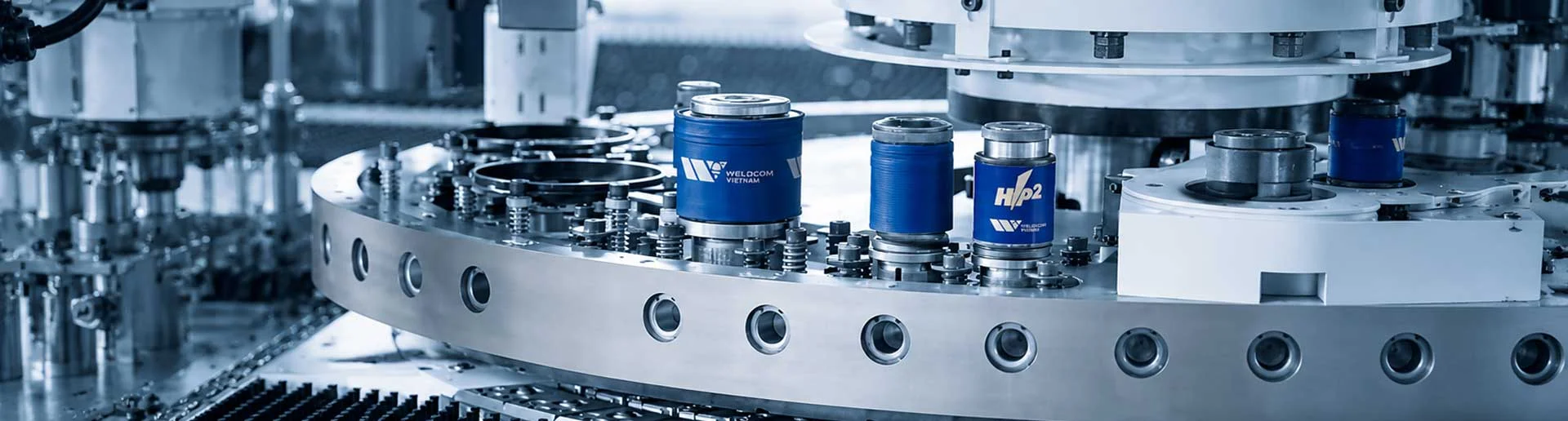
Punching & Stamping Equipment
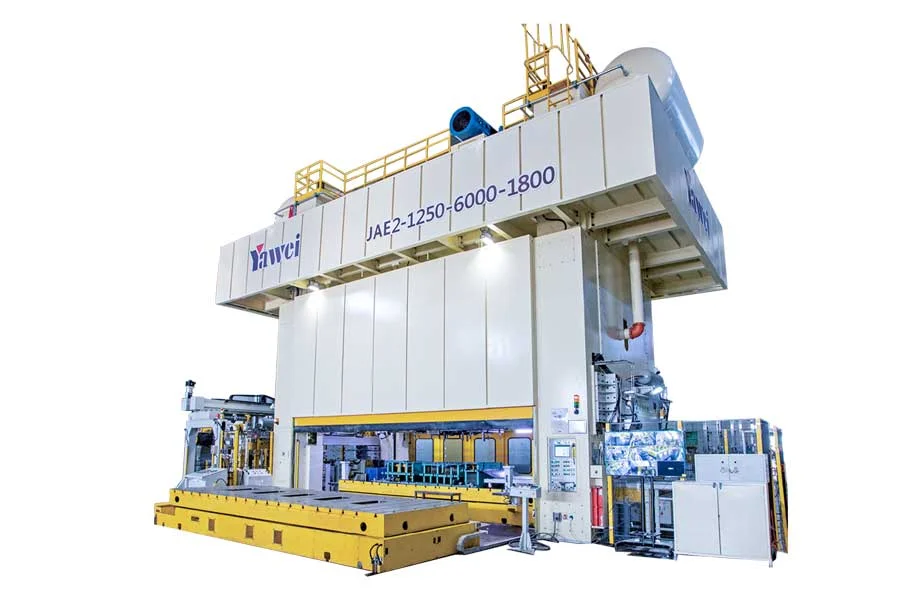
Design of a 2-point force closed frame press - JAE2 SERIES standardized – modular – universal, optimized for maintenance and configuration expansion. High rigidity structure, using large torque ...
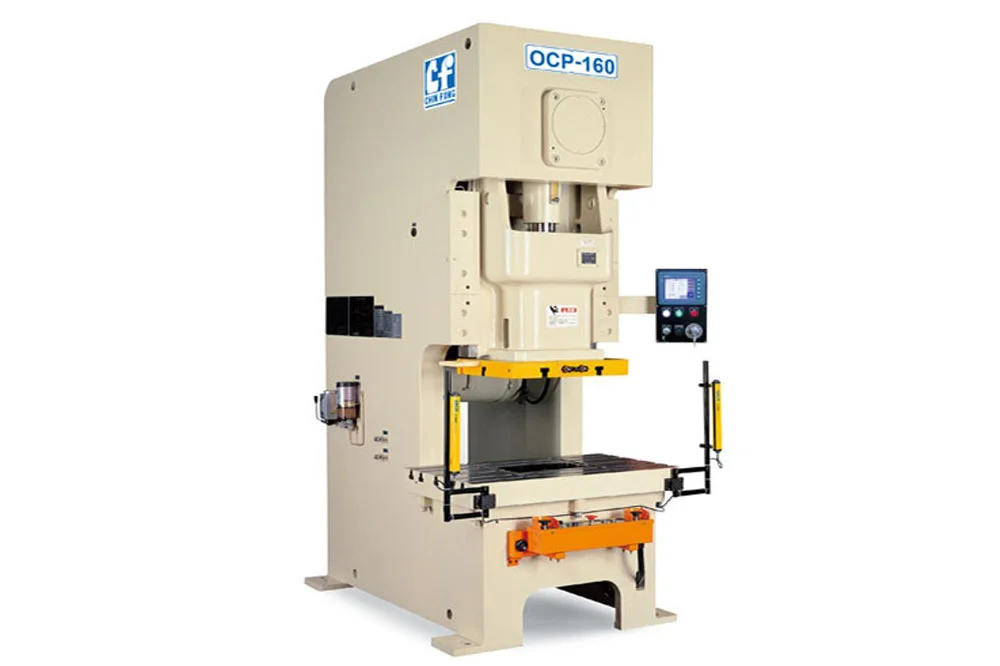
A C-frame mechanical press with a single crankshaft is an OCP series with an open back, a single crankshaft, and a "C" frame, generally designed for stamping applications such as broaching, bending, ...
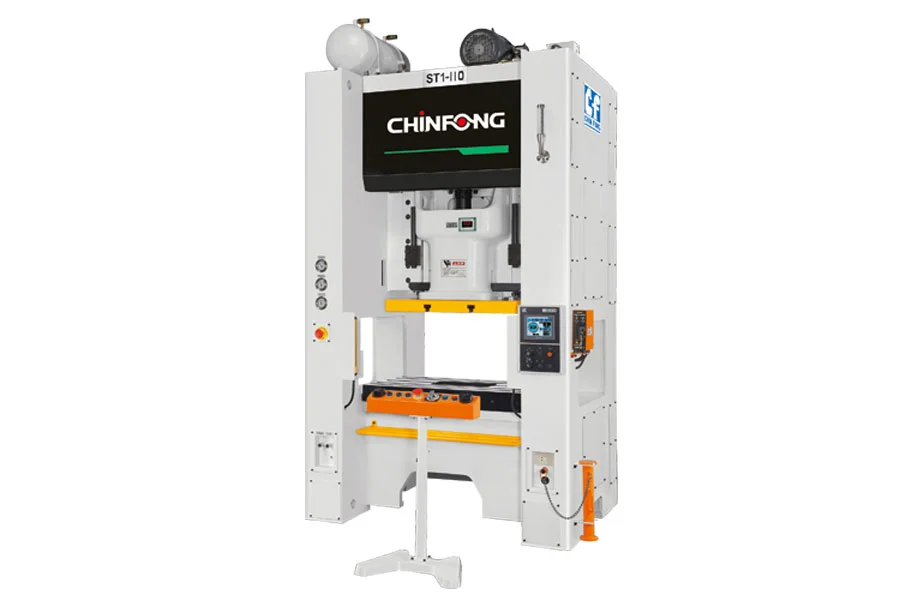
The ST1 series single crank H-frame mechanical press can be widely used in the manufacturing process, including stamping, bending, punching, etc. Moreover, it can also apply single or continuous ...
The G2 series two-crank C-frame mechanical press is designed to resist bending and provide precision for stamping, increasing die life. The heavy-duty welded steel frame is designed to reduce ...
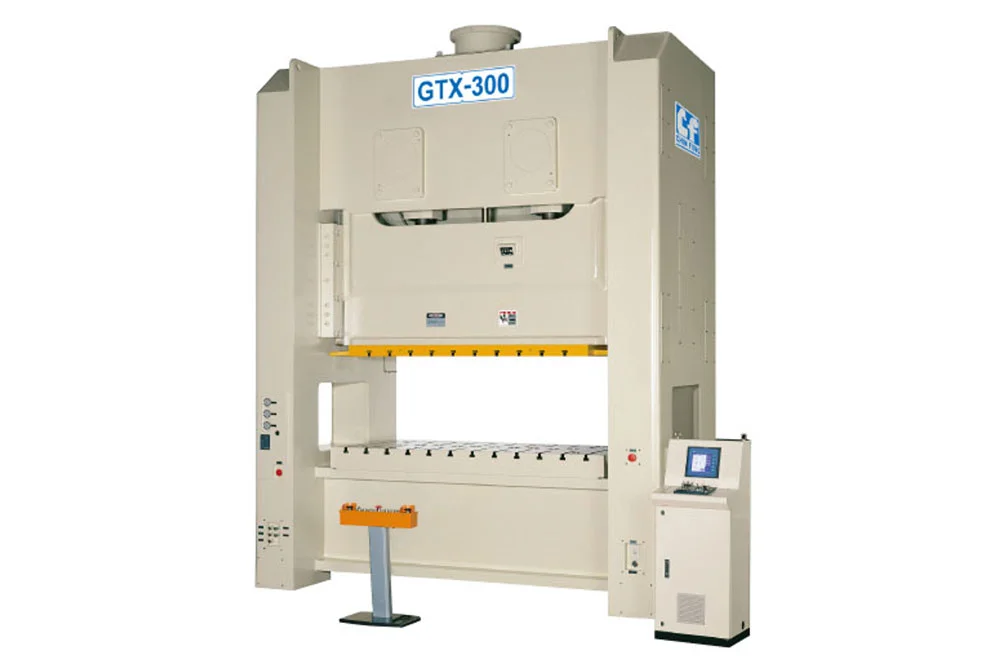
The GTX series double crank H-frame press is designed for high-precision applications, heavy metal stamping such as motorcycle parts, bicycle parts, and household appliances. In terms of automation, ...
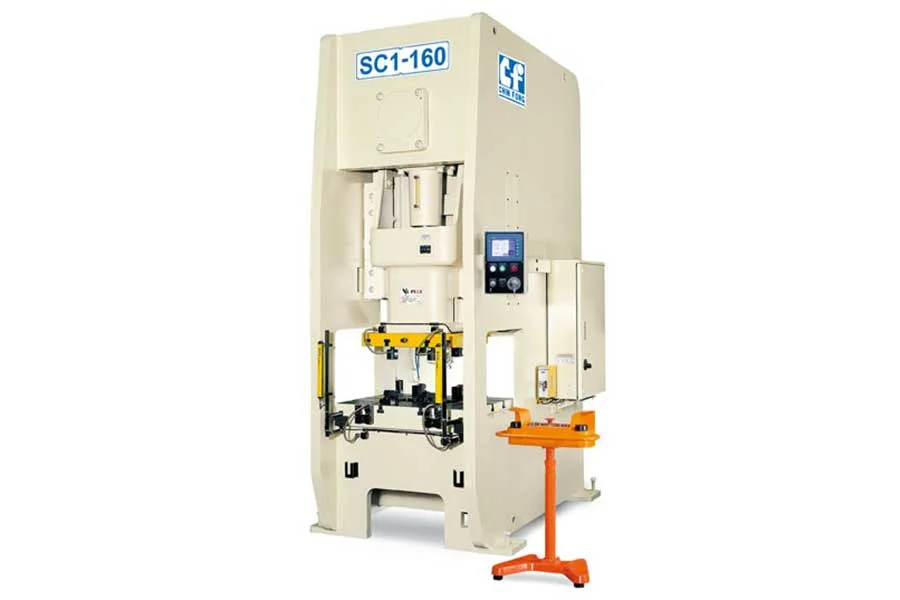
The main configuration of the SC1 single crank H-frame press is reinforced to minimize deflection, thereby increasing stamping accuracy and extending die life. The heavy-duty monolithic welded die is ...
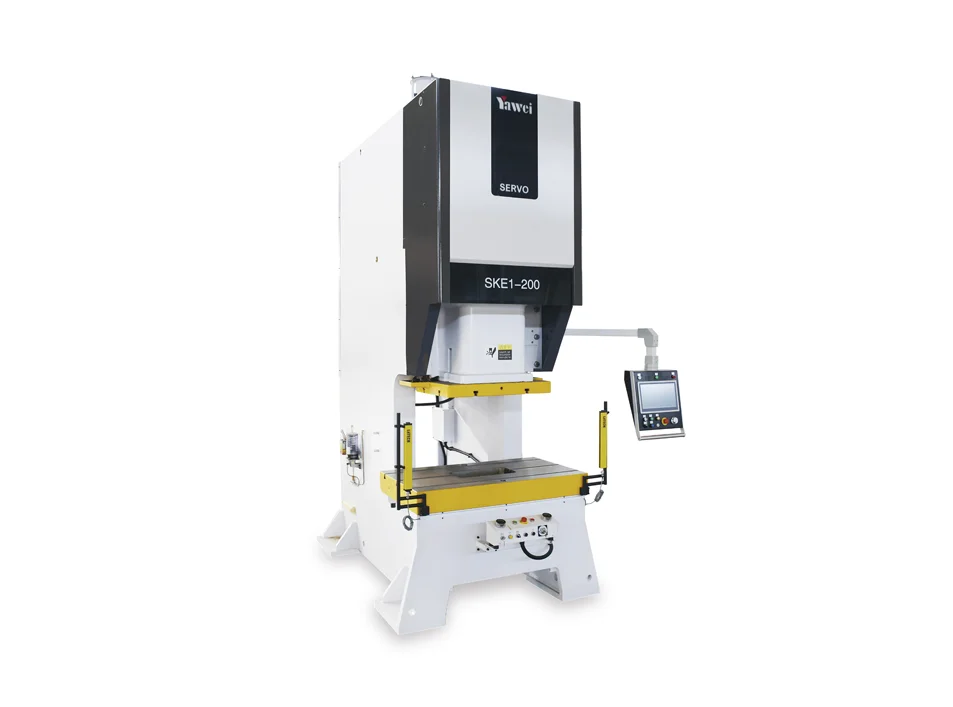
Yawei C-frame servo press with 1 crankshaft integrates a Servo system that can freely control sliding motion to meet the demands of many hard-to-machine forming materials with high precision and ...
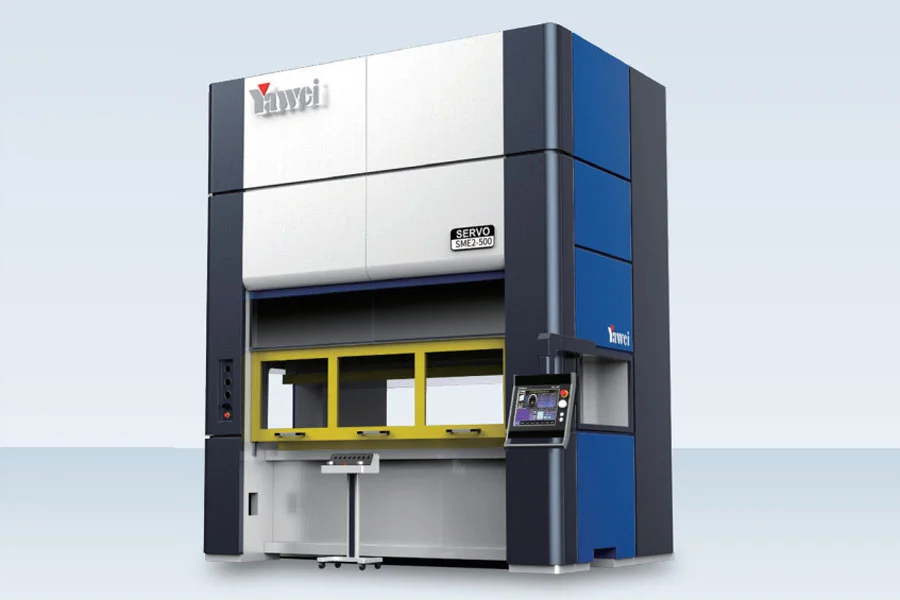
The H-frame servo press with a two-crankshaft system uses advanced servo motor technology, equipped with a high-torque servo drive motor to generate maximum pressing force, even at low speeds. With ...
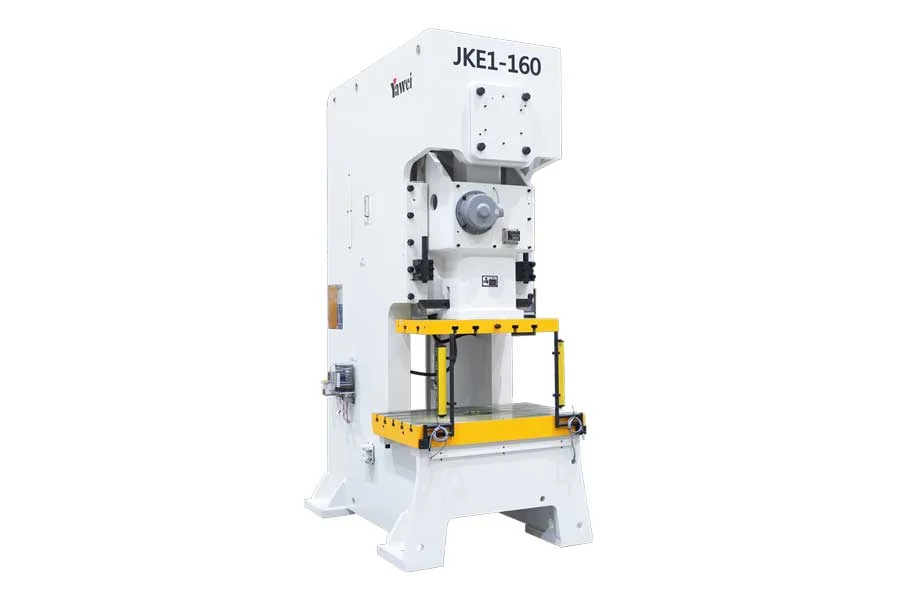
Achieves JIS Level-1 accuracy for the entire machine, ensuring high stability and repeatability during stamping. The machine body has high rigidity, welded from quality steel plates, capable of ...
Punching & Stamping Equipment is commonly used in sheet metal production to create holes, cut profiles, or shape details as required. Depending on product characteristics and output, businesses can choose CNC punching machines, mechanical presses, servo presses, or integrated automated punching systems.
Weldcom offers various punching machine solutions catering to flexible machining for multiple product codes to mass production, with the capability to integrate feeding, unloading, and other machining processes into an automated line.
1. What is a Punching Machine?
Punching & Stamping Equipment is a group of equipment that uses force applied through punches, dies, or molds to process sheet metal. Depending on the machining method, the equipment can perform hole punching, slotting, profile cutting, bending, or shaping products according to pre-designed shapes.
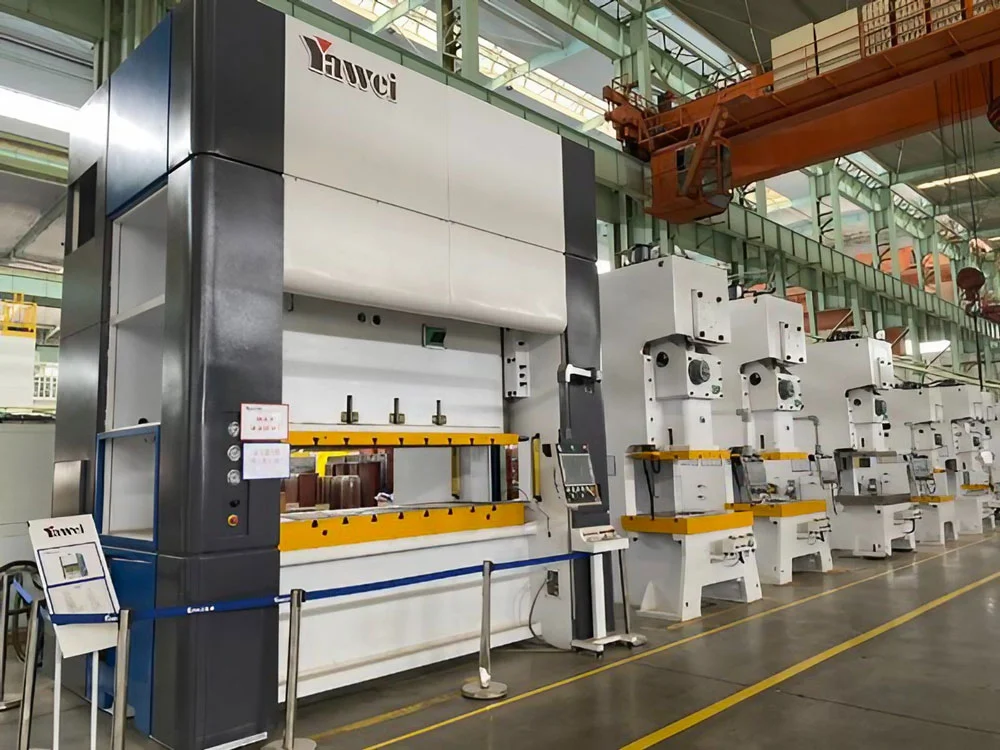
CNC Punching Machine
CNC Punching Machine uses a numerical control system to automatically position the metal sheet and perform punching positions according to a pre-set program. The tool turret can be equipped with various punch and die sets, allowing the machine to handle multiple types of holes and profiles without needing to change the entire mold for each product.
The CNC punching machine is suitable for sheet metal processing businesses with many product codes, frequently requiring design changes or needing to automate the punching process.
Some Yawei CNC punching machines provided by Weldcom use servo punching force and integrate an Auto-index head for processing complex details.
Press Machine
Press Machine uses pressing force applied through a mold set to cut, bend, or shape materials. Compared to CNC punching machines, press machines rely more on the mold set designed for each product but have an advantage when producing large quantities of repeating-shaped parts.
Depending on production requirements, businesses can choose mechanical presses, crank presses, servo presses, or integrated pressing systems with automatic feeding. Weldcom offers a variety of press machine lines in the sheet processing field.
2. Punching & Stamping Equipment Provided by Weldcom
Weldcom provides punching machine lines serving various production requirements, from flexible CNC punching machines to industrial presses for mass production. Specifically:
CNC Punching Machine
The CNC punching machine is suitable for sheet metal parts requiring various types of holes, slots, or different profiles. The process of moving the workpiece, selecting tools, and executing the punching cycle is controlled by CNC, reducing manual operations and facilitating production program changes.
Notably, the Yawei HPE Series CNC punching machine uses a servo motor for punching force, with speeds reaching up to 1,500 times/minute. The punching turret integrates an Auto-index head allowing tool rotation to handle complex detail shapes.
Mechanical Press
Mechanical presses use mechanical drive systems to create pressing force, suitable for repetitive tasks requiring high productivity. The equipment is often combined with mold sets corresponding to each product type.
Mechanical presses can be used independently or combined with a feeder to form a continuous production line.
Servo Press
Servo presses use a servo motor to control the movement of the slide, allowing flexible adjustment of the stroke and pressing cycle according to machining requirements, suitable for products needing tighter control over the forming process.
3. Structure and Operating Principle of Punching & Stamping Equipment
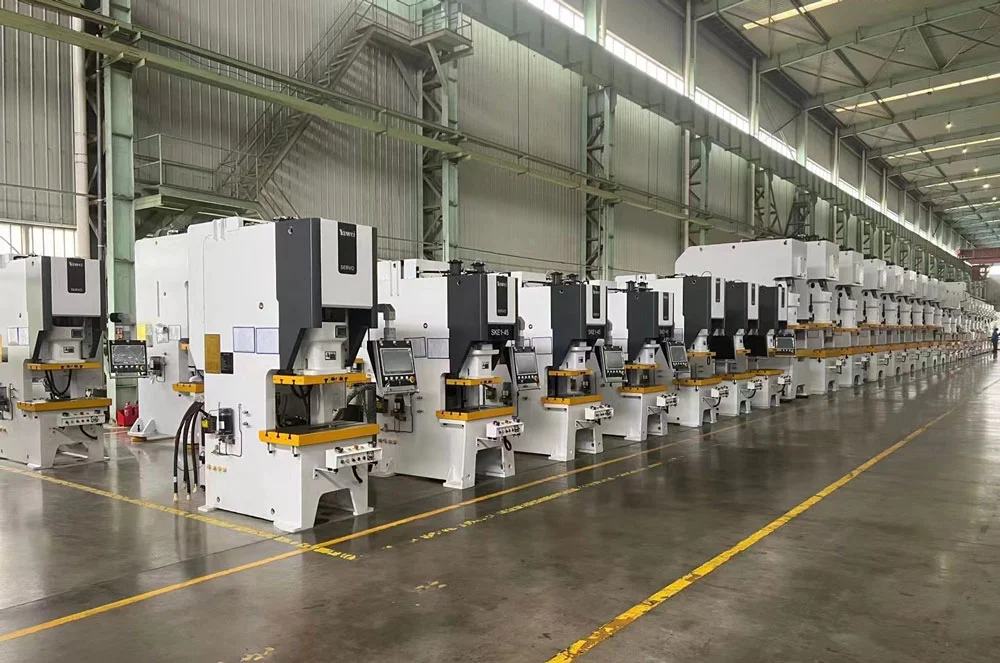
3.1. Structure of Punching & Stamping Equipment
A typical punching machine consists of the following main components:
- Machine Frame: The main load-bearing structure, helping to maintain rigidity and stability during pressing. Depending on the design, the machine may use a C-frame with open working space or a closed frame, straight frame on both sides to increase rigidity.
- Drive System: Responsible for creating and transmitting motion to the slide. Depending on the machine type, the system may use a motor combined with a flywheel and crankshaft, a hydraulic system, or a servo motor.
- Slide: Carries the punch or upper mold part and moves along the stroke to perform punching, cutting, or shaping of the material.
- Machine Table: The position for mounting the die or lower mold part, also supporting the workpiece during machining.
- Punching Die: Consists of punches and dies or mold sets designed according to the shape of the detail to be machined. This is the part that directly impacts the material.
- Control System: Manages the operating cycle, stroke, and machine parameters. For CNC machines, the control system also manages the workpiece position, tools, and machining sequence.
Specifically, turret-type CNC punching machines also have a turret containing multiple punch and die sets, a workpiece clamping mechanism, and a system for moving the sheet along CNC axes. For example, the Yawei HPE CNC punching machine uses X, Y axes to move the workpiece, a servo-controlled turret, and a CNC system to manage the machining process.
3.2. Operating Principle of Punching & Stamping Equipment
The general principle of punching machines is to create force and transmit motion to the punch or mold to impact the material. When the punch goes down and presses the material into the die, the material can be cut to create holes, profiles, or deformed according to the mold shape. After completing the stroke, the slide returns to the initial position to perform the next cycle.
The method of creating and controlling force varies depending on the type of punching machine as follows:
- Mechanical Press: The motor rotates the flywheel to store energy. Then the energy is transmitted through the drive mechanism like a crankshaft and connecting rod to convert from rotational motion to linear motion of the slide.
- Hydraulic Press: The pump creates pressure for hydraulic oil, the pressure is transmitted through the liquid to the cylinder and creates force on the piston. This principle is based on Pascal's law, where the force generated depends on the pressure and the piston’s effective area.
- Servo Press: The servo motor controls the machine's drive mechanism, allowing flexible programming of the slide's position, speed, and motion pattern for each stage. Some servo press designs use a direct-drive servo motor and do not require a flywheel, clutch like traditional mechanical machines.
- Servo CNC Punching Machine: The CNC system coordinates with the servo to control the punch head, sheet position, and tool selection according to the program. This technology allows continuous execution of multiple punching positions and different profiles on the same metal sheet. For example, Yawei and AMADA's turret punch servo lines use servo combined with a numerical control system for the punching process.
4. How is a CNC Punching Machine Different from a Press?
Criteria | CNC Punching Machine | Press Machine |
|---|---|---|
| Main Machining | Punching holes, slots, profiles | Cutting, bending, shaping, drawing |
| Tools | Multiple punch and die sets on turret | Mold set per product |
| Product Changeability | Flexible with CNC program | Usually requires mold change |
| Production Type | Multiple product codes | Large quantity of repeating products |
| Automation Capability | Feeding, unloading, stock | Feeding, robot, pressing line |
| Priority Factor | Flexibility | Productivity and mold |
The CNC punching machine is not a direct replacement for all press applications. The choice should be based on the detail shape and actual production process rather than just machine force or equipment capacity.
5. Should You Choose a CNC Punching Machine or a Press?
Businesses should choose a CNC punching machine when needing to process various details and frequently change production programs. Press machines are more suitable for products using fixed molds, having large output, and requiring continuous repetitive machining cycles.
5.1. According to the Type of Detail to be Machined
If the product mainly requires creating round holes, square holes, slots, vents, or profiles on sheet metal, the CNC punching machine usually offers higher flexibility.
If the product requires bending, drawing, or spatial shaping using molds, the press machine is a more suitable choice.
5.2. According to Output
Businesses producing many product codes with changing quantities often need quick program changeability. The CNC punching machine meets this production style well thanks to CNC control and the tool system on the turret.
For stable products with large output, the press machine combined with specialized molds can create a continuous production cycle and easily integrate a feeder.
5.3. According to Material and Thickness
The type of material, sheet thickness, and detail size directly affect machine force, working area size, and tool design. Businesses should fully determine these parameters before choosing a punching machine configuration.
5.4. According to the Level of Automation
Besides standalone machines, businesses can choose a feeding system, unloading system, or a complete automated line. The level of automation should be determined based on output, production shifts, labor, and the ability to connect with subsequent stages.
6. Applications of Punching & Stamping Equipment in Production
Punching machines are widely used in sheet metal production and shaping detail industries. Some common applications include:
- Production of Electrical Cabinets, Cable Trays: Punching holes for device installation, ventilation slots, doors, and profiles on electrical cabinet shells, control cabinets, cable trays, and cable ducts.
- Automobiles and Motorcycles: Cutting, bending, and shaping metal parts, frame components, shells, and accessories needing large-scale production.
- Electrical Equipment and Household Appliances: Processing machine shells, metal frames, brackets, and shaped details used in electrical, electronic, and household appliances.
- Sheet Metal Processing: CNC punching machines are suitable for units needing to handle various types of holes, slots, and profiles on the same sheet, especially when producing multiple product codes.
- Mechanical and Industrial Equipment: Producing machine parts, jigs, protective shells, frames, and metal components needing punching or shaping according to design.
- Mass Production with Molds: Press machines can combine feeders and specialized molds for continuous production of stable-shaped and large-quantity details.
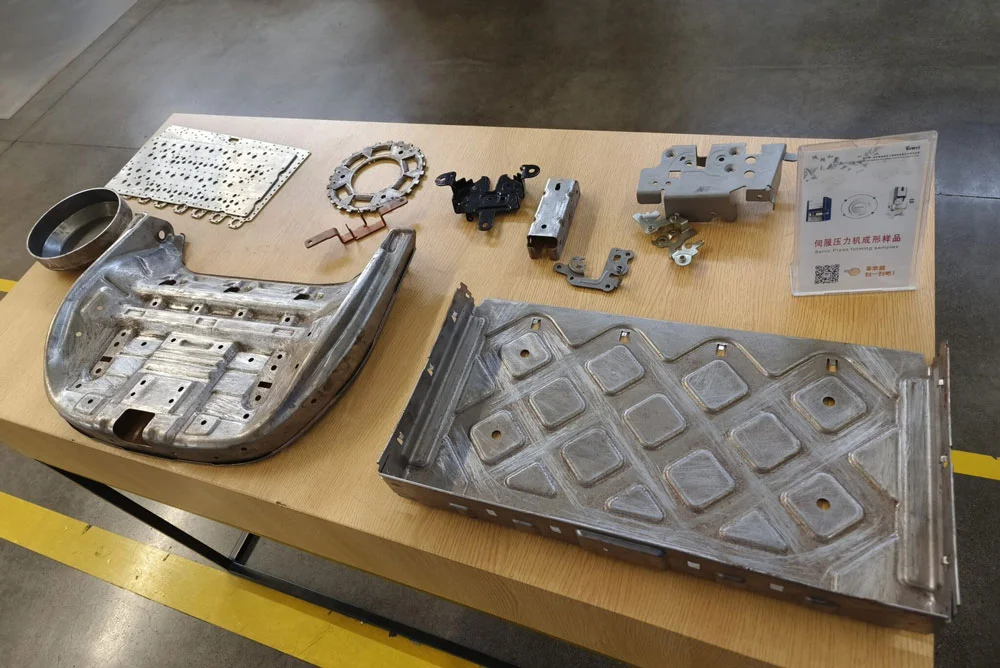
7. Punching & Stamping Automation Solutions
Punching machines can be integrated with feeding systems, unloading systems, product sorting, and material storage to reduce manual operations. Depending on the factory scale, businesses can automate the punching stage alone or connect multiple stages into a continuous production system.
Weldcom currently offers CNC punching solutions combined with automatic feeding and unloading. A two-sided feeding and unloading system includes a workpiece trolley, feeding device, CNC punching machine, unloading device, and product lifting device.
Besides standalone CNC punching machines, more complex configurations can combine multiple technologies on the same line. Weldcom is introducing a 3-in-1 CNC punching system combined with automatic feeding and unloading, as well as integrated lines with punching machines, cutting devices, feeding, sorting, and product stacking.
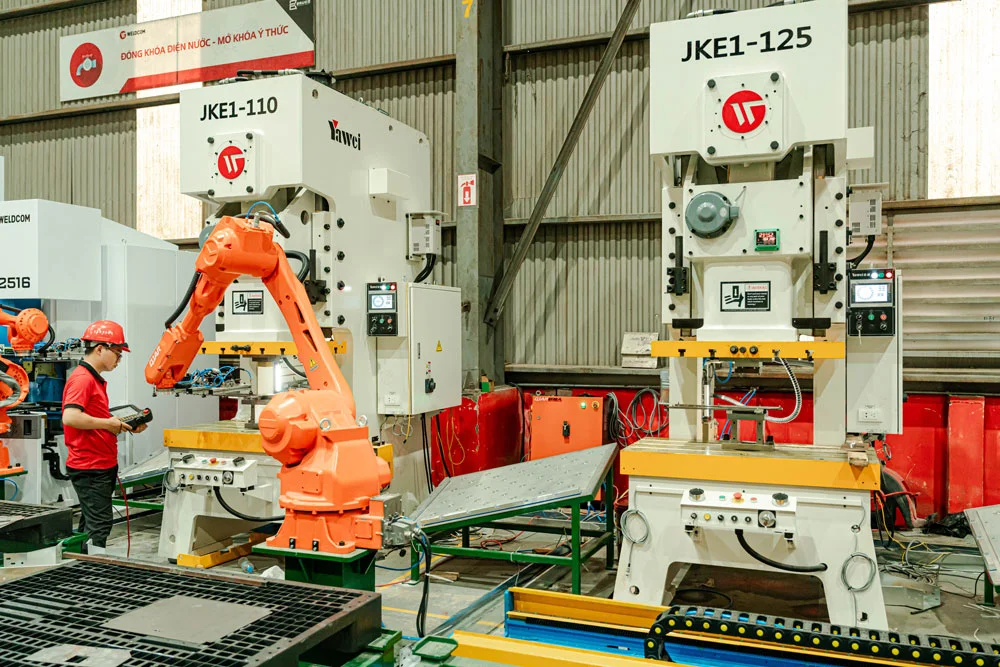
An automation process can be organized in the direction of:
Material storage → feeding → positioning → CNC punching → sorting → unloading and stacking products → moving to the next stage
The actual configuration needs to be designed based on the workshop layout, product type, and output instead of applying a fixed line for all businesses.
8. CNC Punching & Stamping Equipment Projects Implemented by Weldcom
Practical implementation experience is an important factor when choosing a punching machine supplier, especially for systems needing to connect multiple devices.
Besides providing standalone punching machines, Weldcom has implemented sheet metal processing projects with CNC punching machines combined with other production stages.
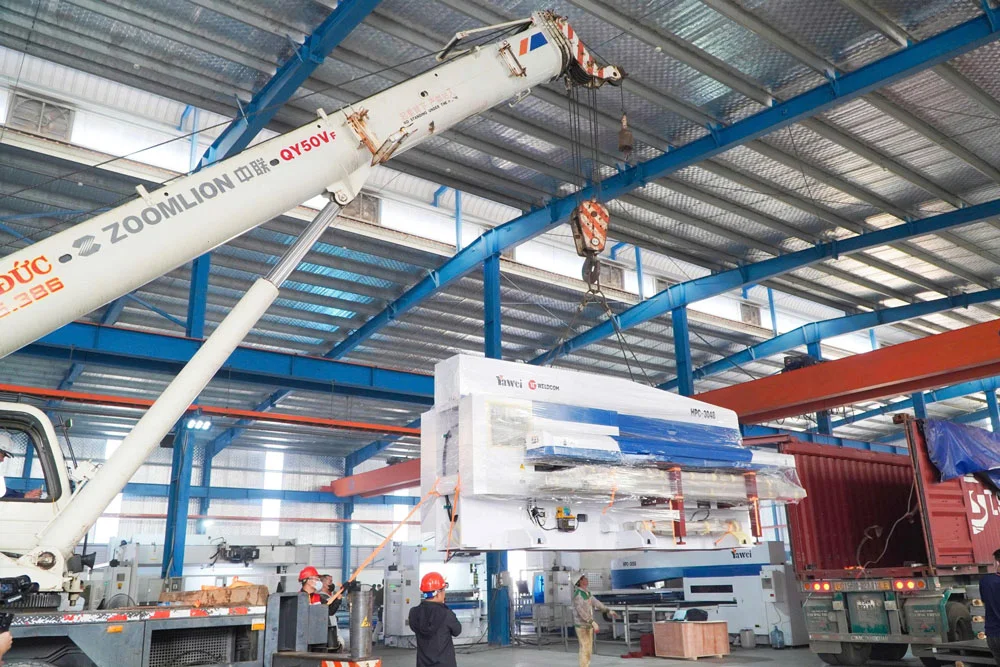
One of the actual projects Weldcom has implemented is the project at Thanh Tien company. Weldcom provided and installed a system of equipment including 4 Yawei CNC press brakes, 1 Yawei CNC punching machine, 1 groove milling machine, and a laser cutting system. The equipment was installed on schedule and met the supplier's standards.
In addition, Thanh Tien also uses Yawei's HPE and HPC punching machine lines along with a synchronized sheet processing equipment system provided by Weldcom.
The implementation of CNC punching machines along with cutting machines, press brakes, and related equipment shows that investment options can be calculated according to the entire production process instead of viewing each machine as an independent stage.
9. Factors Affecting the Price of Punching Machines
The price of punching machines does not only depend on the machine force but also varies according to drive technology, working area, control system, and automation level. Therefore, two devices with the same nominal force can still have different investment levels if the configuration and production requirements differ.
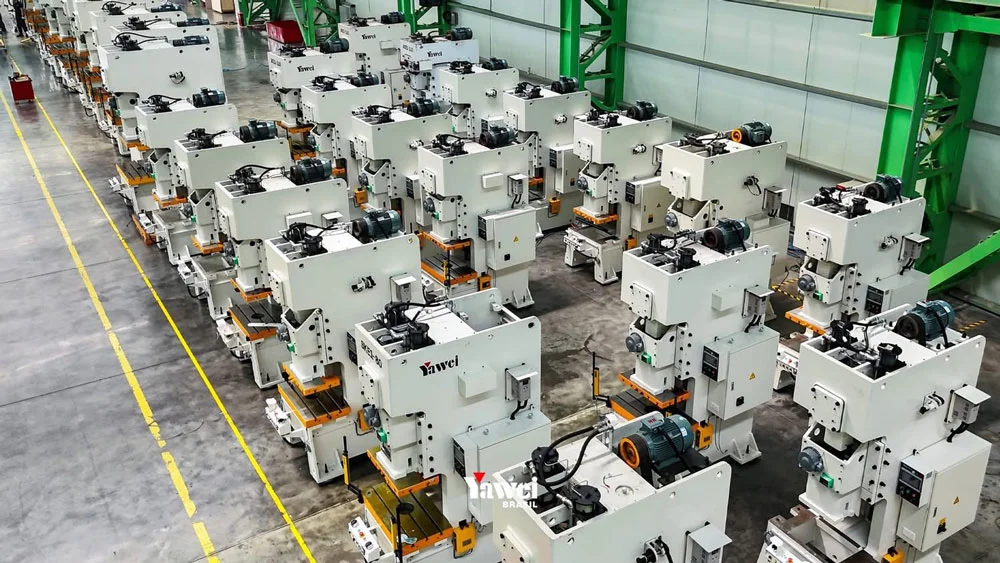
Factors to consider include:
- Machine Type: CNC punching machine, mechanical press, or servo press.
- Punching or Pressing Force: Needs to be suitable for the material and product thickness.
- Machining Size: Affects the working area and machine size.
- Tool and Mold Configuration: Depends on the shape and quantity of products.
- CNC System: Affects programming capability and machining process control.
- Feeding and Unloading: From manual operation to fully automatic.
- Integration Capability: Connects material storage, robots, or other stages.
10. Reasons to Choose Punching Machine Solutions at Weldcom
Weldcom provides from standalone CNC punching machines, independent presses to integrated punching systems with feeding and unloading, helping businesses choose configurations according to actual production needs.
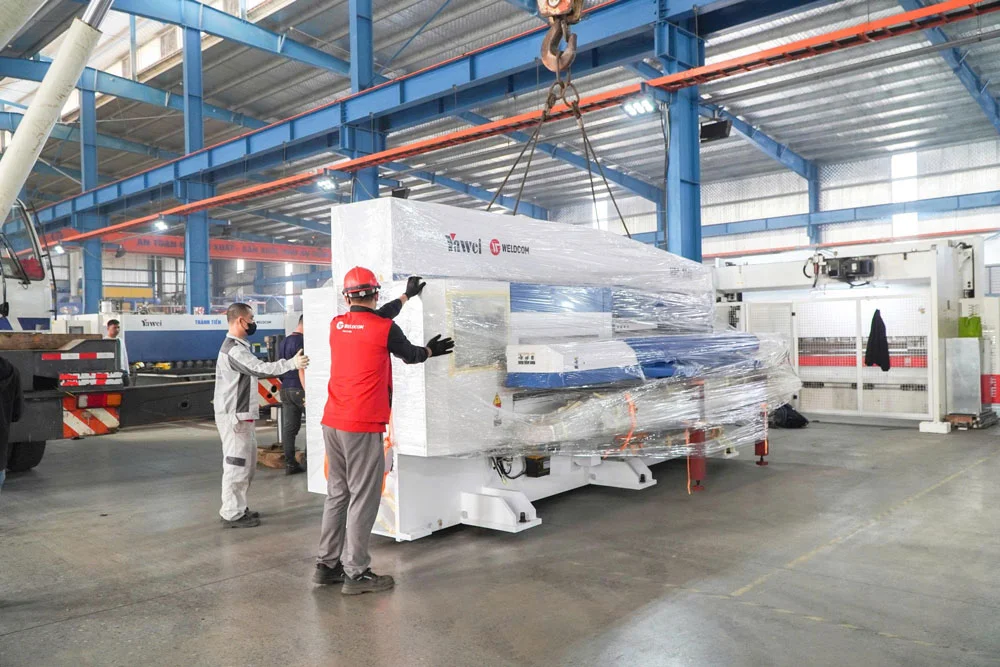
Weldcom's strengths that can support include:
- Consulting on choosing the machine type according to customer products.
- Determining machine force and working area according to material, thickness.
- Selecting CNC punching machine or press configuration suitable for output.
- Building automatic feeding and unloading solutions.
- Integrating punching machines with other sheet processing stages.
- Consulting layout and expansion plans for the production line according to production orientation.
Instead of just choosing equipment based on machine specifications, let Weldcom send you an investment plan evaluated on the entire process from raw material input to post-machining products.
Hỗ trợ tư vấn
11. Frequently Asked Questions About Punching Machines
11.1. Are Punching Machines and Press Machines the Same?
- Not entirely the same. Each type is suitable for different production methods.
- Punching machines often focus on creating holes, slots, and profiles on sheet metal, while press machines use molds to perform multiple operations like cutting, bending, or shaping.
11.2. Can CNC Punching Machines Shape Beyond Punching Holes?
Yes. Depending on the tool configuration, CNC punching machines can perform some shaping operations beyond hole punching. Systems using Auto-index heads also allow tool rotation to handle more complex profiles.
11.3. When Should a CNC Punching Machine Be Used Instead of a Laser Cutting Machine?
- CNC punching machines are suitable when the product has many standard holes, requires some shaping operations with punches and dies, or when the business has built a production system based on punching technology.
- Laser cutting machines are more suitable for complex cutting profiles and do not require the use of punches and dies.
11.4. How Do Mechanical Presses and Servo Presses Differ?
- Mechanical presses use mechanical drive systems to create slide motion.
- Servo presses use a servo motor, allowing more flexible motion control according to the program.
The choice depends on the product, mold, production cycle, and process control requirements.
11.5. Can Punching Machines Integrate Automatic Feeding?
Yes. CNC punching machines can combine feeding devices, unloading devices, product stacking, and material storage. Weldcom currently has one-sided, two-sided feeding and unloading configurations and integrated punching systems in automated lines.
If your business is looking to invest in punching machines, contact Weldcom for advice on choosing a configuration suitable for the product, material, output, and actual automation level.