
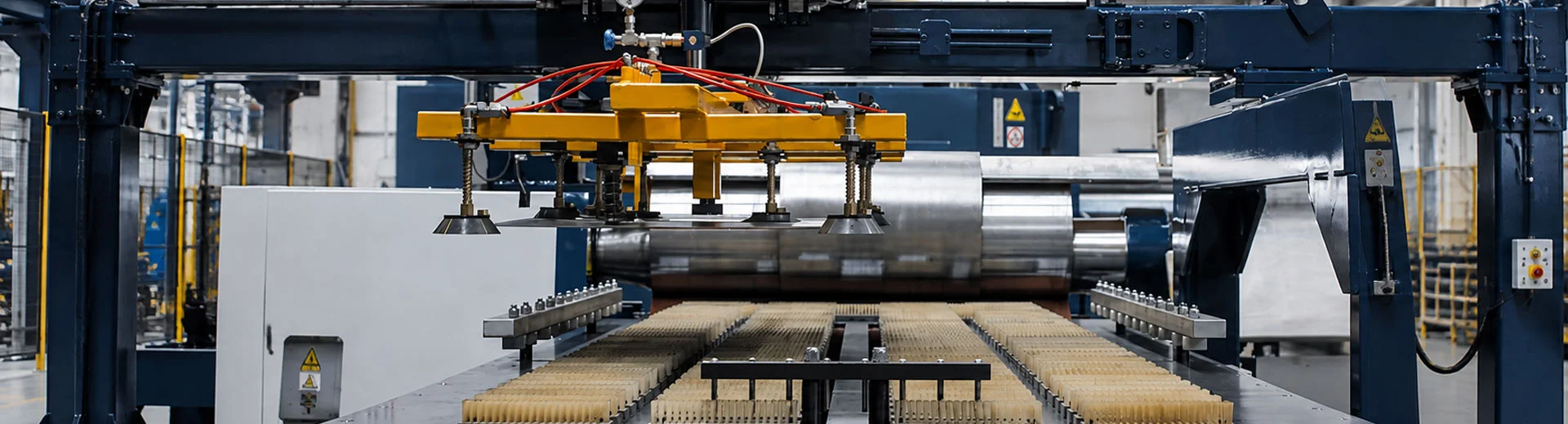
Plate Rolling Machine
Easy to operate, controlled by an intuitive touch screen Can roll various cross-sections, billets with special shapes and sizes High accuracy, high straightness Durable, sturdy machine frame, highly ...
The sheet metal rolling machine can roll sheet metal into cylindrical, arc, and conical shapes at room temperature. Controlled by PLC, it is easy for operators to use, helping to increase production ...
The sheet metal rolling machine is durable, sturdy, and highly stable. It is a mechanically asymmetrical sheet metal rolling device, operating by pressing the upper roller and connecting the upper and ...
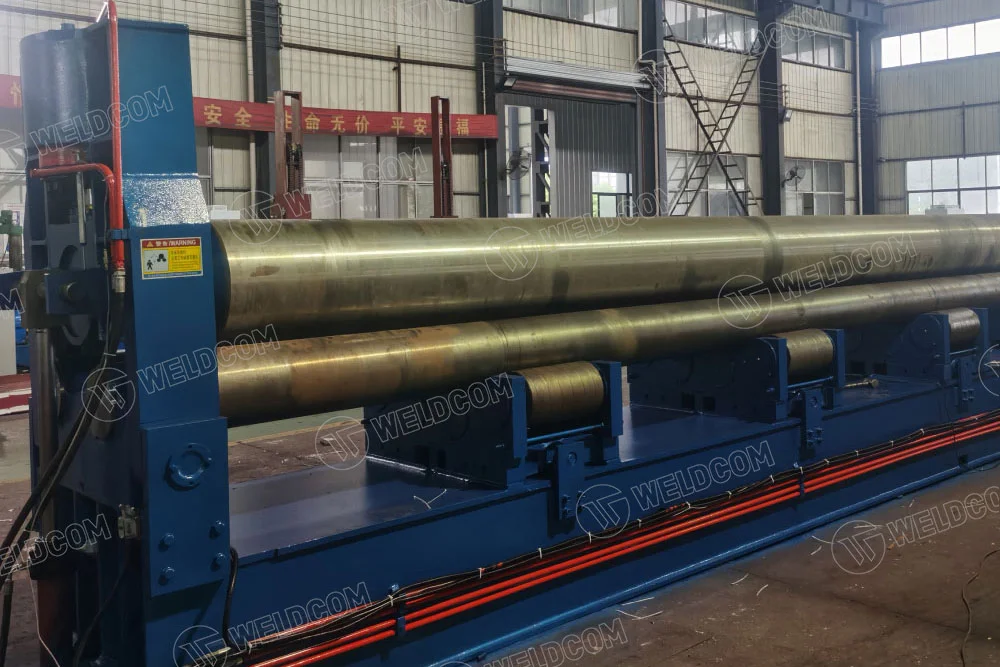
Kruman KPR3Y 3-roll hydraulic plate bending machine (without edge) - Suitable equipment for processing steel plates and galvanized sheets.
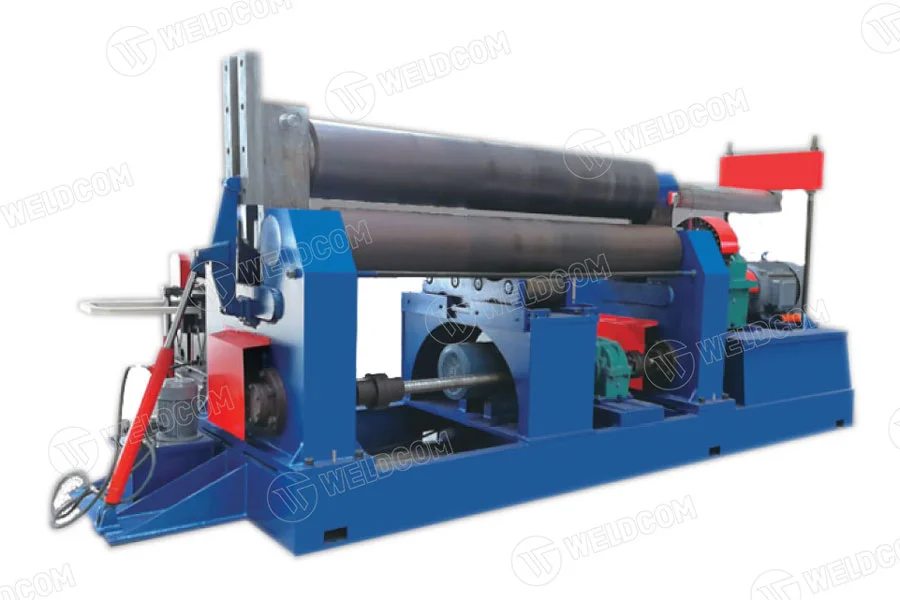
It is a classic mechanical sheet metal rolling machine, durable and sturdy, with low investment, simple operation, widely adaptable to various working conditions, and convenient and easy maintenance.
Plate Rolling Machine is a specialized device with superior precision in shaping metal sheets, allowing processing from thin to thick steel sheets with minimal deviation. Thanks to the drum-shaped upper roll design and flexible adjustment mechanism, the machine can roll metal sheets into cylindrical, arc, or conical shapes over a wide range, meeting diverse production requirements. Today, modern CNC plate rolling machines allow precise control of the bending radius, increasing productivity and significantly reducing errors compared to manual methods.
1. What is a Plate Rolling Machine?
- Plate Rolling Machine (English: Plate Rolling Machine or Bending Roll Machine) is a mechanical device used to create curved shapes for metal sheets by passing the sheet through rotating pressing rolls.
- Under the impact of pressing force and the rotational movement of the rolling rolls, the metal sheet is gradually bent to the desired radius, which can form a cylinder, arc, or cone—all performed at normal temperature without heating the material.
- The plate rolling machine is an indispensable device in sheet metal processing, widely used in industries: tank manufacturing, ventilation ducts, steel structures, industrial equipment production, stainless steel furniture, and precision mechanics.
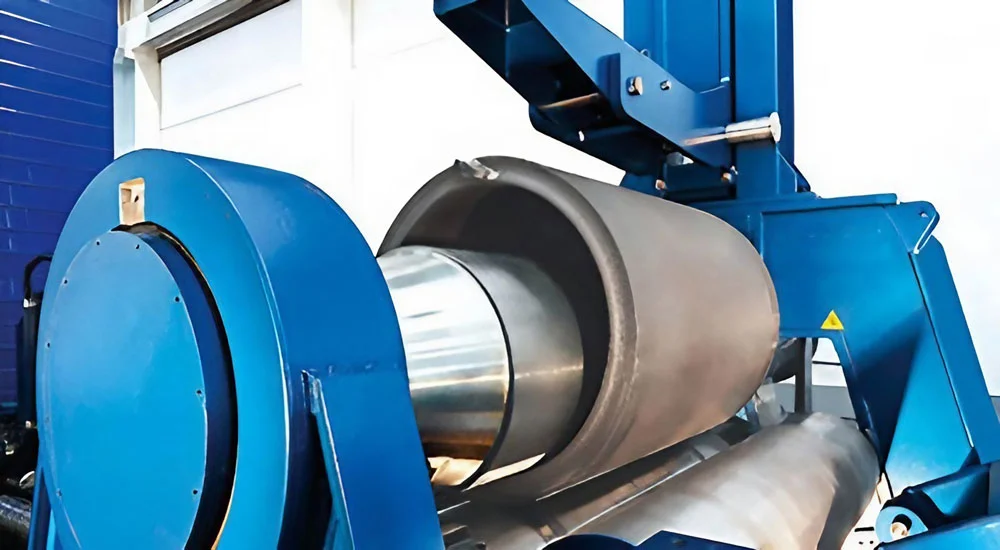 What is a Plate Rolling Machine?
2. Outstanding Advantages of Plate Rolling Machines
The plate rolling machine is considered an indispensable device in sheet metal processing lines due to its ability to shape accurately, quickly, and stably on various materials.
- High precision, suitable for various sheet thicknesses: Thanks to the drum-shaped upper roll design and flexible adjustment mechanism, the machine can roll both thin and thick sheets, ensuring even curvature without edge breakage or material deformation.
- Superior productivity, labor-saving: The plate rolling process is automatic and continuous, allowing mass processing of cylindrical, conical, or arc-shaped details without much manual intervention.
- High stability, durable in industrial environments: The frame of the plate rolling machine is made from heavy-duty structural steel, capable of bearing large loads and operating stably for a long time, suitable for shipbuilding, tank manufacturing, and steel structures.
- Flexible in shaping: The plate rolling machine can create diverse profiles (circular cylinder, cone, curved arc...) with the ability to adjust the bending radius as desired.
- Can integrate CNC and automatic control: Modern plate rolling machines are equipped with CNC controllers that allow programming of the radius, rotation speed, and precise spindle travel, helping to reduce errors and increase product repeatability.
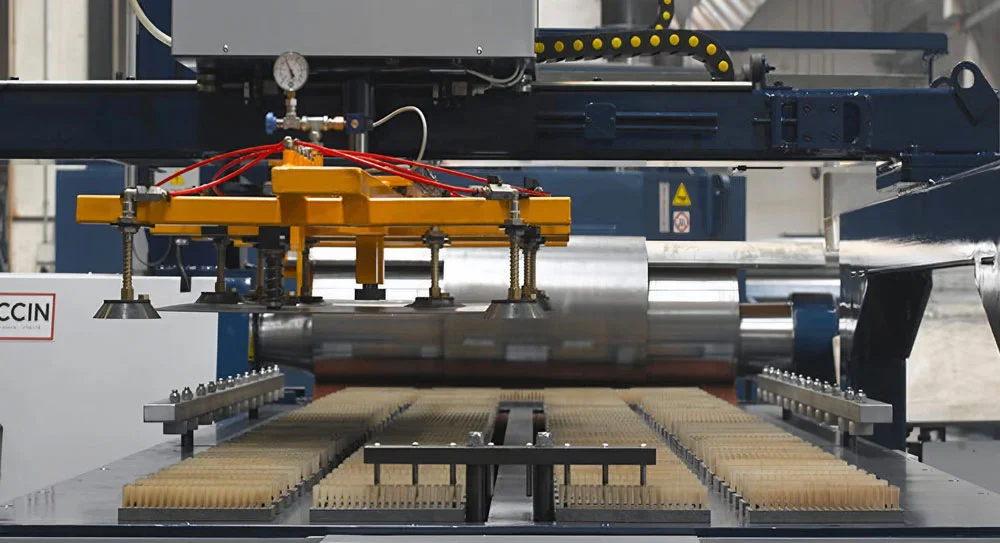 Outstanding Advantages of Plate Rolling Machines
3. Classification of Plate Rolling Machines
Plate rolling machines are classified based on the number of rolling rolls and the drive mechanism. Each type of machine has its own application range and advantages, suitable for different requirements regarding material thickness, bending radius, and production productivity.
3.1. 2-Roll Plate Rolling Machine
This is the simplest type of machine, often used for thin sheets or details with large curvature, not requiring high precision.
- Structure: The 2-roll plate rolling machine consists of a fixed roll and a moving roll to gradually press the metal sheet into the desired shape.
- Advantages: Compact structure, easy operation, low investment cost.
- Limitations: Limited rolling capability, the 2-roll plate rolling machine is not suitable for thick sheets or small radius requirements.
- Applications: Processing ventilation ducts, protective covers, thin details in civil mechanics or interior decoration.
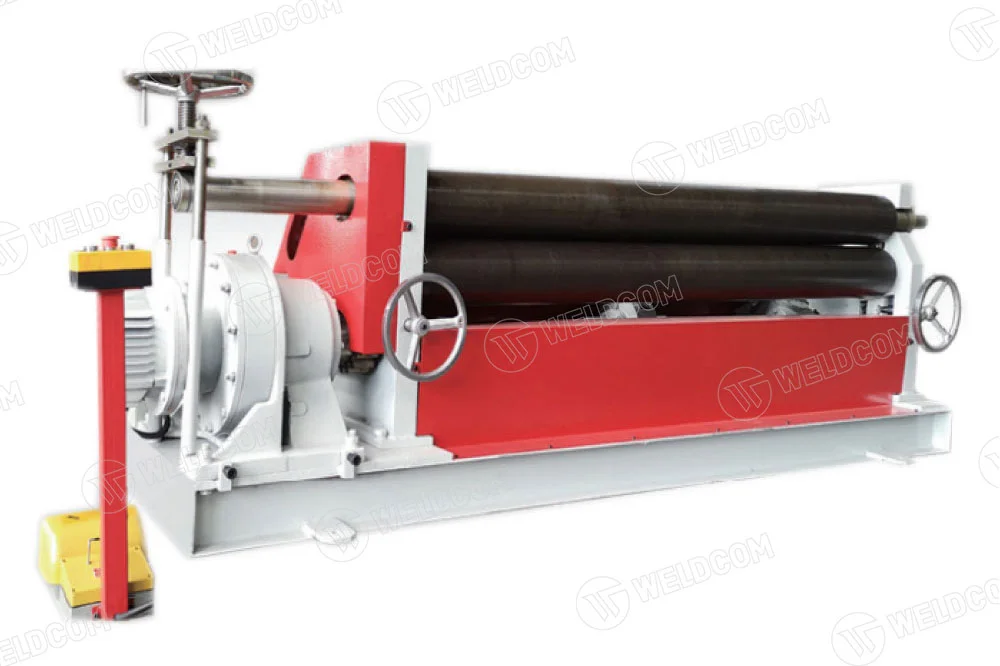
3.2. Mechanical 3-Roll Plate Rolling Machine
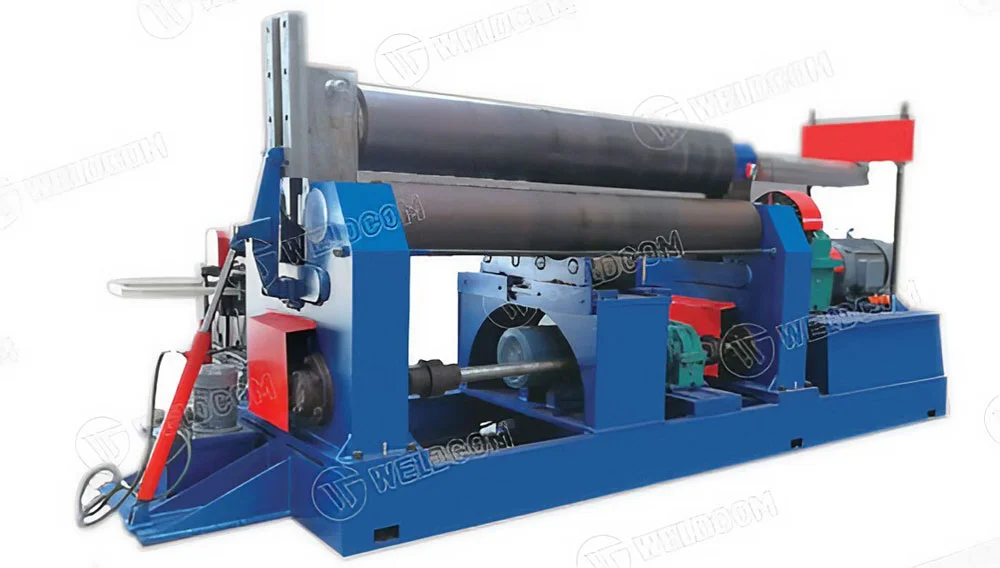 Mechanical 3-Roll Plate Rolling Machine A popular machine in mechanical workshops today, using a gear-worm mechanical system for transmission.
- Structure: The mechanical 3-roll plate rolling machine has two lower rolls rotating in opposite directions to pull the workpiece, the upper roll moves by hand crank or motor.
- Advantages: Easy operation, low cost, suitable for rolling thin sheets (≤6 mm) or large radius details.
- Limitations: The mechanical 3-roll plate rolling machine requires a lot of manual operation, and precision depends on the operator's skills.
- Applications: Producing conduits, ventilation ducts, thin electrical cabinets, decorative stainless steel details.
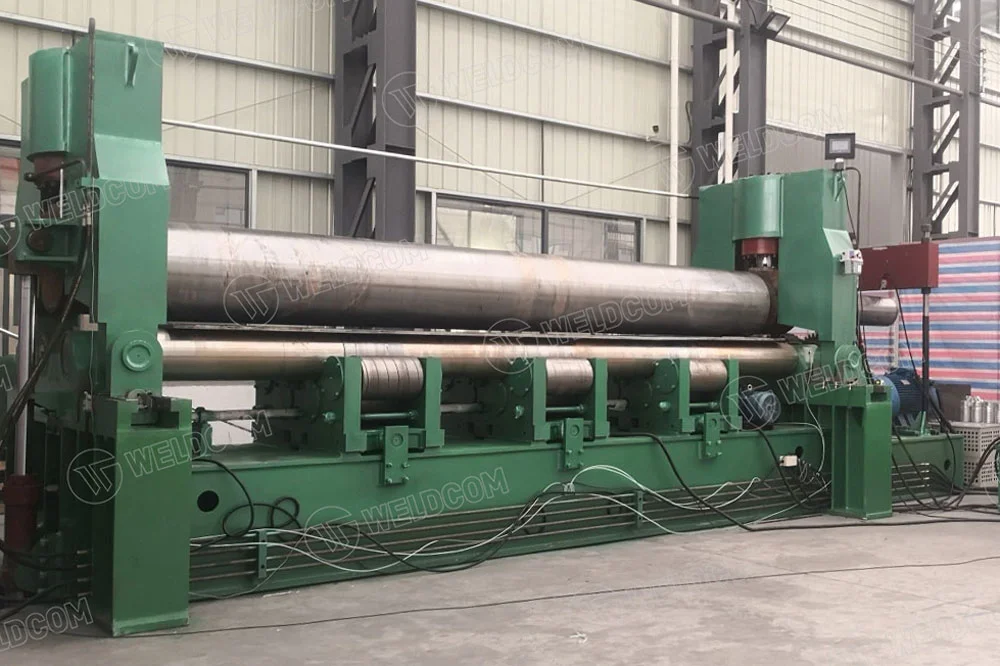
3.3. Hydraulic 3-Roll Plate Rolling Machine
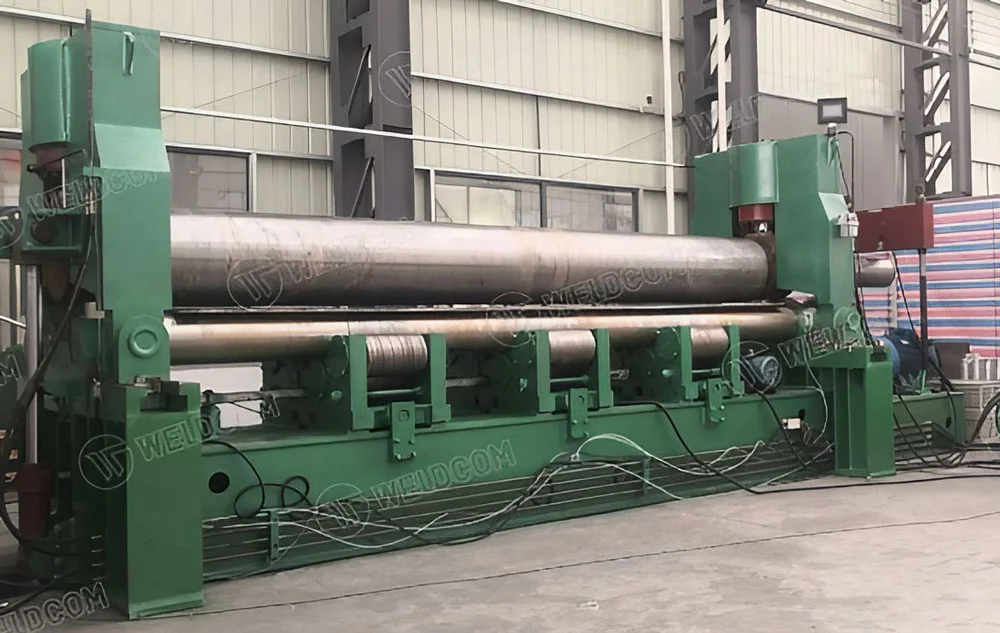 Hydraulic 3-Roll Plate Rolling Machine
- Uses a hydraulic cylinder system to control the pressing force, ensuring precision and stability when rolling thick sheets.
- Structure: The hydraulic 3-roll plate rolling machine includes three synchronized rotating rolls, with the upper roll moving by hydraulic cylinder.
Advantages of the hydraulic 3-roll plate rolling machine:
- Can roll thick sheets and hard materials (steel, stainless steel, Q345 steel).
- The hydraulic 3-roll plate rolling machine has high pressing force, high speed, and good roundness.
- Can integrate CNC for process automation.
Applications: The hydraulic 3-roll plate rolling machine is used in manufacturing tanks, pressure pipes, steel structures, shipbuilding, and hydropower.
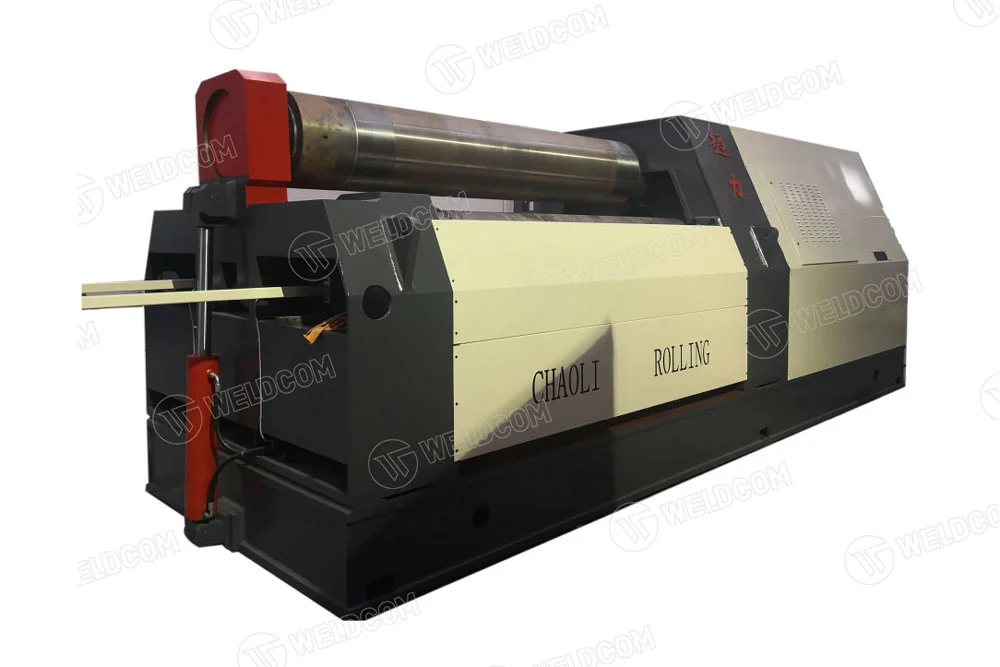
3.4. CNC 4-Roll Plate Rolling Machine
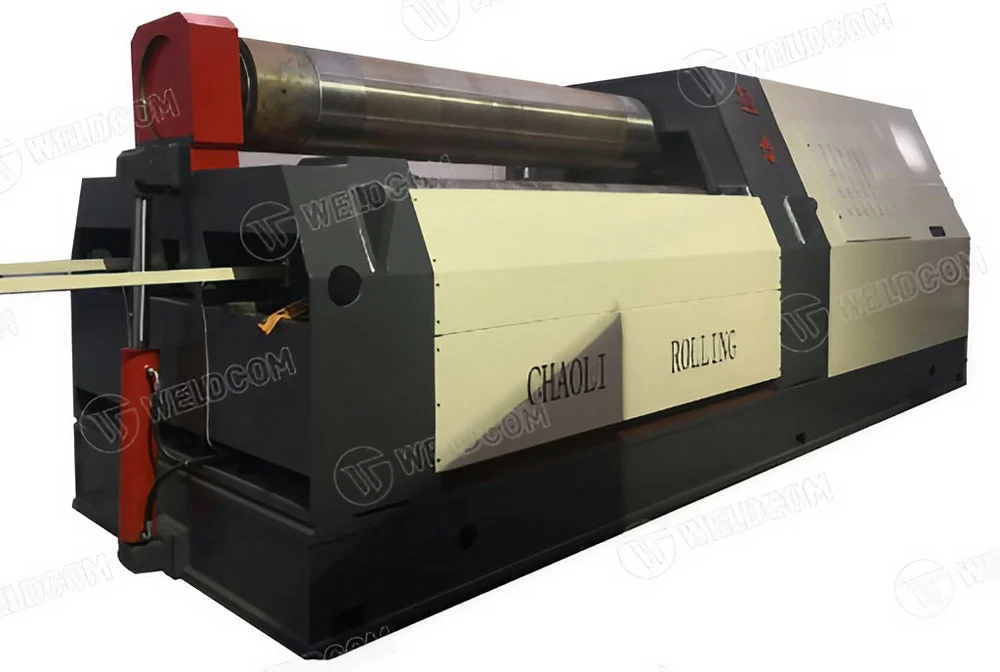 CNC 4-Roll Plate Rolling Machine
- The most modern machine line, applying CNC numerical control technology to automate the entire rolling process.
- Structure: four active rotating rolls, the pressing roll can move precisely according to the set program.
Advantages:
- The 4-roll plate rolling machine can roll both ends of the workpiece continuously without flipping the sheet.
- High precision, superior productivity, minimizing errors.
- Easy to program, store, and repeat rolling programs for mass production.
Applications: The CNC 4-roll plate rolling machine is used in automatic sheet processing factories, heavy industrial production, high-pressure equipment.
4. Applications of Plate Rolling Machines
Thanks to their precise and flexible shaping capabilities, plate rolling machines are widely used in many industrial production fields, especially in industries requiring cylindrical, pipe, or conical details with uniform curvature and size. 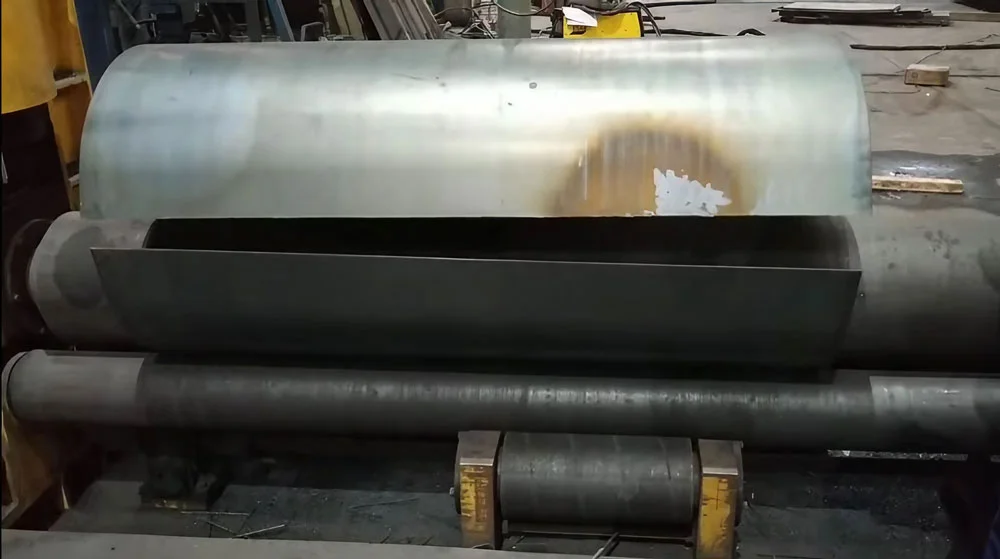 Applications of Plate Rolling Machines Shipbuilding and Heavy Industry
- Processing ship hulls, conduits, deck details, curved walls, pressure pipes.
- Hydraulic 3-roll or CNC 4-roll plate rolling machines allow rolling thick, large-sized sheets, ensuring even roundness without deformation.
Energy and Pressure Equipment Industry
- Manufacturing pressure tanks, gas tanks, boilers, oil pipelines, hydropower pipes.
- Requires high precision, absolute tightness—often using CNC plate rolling machines with high pressing force.
Steel Structure and Machinery Manufacturing Industry
- Processing steel pipes, ventilation ducts, columns, load-bearing frames, round beam columns.
- Plate rolling machines help shorten welding stages, reduce errors, and increase product concentricity.
Stainless Steel Furniture and Metal Decoration Industry
- Rolling to shape table legs, chair frames, decorative pipes, stainless steel railings, elevator covers.
- Requires smooth, scratch-free surfaces—suitable for mechanical 3-roll or CNC 4-roll plate rolling machines with light pressure control.
HVAC and Civil Mechanics Industry
- Producing ventilation ducts, vent covers, thin round details, air dampers.
- Prioritize compact, flexible operating plate rolling machines that save space.
5. Experience in Choosing a Plate Rolling Machine
Choosing the right plate rolling machine helps businesses ensure productivity, precision, and equipment longevity throughout the operation process. Here are important factors to consider before investing:
5.1. Determine Actual Processing Needs
The thickness and length of the sheet are the parameters that determine the type of machine and capacity to choose.
- Thin sheet (<6 mm) → Choose a mechanical 3-roll machine.
- Medium-thick sheet (>6 mm) → Choose a hydraulic 3-roll or CNC 4-roll plate rolling machine.
Determine the profile to be rolled (cylinder, cone, arc...) to choose the correct roll configuration. 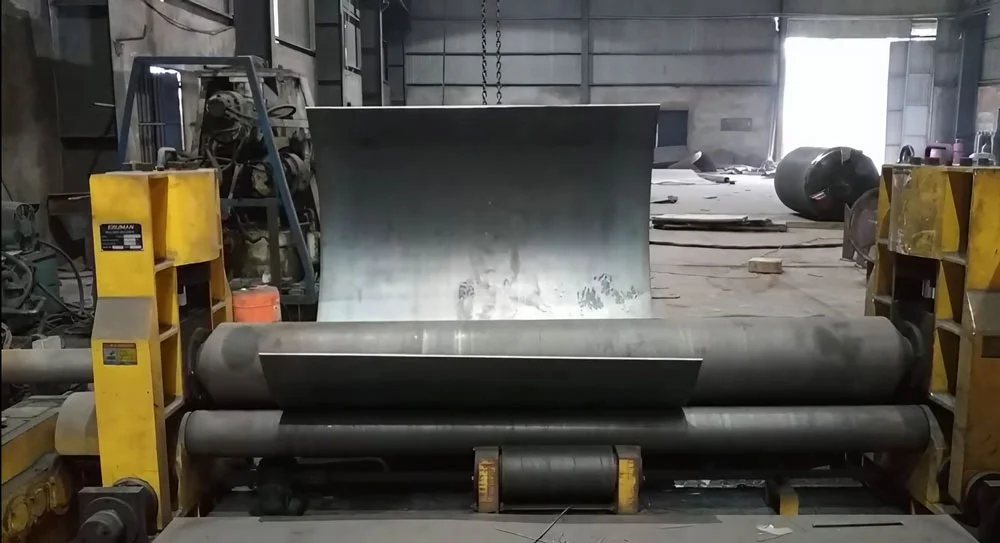 Experience in Choosing a Plate Rolling Machine: Based on Actual Needs
5.2. Choose the Appropriate Number of Rolls and Drive Mechanism
- 2-roll plate rolling machine: Simple, cheap, only for thin sheets.
- 3-roll plate rolling machine: Popular, flexible, for even and stable curvature.
- 4-roll plate rolling machine: High automation, suitable for mass production.
Prioritize hydraulic or CNC drive for higher precision and safety.
5.3. Check the Quality of Rolling Rolls and Machine Frame
- Rolls must be hardened and precisely ground to resist wear, not deform when rolling thick sheets.
- The plate rolling machine frame should be a welded monolithic structural steel, capable of bearing large loads, reducing vibrations during pressing.
5.4. Control System and Automation Capability
- Modern plate rolling machines need to have a CNC or PLC control unit, allowing the setting and storage of rolling parameters.
- Check the ability to compensate for errors, automatically adjust the workpiece, and safety sensors during operation.
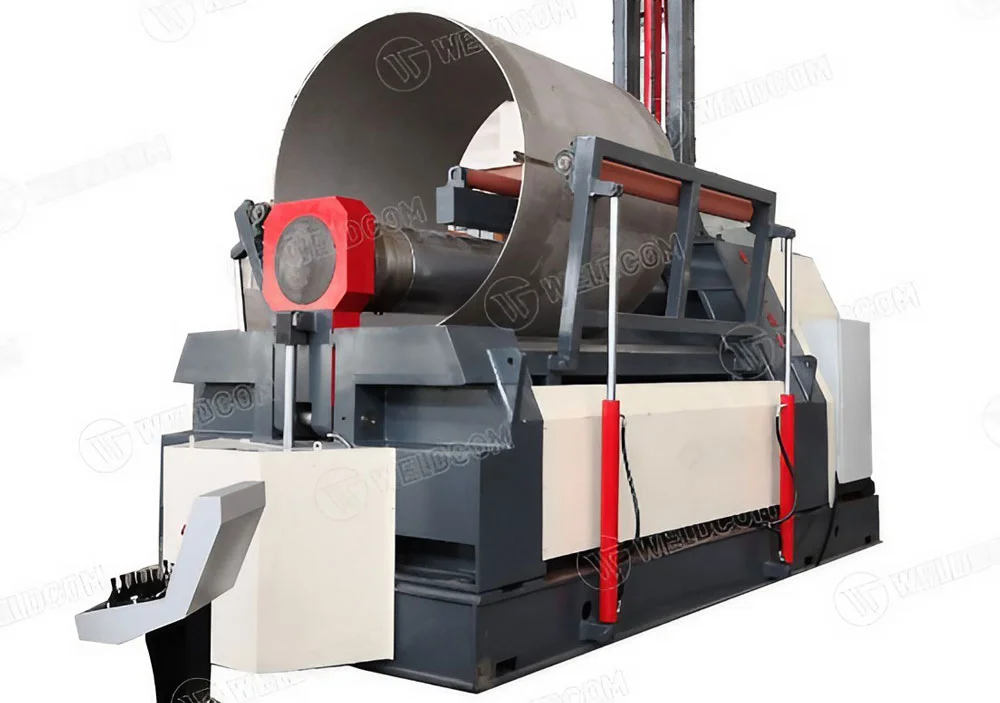 Experience in Choosing a Plate Rolling Machine: Automated Control System
5.5. After-Sales Service and Warranty
- Prioritize choosing a plate rolling machine supplier with on-site technical support, operational training, and available spare parts.
- Reputable brands like Yawei, Kruman, or Lanus distributed by Weldcom meet these criteria well.
A suitable plate rolling machine not only helps businesses save initial investment costs but also ensures long-term, stable, and safe production efficiency.
6. Weldcom – Leading CNC Plate Rolling Machine Supplier in Vietnam
With over 20 years of experience in the sheet metal processing technology field, Weldcom is a pioneer in distributing CNC plate rolling machines, press brakes, folding machines, punching machines and automatic sheet processing equipment for factories nationwide. Besides product quality commitment, Weldcom commits to service:
- Consulting comprehensive solutions: designing bending – rolling – welding – grinding lines suitable for each factory's characteristics.
- Installation, training, and on-site warranty, with engineers certified by the manufacturer.
- Supplying spare parts, periodic maintenance, and 24/7 technical support.
Below are some typical plate rolling machines that Weldcom is distributing in the sheet processing field:
6.1. CNC 4-Roll Plate Rolling Machine – W12
- Heavy-duty machine line, high automation, full CNC and hydraulic control.
- The CNC 4-roll plate rolling machine – W12 has high rolling precision, allowing processing of complex profiles, suitable for large industrial plants.
6.2. Hydraulic 3-Roll Plate Rolling Machine with Edge Bending – W11S
- Equipped with a hydraulic system and PLC control, allowing rolling and edge bending in a single operation.
- The hydraulic 3-roll plate rolling machine with edge bending – W11S is suitable for producing tanks, conduits, and round structures requiring high precision.
6.3. Mechanical 3-Roll Plate Rolling Machine – W11
- Traditional mechanical plate rolling machine, robust design, easy operation, low investment cost.
- Suitable for small to medium mechanical workshops, specializing in rolling simple cylindrical, arc, and cone shapes.
Contact Weldcom via hotline for consultation and selection of the most suitable plate rolling machine for your business's production needs. We look forward to welcoming you!