

Industrial Robot
No products found
Industrial robots are becoming a key automation solution in modern manufacturing, helping businesses increase productivity, optimize costs, and improve quality. From mechanical, automotive, and electronics industries to food and logistics, industrial robots are increasingly asserting their indispensable role in the journey of digital transformation and sustainable development.
1. What is an industrial robot?
Industrial robots are a type of automated machine capable of programming, reprogramming, and performing flexible movements on multiple axes. Simply put, they are "robotic arms" designed to replace or assist humans in production tasks, from repetitive tasks to stages requiring high precision.
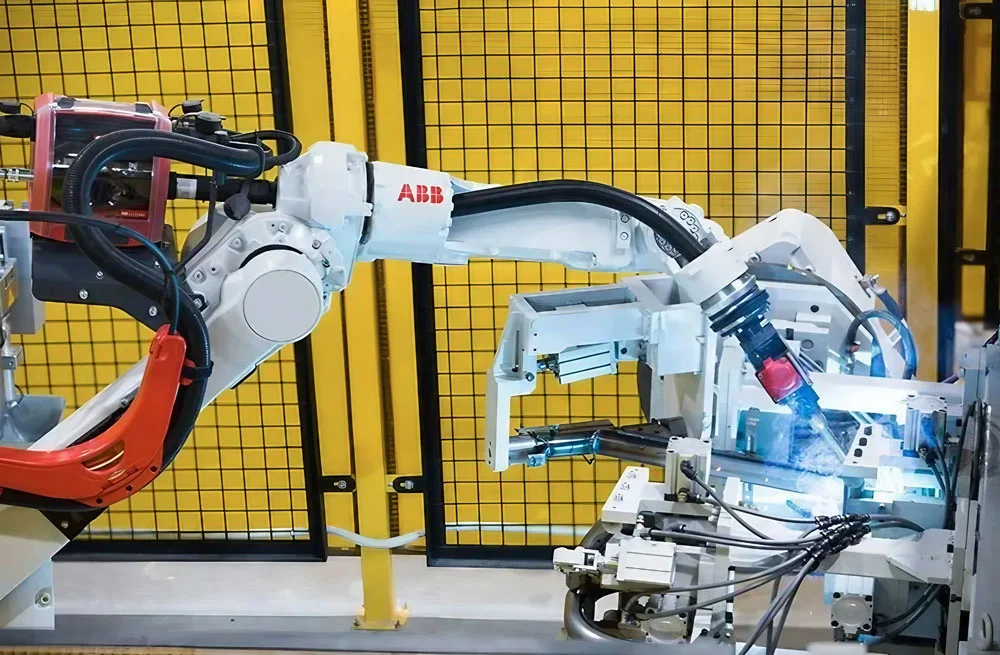 What is an industrial robot?
According to international organizations:
- AFNOR (France): An industrial robot is an automated structure that can be programmed and controlled to move and manipulate physical objects such as parts, tools, fixtures... according to a predetermined program.
- RIA (USA): A robot is a versatile manipulator that can repeat programs to move materials, parts, tools, or specialized devices to complete various tasks.
- IOCT (Russia): An industrial robot is an automated machine (fixed or mobile), consisting of a manipulator combined with a program-controlled system, capable of reprogramming to perform motion functions in the production process.
(***According to the textbook "Industrial Robots – Dr. Pham Dang Phuoc")
2. Characteristics of industrial robots
Industrial robots possess many outstanding features, making them the "backbone" of modern automation lines:
- Multi-joint structure, many degrees of freedom: Robots usually have 4–7 axes, allowing them to perform complex movements in three-dimensional space. As a result, robots can weld, spray, pick, or assemble in positions that are difficult for humans to access.
- Programmable and reprogrammable capability: A key difference is that industrial robots can be programmed to perform various tasks. Businesses can easily adjust or change when products, processes, or production lines change.
- High precision, stable repeatability: The repeatability error of industrial robots is only from ±0.02 – ±0.05 mm. This ensures product quality is always uniform, minimizing waste and risks in production.
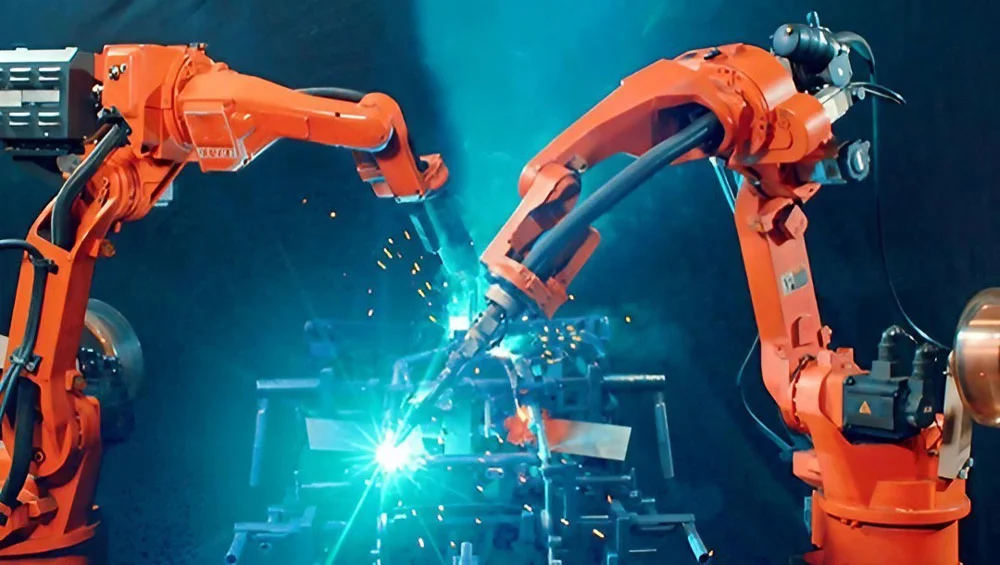 Characteristics of industrial robots
- Superior operating speed: Industrial robots can work at speeds many times faster than humans without fatigue. In particular, robots operate continuously 24/7, suitable for production lines that require high tempo.
- Integration of multiple actuators and sensors: Robots can be equipped with grippers, clamps, welding guns, spray nozzles, 3D cameras, or force sensors, providing flexibility in many applications: from welding, cutting, and painting to product quality inspection.
- Ability to work in harsh environments: Industrial robots are designed to operate stably in dusty, high-temperature, chemical-laden, or hazardous environments for humans.
- Integration into smart production systems: Not only do they operate independently, but industrial robots are also connected to central control systems, simulation software, and production management (such as RobotStudio, WMMS), becoming an important part of the smart factory (Smart Factory).
3. Types of industrial robots today
Currently, there are many types of industrial robots designed for different applications, each with its own structure and advantages. Below are the 7 most popular types of robots widely used in modern industry.
3.1. Cartesian Robot (Descartes Coordinate Robot)
Cartesian robots move along three linear axes X, Y, Z perpendicular to each other, forming a cuboid workspace. This type of robot is usually driven by belts, screws, or racks and pinions.
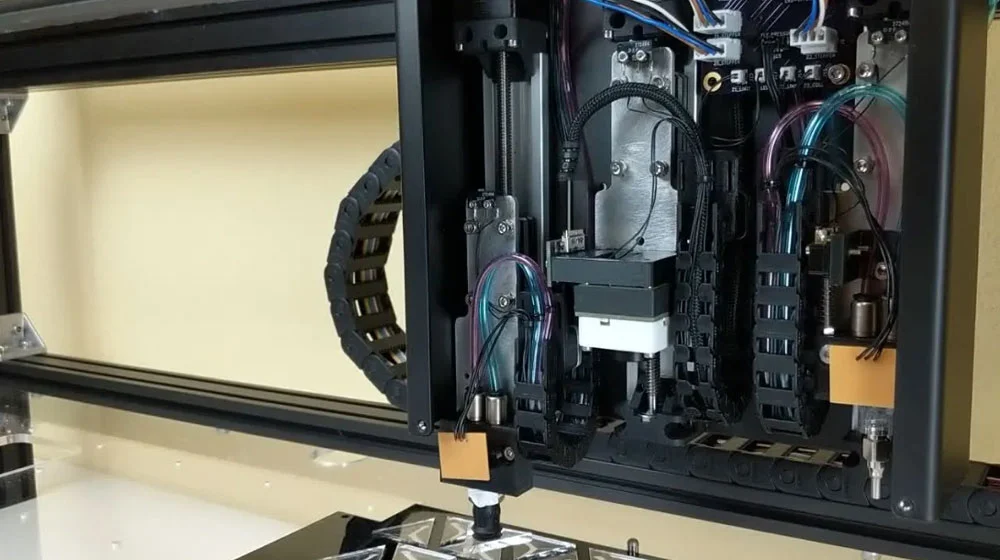 Cartesian Robot
Advantages of Cartesian robots:
- Simple design and operation.
- High precision, easy to program and maintain.
- Low investment cost, easily customizable for many applications.
Disadvantages of Cartesian robots:
- Occupies a lot of floor space.
- Slower movement speed compared to other types of robots.
- Less flexible, only suitable for fixed linear movements.
- Open structure, easily contaminated by dust.
Applications of Cartesian robots:
- Cartesian robots are commonly used in product picking and placing, packaging, inspection, 3D printing, CNC cutting and engraving, or technical drawing.
3.2. Articulated Robot
This type of robot has multiple rotary joints (rotating axes) that mimic the movement of a human arm. Robots usually have 4–6 axes, even up to 10 axes in complex systems.
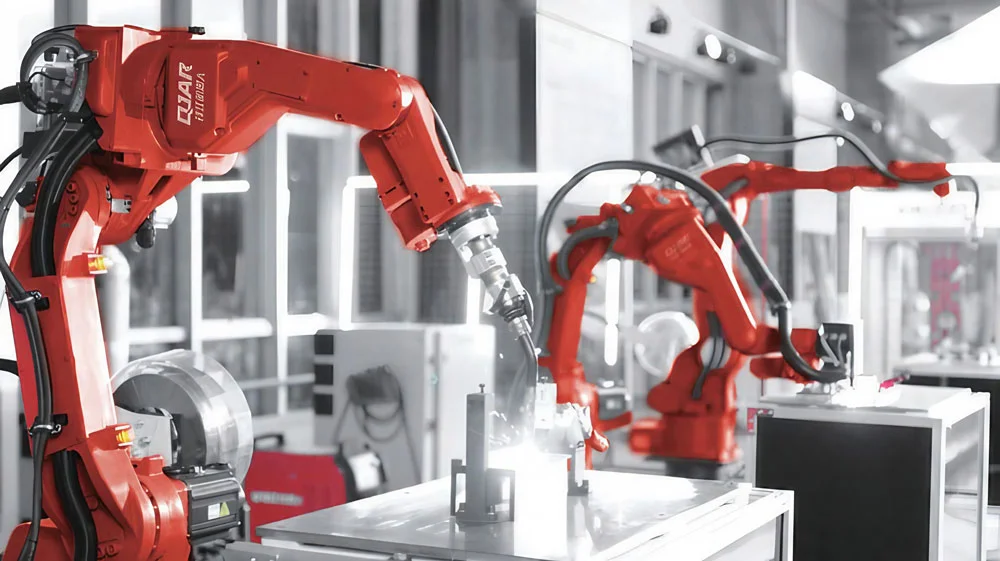 Articulated Robot
Advantages of Articulated Robots:
- High flexibility, can operate at various angles.
- Fast operating speed, suitable for continuous production lines.
Disadvantages of Articulated Robots:
- Complex structure, high investment and maintenance costs.
- Requires advanced technical skills for operation and programming.
Applications of Articulated Robots:
- Articulated robots are widely used in arc welding, painting, assembly, packaging, glue dispensing, grinding, and polishing, and many applications requiring high dexterity and flexibility.
3.3. Cylindrical Robot
Cylindrical robots have a rotating base and a linear arm that moves up and down. The robot's workspace is cylindrical in shape.
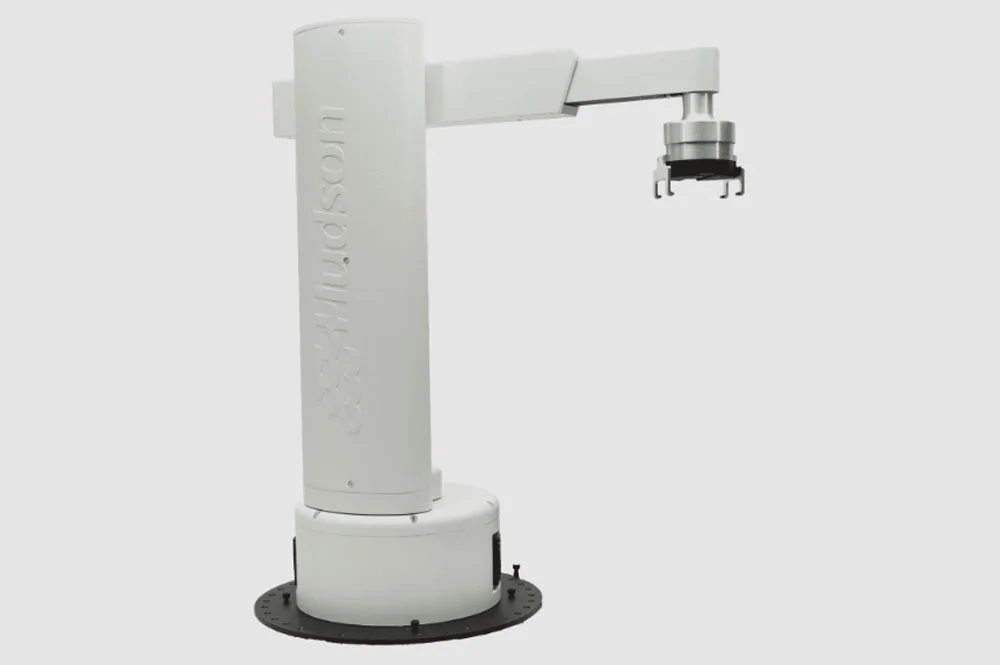 Cylindrical Robot
Advantages of cylindrical robots:
- High payload capacity, can handle heavy objects.
- Easy to move in vertical axis space.
Disadvantages of cylindrical robots:
- Occupies a lot of floor space.
- Limited movement – cannot flip or rotate complex objects.
Applications of cylindrical robots:
- Commonly used in automatic welding, material handling, assembly operations, painting, or applications requiring cylindrical movement.
3.4. Spherical / Polar Robot
Spherical robots have two rotary joints and one linear joint, creating a spherical workspace around the robot. This is one of the earliest electronically controlled robot lines.
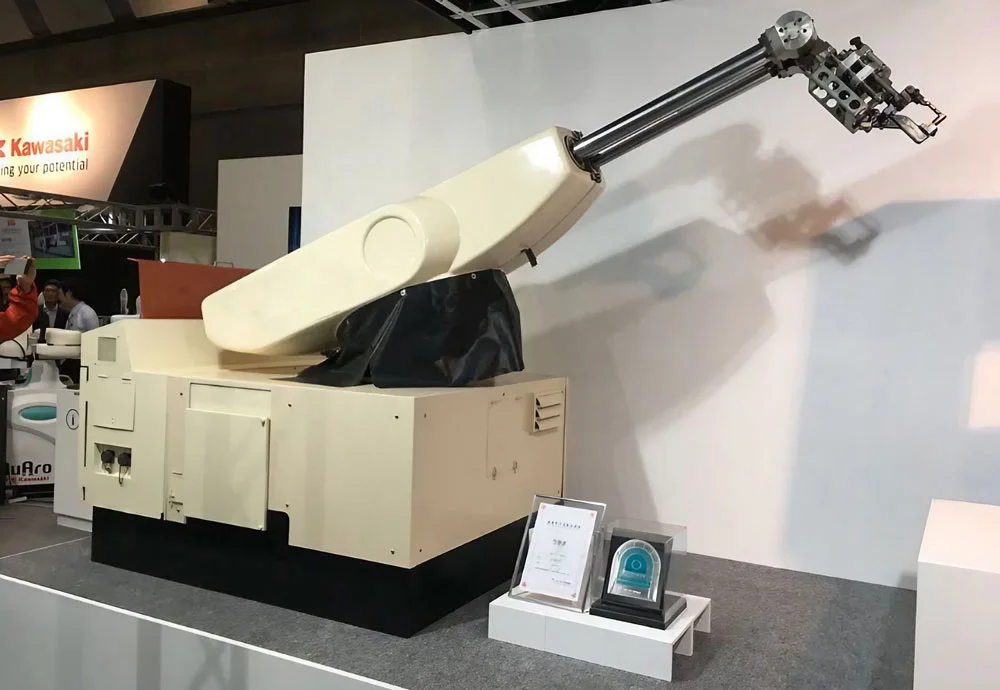 Spherical Robot
Advantages of spherical robots:
- High load capacity, stable operation.
Disadvantages of spherical robots:
- Bulky design, occupies a large space.
- Complex joint structure, high investment and maintenance costs.
Applications of spherical robots:
- Today, spherical robots are mainly replaced by articulated robots. However, some factories still use them in injection molding, welding, material handling, and symmetrical round shaping operations.
3.5. Delta Robot (Spider Robot)
Delta robots have an inverted triangular structure, with three arms mounted on a fixed frame above the workspace. The arms are lightweight, allowing the robot to achieve extremely fast speed and acceleration.
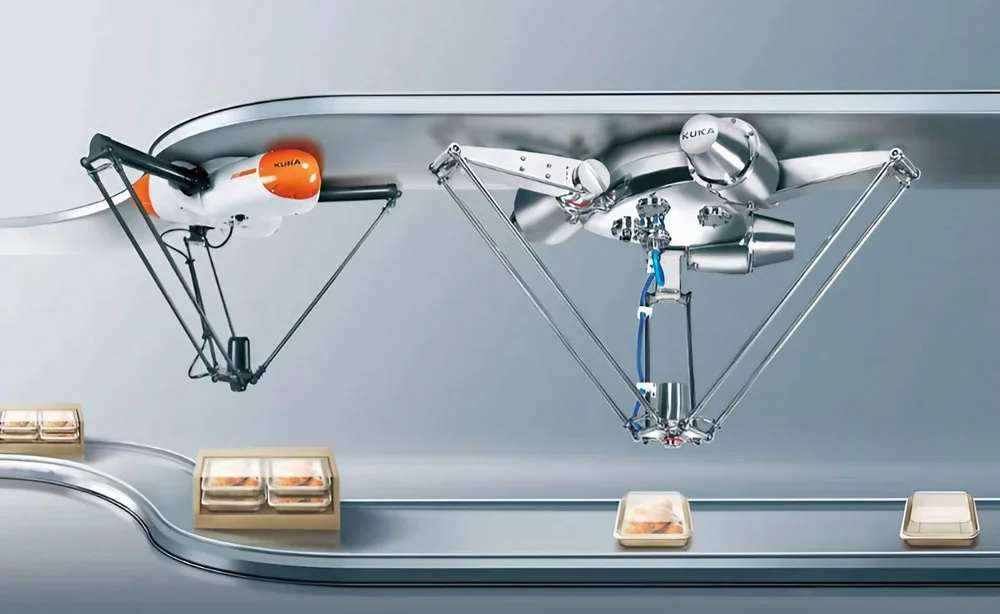 Delta Robot
Advantages of Delta robots:
- High speed, low inertia, superior acceleration capability.
- Very accurate in repetitive operations at high frequencies.
Disadvantages of Delta robots:
- Not suitable for heavy loads, only used for small, lightweight objects.
Applications of Delta robots:
- Suitable for food, pharmaceutical, medical industries, small product packaging, high-speed Pick & Place.
3.6. SCARA Robot
The name SCARA stands for Selective Compliance Assembly Robot Arm. SCARA robots can move quickly along the X–Y axis, with fixed movement along the Z axis.
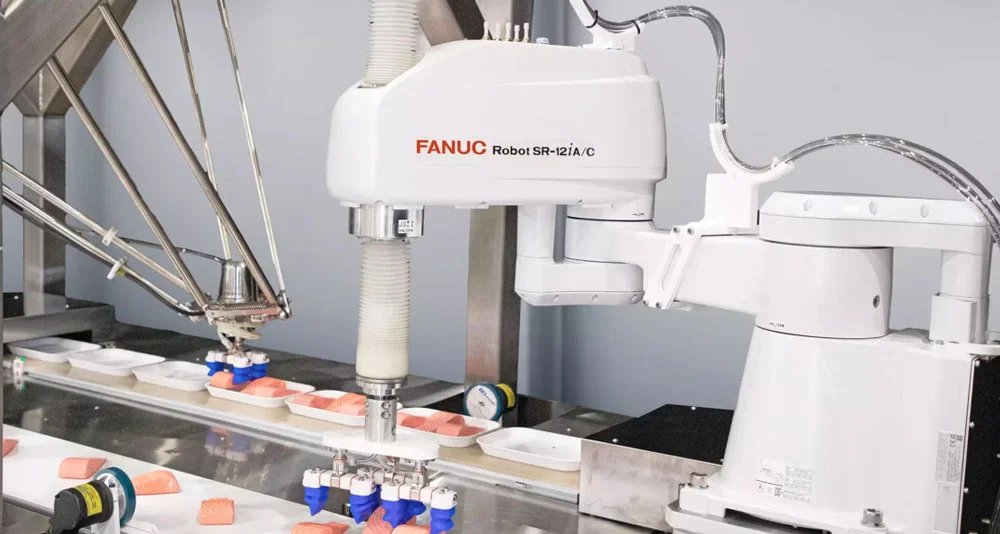 SCARA Robot
Advantages of SCARA robots:
- High speed, good repeatability and accuracy.
- Easy to install, space-saving.
- Suitable for lines with small and medium operations.
Disadvantages of SCARA robots:
- Limited payload, usually only carrying objects from 5–10 kg.
- Cannot rotate or flip complex objects.
Applications of SCARA robots:
- Commonly used in component picking, spot welding, electronic assembly, light material handling, laser engraving, product inspection.
3.7. Collaborative Robot (Cobot)
Collaborative robots – or Cobots – are designed to work alongside humans in the same space without the need for protective barriers.
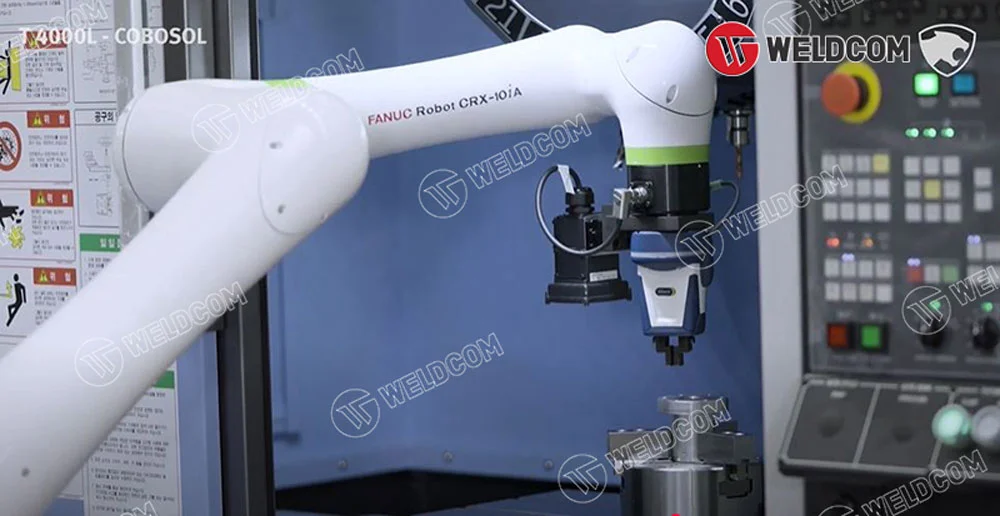 Collaborative Robot
Advantages of collaborative robots:
- Safety: Equipped with force, torque sensors, and soft shells to stop on collision.
- Easy to program: Intuitive interface, can be taught by hand (drag & teach).
- Flexible: Easily movable, reconfigurable for various tasks.
Disadvantages of collaborative robots:
- Speed is limited to ensure safety.
- High cost due to integration of many sensors and protective technologies.
- Must comply with strict safety standards and certifications.
Applications of collaborative robots:
- Cobots are increasingly popular in picking, screwing, welding, polishing, inspection, packaging, and expanding into services, healthcare, education, sales, demonstrations – where safe coordination between humans and machines is needed.
It can be seen that each type of industrial robot has its own characteristics, suitable for specific production requirements. Choosing the right type of robot – from Cartesian, SCARA to Cobot – will help businesses optimize costs, increase efficiency, and enhance competitiveness in the era of automation.
4. Main functions of industrial robots
Since their inception, industrial robots have been designed to replace humans in heavy, repetitive, or dangerous tasks. Over decades of development, robot functions have become increasingly diverse, from simple operations to complex processes in production.
4.1. Material handling and transportation function
- This is the basic function and also the first application of industrial robots.
- Handling robots replace workers in moving heavy, hot metal billets in forges, foundries, where working conditions are harsh and dangerous.
- Today, the handling, lifting, and placing function is also popular in logistics, packaging, automatic feeding lines, helping to increase speed and accuracy.
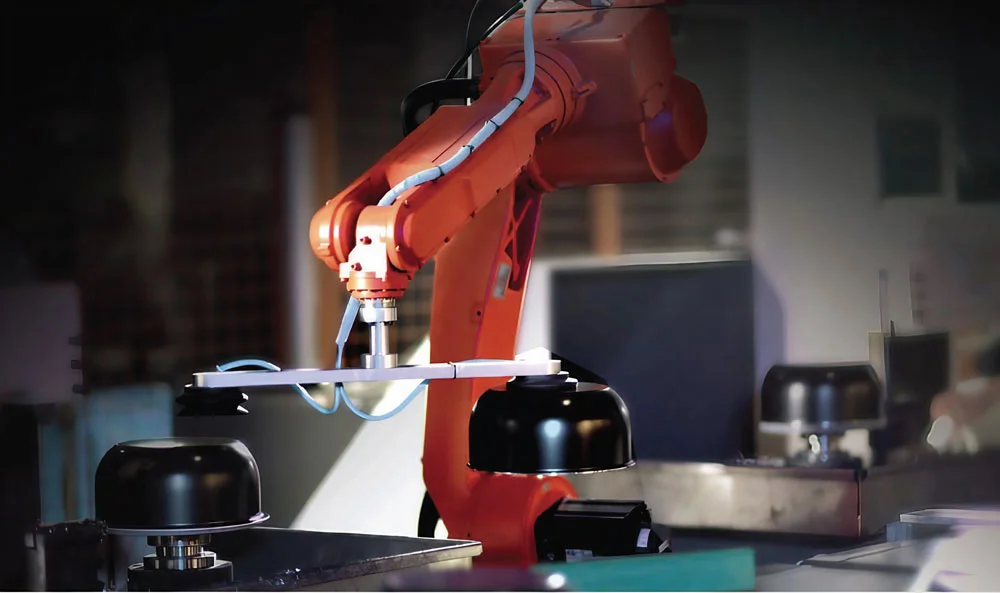 Industrial robots specializing in material handling and transportation
4.2. Industrial welding function
- Spot welding: Most common in the automotive industry. Welding robots help fix and weld car frames quickly, accurately, and stably, significantly reducing errors compared to manual operations.
- Seam welding (welding along a path): Industrial robots move along a pre-programmed welding path, providing more stable quality than hand welding. Recent studies integrate laser sensors to detect welding paths, handling well curved or large tolerance parts.
- As a result, welding robots have become one of the most important pillars of heavy industrial automation and manufacturing.
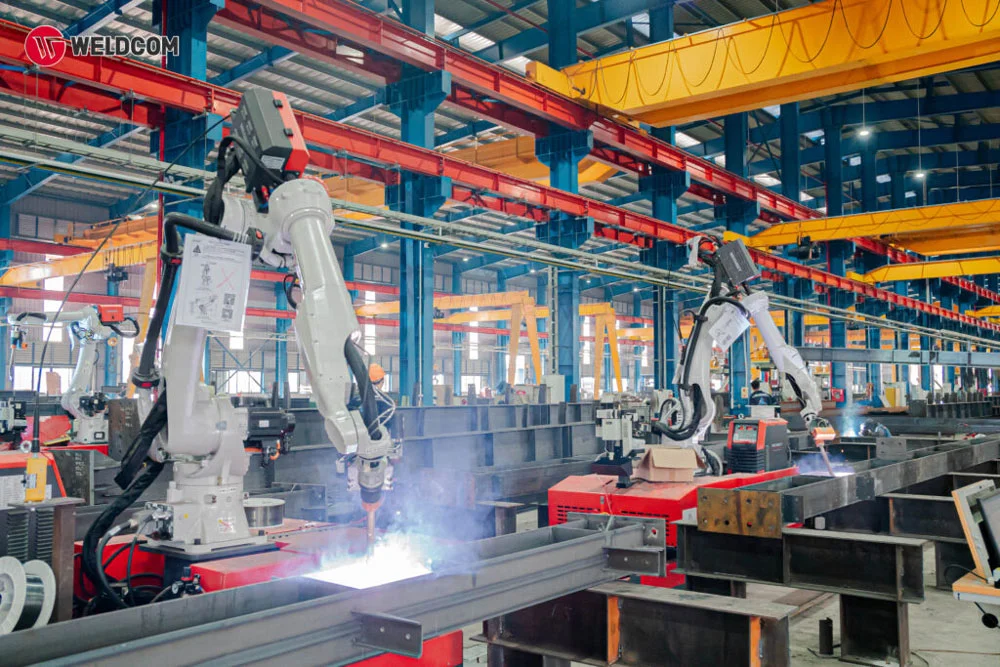 Industrial robots specializing in welding
4.4. Painting and coating function
- Painting used to be a hazardous job requiring high skill. A skilled painter takes many years of training, while an industrial robot only needs a few hours to "learn" the operation from humans and then repeat it thousands of times with consistent quality.
- Painting robots have a "elephant trunk" design with high flexibility, easily operating on many complex surfaces.
- Advantages: superior productivity, smooth and beautiful surface, reducing health risks for workers.
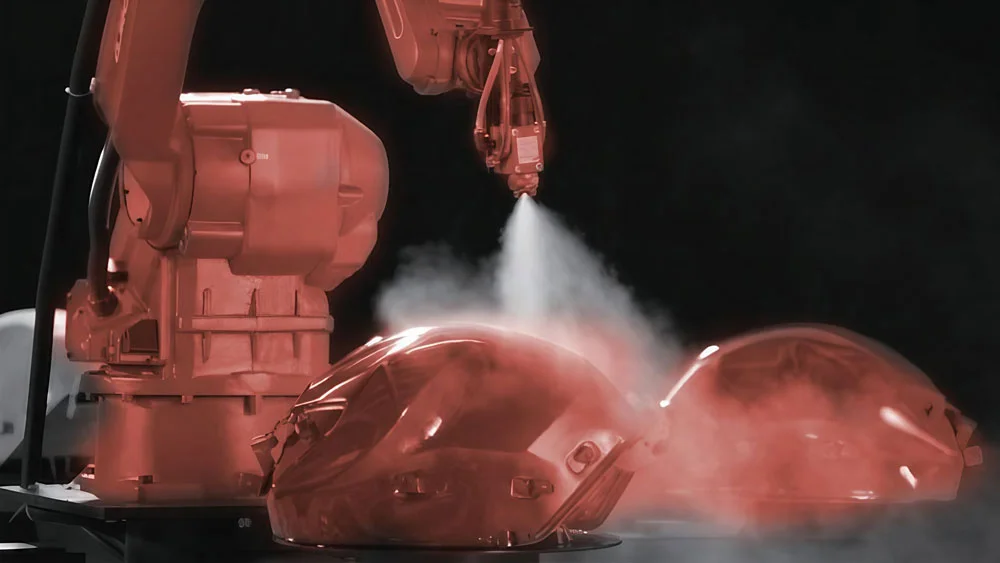 Industrial robots specializing in painting
4.5. Assembly function
- Industrial robots can perform assembly operations such as: placing parts in position, tightening screws, applying adhesive, attaching glass...
- This is the foundation towards a fully automated factory, where design – machining – assembly – inspection are all connected on the same system.
- In electronics, precision mechanics, and automotive manufacturing, assembly robots are increasingly important to ensure high speed and accuracy.
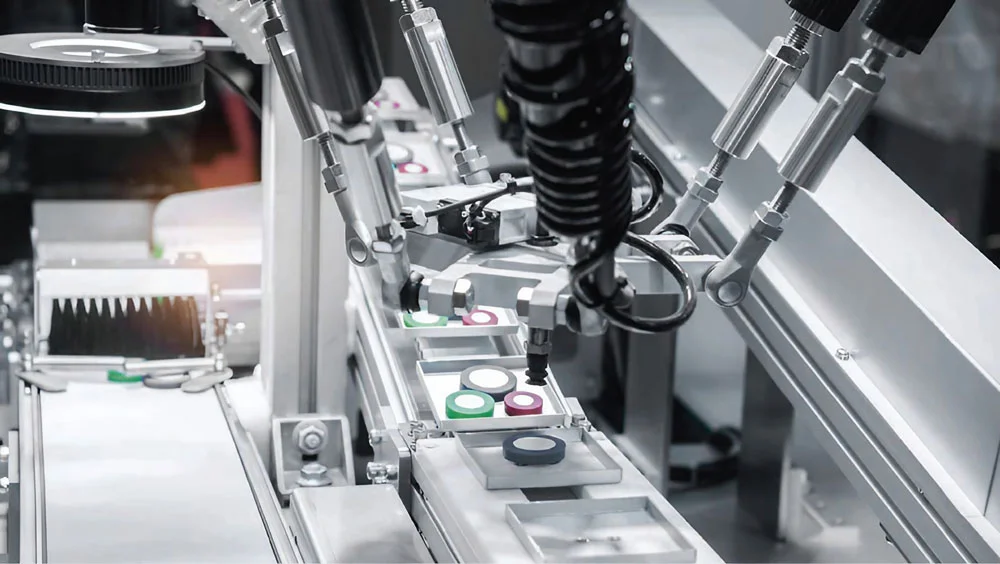 Industrial robots specializing in assembly
4.6. Grinding and polishing function
- Industrial robots use an automatic clamping and polishing head system, helping the finished surface achieve high, uniform quality.
- Advantages: Polishing robots operate quickly, easy to operate, do not require much experience; integrate force control to ensure stable grinding force.
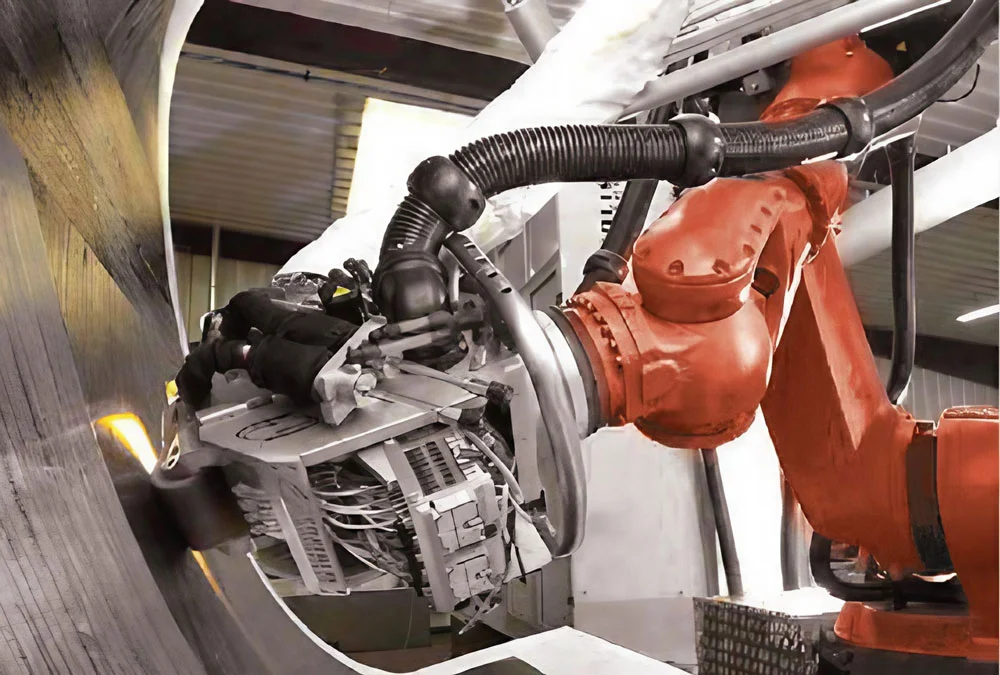 Industrial robots specializing in polishing
4.7. Sorting and classifying function
- Robots automatically sort, package, and arrange materials or products with high speed and absolute accuracy.
- Advantages: Palletizing robots operate simply, do not require direct supervision, saving labor costs.
4.8. Inspection and quality control function
Industrial robots are equipped with image sensors, 2D/3D cameras, AI, or lasers to inspect product surfaces, measure dimensions, detect welding defects, assembly deviations, or surface defects. Advantages:
- Continuous inspection, high speed, more accurate than manual inspection.
- Eliminate defective products right on the line, reducing scrap rates.
- Easily store and analyze quality data to improve production.
It can be seen that industrial robots today not only stop at basic tasks such as handling, welding, spraying but also expand to assembly, grinding, sorting, and quality control. This is the foundation for businesses to move towards the smart production model – Smart Factory.
5. Applications of industrial robots in production
Industrial robots are increasingly present in manufacturing fields, from heavy to light industries. Thanks to their flexible operation, high precision, and ability to work in harsh environments, robots become an important solution for businesses to increase productivity and reduce costs.
5.1. Automotive and mechanical engineering industry
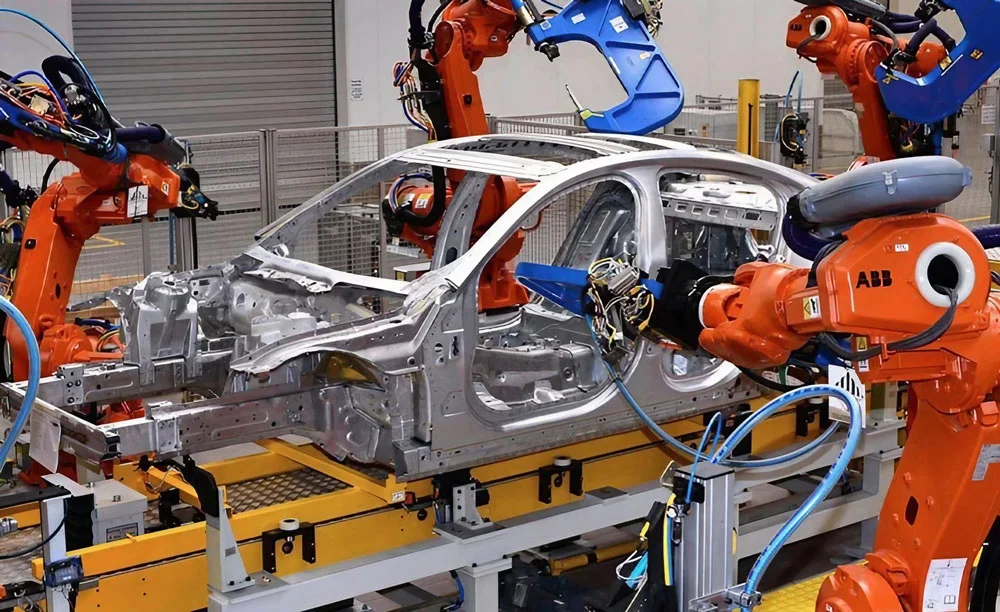 Applications of industrial robots in the automotive industry
- Spot and seam welding: Particularly popular in car body production (Body-in-White). Robots ensure stable, uniform, and much faster welds than manual labor.
- Painting and glue spraying: Industrial robots help the car surface achieve high, uniform quality; at the same time, eliminate health risks for workers.
- Detail assembly: Robots perform complex operations such as attaching glass, tightening screws, applying glue, ensuring accuracy and speed.
5.2. Electrical and electronics industry
- Component assembly: Robots pick and place chips, circuit boards with micrometer precision.
- Inspection and quality control: Industrial robots integrate 3D cameras, AI to detect defective products right on the line.
- Packing and sorting: high speed, saving labor in large-scale production environments.
5.3. Food and pharmaceutical industry
- Packing and arranging: Industrial robots handle sorting, packaging, and arranging products with high speed and accuracy.
- Material handling: working in cold, humid, or chemically-laden environments that humans cannot endure for long.
- Advantages: ensuring hygiene, food safety, and meeting the strict standards of the pharmaceutical industry.
5.4. Steel structure and metal processing industry
 Applications of industrial robots in the steel structure industry
- Welding H-beams, box beams, wind turbine bases: Industrial welding robots help shorten manufacturing time and improve weld quality.
- Cutting, drilling, grinding, and polishing: Industrial robots replace workers in heavy tasks, helping the surface of details achieve high and uniform quality.
- Transporting billets and assembling large components: optimizing labor in heavy mechanical workshops.
5.5. Logistics and warehousing industry
- Loading and unloading goods, palletizing: Industrial robots replace manual labor in lifting and stacking goods.
- Automatic sorting and classifying: ensuring fast, accurate order processing, significantly reducing labor costs.
- Strong applications in distribution centers, cold storage, and automated transportation systems.
6. Advantages and disadvantages of industrial robots
Here are the advantages and disadvantages of industrial robots that businesses need to understand before considering investment.
6.1. Advantages of industrial robots
Investing in and applying industrial robots brings many practical values to manufacturing businesses, not only in terms of productivity but also in cost, quality, and competitiveness:
- Increase production productivity: Robots can work continuously 24/7 without fatigue. Fast, stable operation cycles, shortening production time.
- Improve product quality: Industrial robots ensure high precision, repeatability error only ±0.02 – 0.05 mm. Welds, paint layers, and machined surfaces are uniform, minimizing waste.
- Save costs and optimize human resources: Reduce direct labor costs for heavy or repetitive tasks. Reduce material waste thanks to high precision. Optimize long-term costs thanks to stable operation and high equipment lifespan.
- Labor safety: Industrial robots replace humans in hazardous environments: high temperatures, dust, toxic chemicals. Minimize labor accidents in lifting, welding, painting, grinding operations.
- Flexibility in production: Robots can be reprogrammed, easily adapting to new products and processes. Integrate many technologies: sensors, 3D cameras, AI, helping to expand functions when needed.
- Increase competitiveness and sustainable development: Businesses applying industrial robots will enhance production efficiency, shorten delivery times, maintain quality. This is the foundation to enter the smart factory era (Smart Factory), ready to compete in the global market.
6.2. Disadvantages of industrial robots
Besides outstanding benefits, the application of industrial robots also has some disadvantages that businesses need to consider:
- High initial investment cost: The cost of robots, control systems, software, and auxiliary equipment (sensors, fixtures, safety systems) is often large. Initial investment requires businesses to have significant capital and long-term exploitation plans.
- Complex technical and operational requirements: Industrial robots require a team of engineers and technicians with knowledge of programming, operation, and maintenance. Businesses must train or recruit specialized personnel, leading to additional costs.
- Lack of flexibility in some tasks: Robots are effective in repetitive, stable operations. For small, customized products or constantly changing, robots are not always optimal.
- Maintenance and spare parts costs: Industrial robots need periodic maintenance to maintain accuracy. Replacing components and consumables can be costly and dependent on suppliers.
- Impact on unskilled labor: Replacing manual labor with robots can reduce the demand for unskilled labor in factories. Businesses need to have strategies to retrain personnel to transition to higher technical positions.
7. Trends in the development of industrial robots in Vietnam and the world
In the era of Industry 4.0, industrial robots are not just "robotic arms" replacing labor but are evolving into intelligent systems, connecting data, and automatically optimizing production processes.
7.1. Trends in the development of industrial robots worldwide
 Trends in the development of industrial robots worldwide
- Integration of AI and Machine Vision: Robots are increasingly capable of image recognition, learning, and making independent decisions.
- Collaborative Robots (Cobots): Safe, compact robotic arms that can work alongside humans without protective barriers are being widely applied in small and medium workshops.
- IoT and Big Data connectivity: Industrial robots become part of the smart factory system, connecting with other devices to share data and optimize processes.
- Growth in logistics and e-commerce: The demand for robots for picking, sorting, and palletizing is booming due to the strong development of e-commerce.
7.2. Trends in the development of industrial robots in Vietnam
 Trends in the development of industrial robots in Vietnam
- High demand for automation: Automotive, mechanical, steel, electronics, pharmaceuticals, food, and logistics industries are heavily investing in industrial robots to increase productivity and compete internationally.
- Opportunities from digital transformation and industrialization policies: The government encourages businesses to innovate technology, aiming towards smart production models.
- Domestic enterprises collaborating with international partners: Companies like Weldcom partner with ABB, QJAR, etc., bringing modern robot solutions to Vietnam, while developing intelligent control software like Smarobics, SmarLineiQ to meet domestic needs.
In the trend of globalization, industrial robots not only bring outstanding efficiency but also open up competitive opportunities for Vietnamese businesses. Investing in industrial robots today is a strategic step to optimize productivity, improve product quality, and lead the market. Contact Weldcom – Hotline 1900 9410 for consultation and supply of genuine industrial robots, along with comprehensive after-sales support services.