
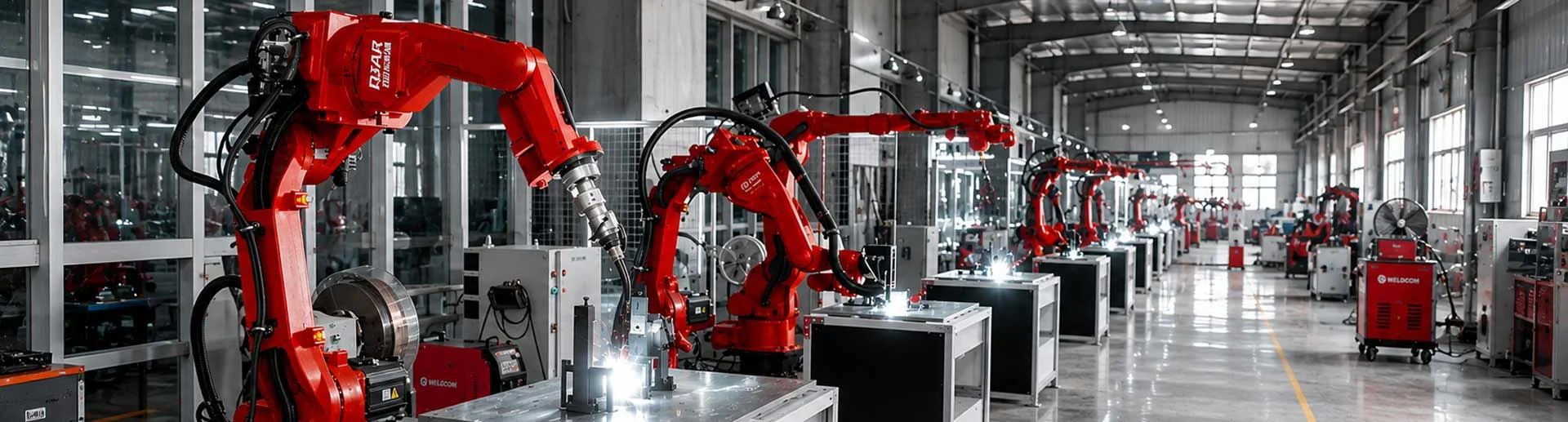
Spray Coating Robot
No products found
In modern production, automatic painting robots are becoming the optimal automation solution to help businesses increase productivity, save costs, and synchronize quality. Instead of relying on craftsmen, painting robots can be precisely programmed, operate continuously, and effectively control the amount of paint. This is an inevitable trend in the surface finishing industry, from automobiles, motorcycles to wood, electronics, and steel structures. Weldcom is the official distributor of ABB and QJAR welding robots in Vietnam. With dedicated after-sales support services, Weldcom is committed to providing modern, efficient, and sustainable welding robot solutions for businesses.
1. What is a painting robot?
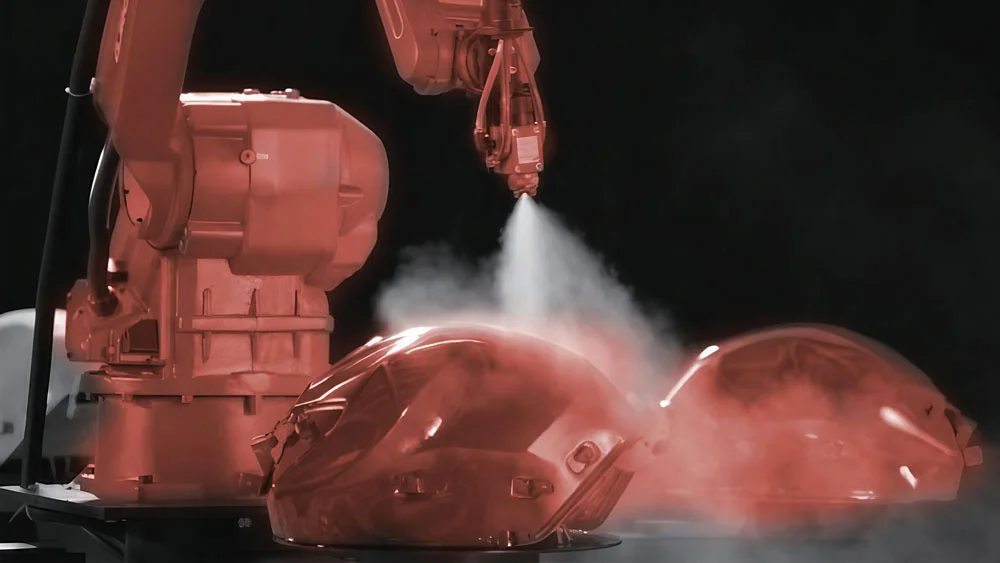
Automatic painting robots are a type of industrial robot programmed to automate the entire painting process, replacing manual painters. Instead of humans directly holding the spray gun, the robot will control a multi-axis robotic arm equipped with a spray gun, moving according to a preset program to apply a uniform, precise, and stable coat of paint.
2. Structure of an automatic painting robot
An automatic painting robot system usually includes:
2.1. Painting robot arm
- The painting robot arm is the main component, responsible for moving and positioning the spray gun on the surface to be painted.
- Installed on motor axes, which can be 3-axis or 6-axis depending on the model.
- The painting robot arm is programmed to perform precise, uniform movements, ensuring the paint covers the entire surface, even in hard-to-reach areas.
2.2. Spray gun
- A specialized device mounted on the painting robot arm.
- Responsible for spraying a specific amount of paint onto the object's surface.
- Can adjust parameters such as spray pressure, paint flow, spray pattern (round, flat, fan) to suit each product and painting technology (electrostatic, water, powder).
2.3. Central control unit
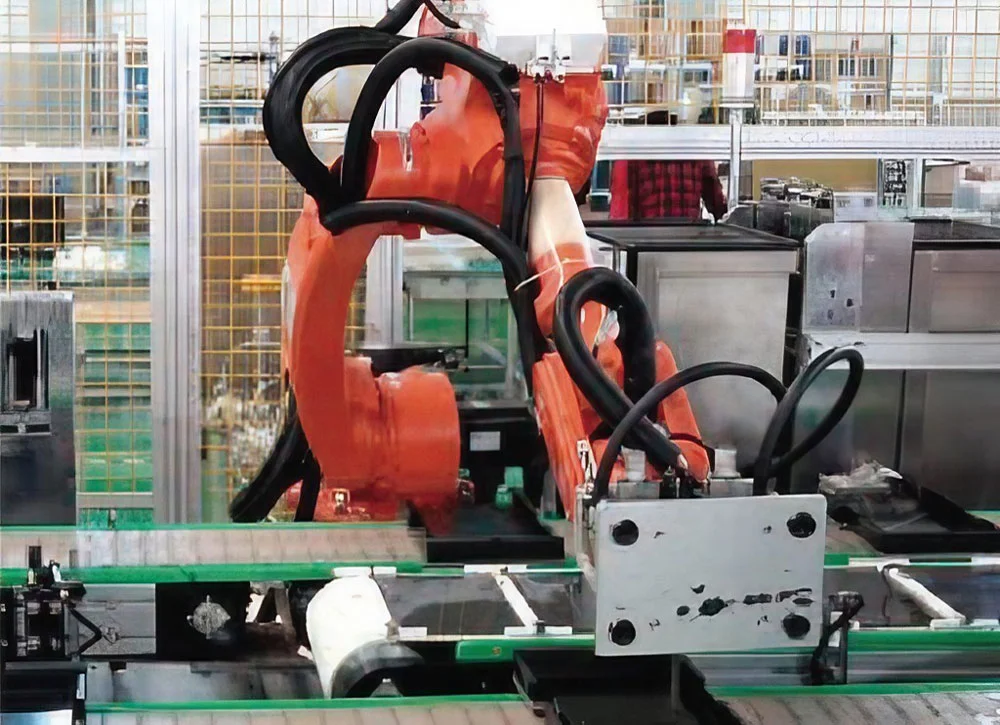
- Considered the "heart" of the automatic painting robot system.
- Responsible for programming and coordinating the operation of the robot arm and spray gun.
- Operators can set parameters: position, movement speed, rotation angle, spray time.
- Ensures synchronization between the robot arm and spray gun, making the painting process precise and efficient.
2.4. Auxiliary systems to enhance performance
- Paint supply system: Ensures a stable, continuous paint supply throughout the spraying process.
- Quality control system: Monitors thickness, adhesion, and quality of the paint layer.
- Waste treatment system: Recovers and processes excess paint, filters air, reduces environmental pollution.
- Automatic painting booth: Creates an enclosed space, ensuring worker safety and maintaining a clean production environment.
Unlike manual painting, painting robots can work continuously, ensuring a uniform paint surface, reducing paint waste, and improving product quality. This is the optimal solution for medium and large-scale manufacturing enterprises, especially in the automotive, furniture, electronics, and metalworking industries.
3. Advantages of automatic painting robots
Compared to manual painting methods, industrial painting robots offer a range of superior benefits.
See more: Automatic industrial welding robots
Improved surface quality
- Robots move precisely according to the programmed trajectory → the paint layer is even, smooth, minimizing thick-thin spots.
- Ensures consistent quality between products, meeting high aesthetic requirements.
Paint and material savings
- Electrostatic spraying technology and precise programming help the automatic painting robot system reduce paint overspray.
- Optimizes paint usage, reducing waste by 20–30% compared to manual methods.
Work safety

- With the involvement of painting robots, painters no longer have to directly contact solvents, paint dust, and toxic gases.
- Minimizes the risk of occupational diseases and work accidents.
High productivity, continuous operation
- The automatic painting robot system can operate 24/7, not interrupted by shifts or human health.
- Stable spraying speed, meeting large order quantities in a short time.
Flexible and easy to integrate
- Painting robots can be reprogrammed to suit various product types, from vehicle frames, wooden furniture, to electronic components.
- Easily integrated into existing automated production lines.
Thanks to these advantages, painting robot machines not only enhance production efficiency but also provide long-term competitive advantages for businesses in the Industry 4.0 era.
4. Applications of industrial painting robots
Today, automatic painting robot systems have been widely applied in many production fields, from heavy industry to consumer goods. Thanks to their flexibility and precise programming capabilities, the equipment can meet various requirements for aesthetics, coverage, and productivity.
4.1. Automotive and motorcycle industry
- Painting vehicle frames, exteriors, interior details, and parts.
- Ensures even, beautiful, durable paint layers according to international standards.
- This is the most common application field, helping painting robots replace numerous manual stages in the production line.
4.2. Aerospace industry
- Painting robots are used to paint aircraft bodies, wings, and structural components.
- Requires extremely high precision and surface coverage, helping to protect materials from harsh environmental impacts.
4.3. Construction & steel structure industry
- Automatic painting systems are applied in painting bridges, buildings, steel frames, storage tanks.
- Painting robots can replace humans in hard-to-reach positions, minimizing safety risks.
4.4. Furniture & industrial wood industry
- Painting tables, chairs, railings, gates, cabinets, supermarket shelves.
- Painting robots help achieve even, aesthetically pleasing paint layers, suitable for mass production.
4.5. Home appliance manufacturing industry
- Applied to products such as refrigerators, washing machines, ovens, air conditioners.
- Ensures color consistency, minimizes color bleeding or peeling errors.
4.6. Maritime industry
- Automatic painting robot systems are used to paint ship hulls, decks, boats, and offshore structures.
- The protective paint layer prevents corrosion in salty water environments and harsh climates.
4.7. Electronics & consumer goods industry
- Painting products such as TVs, computers, phone cases, plastic or metal components.
- Requires thin, delicate, high-aesthetic coatings.
It can be seen that automatic painting robot systems are not limited to a single industry but have become a key tool in many industrial fields – from furniture, appliances to automotive, aerospace, and electronics.
5. How much does an automatic painting robot cost?
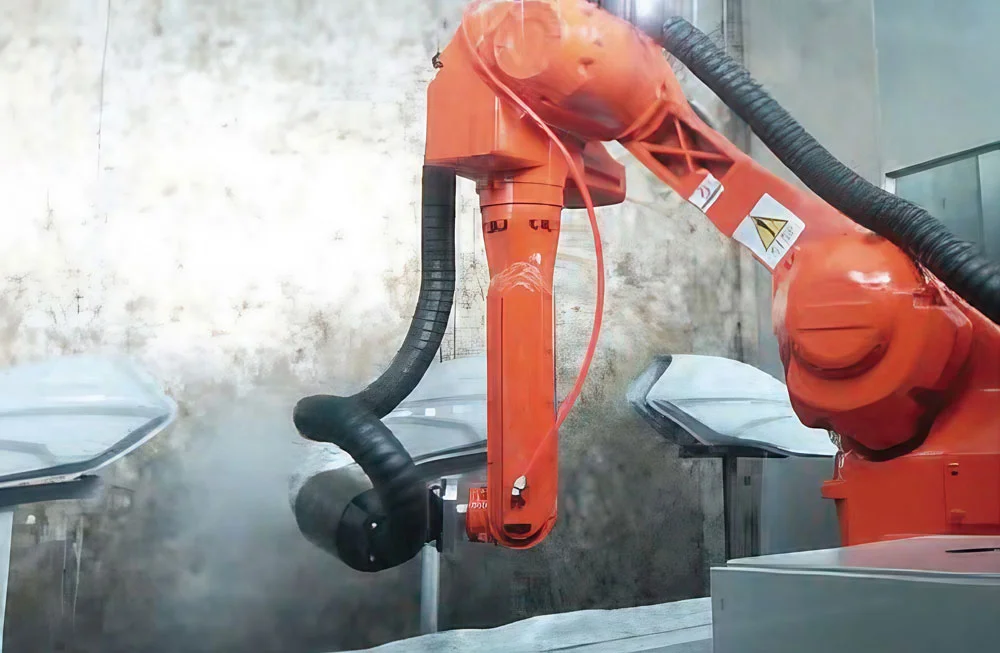
The investment cost for industrial painting robots depends on many factors, with no fixed price. Businesses need to clearly define their production needs to choose the appropriate configuration. Some factors affecting the price of painting robots
- Number of robot axes: 4 or 6 → the more axes, the higher the flexibility, and the higher the price.
- Spray technology: electrostatic paint, water/solvent paint, or powder paint.
- Brand & origin: ABB, QJAR, Yaskawa, Fanuc,... are usually higher than common brands.
- Integrated systems: automatic painting booth, air filtration, dust extraction system, control software.
- After-sales service: operational training, regular maintenance, replacement parts.
With the ability to improve surface quality, save paint, and ensure work safety, painting robots are asserting their position as the core technology of the Industry 4.0 era. Early investment by businesses will gain outstanding competitive advantages, optimizing both costs and efficiency.
Contact Weldcom now for consultation and pricing on the most suitable painting robot system.