
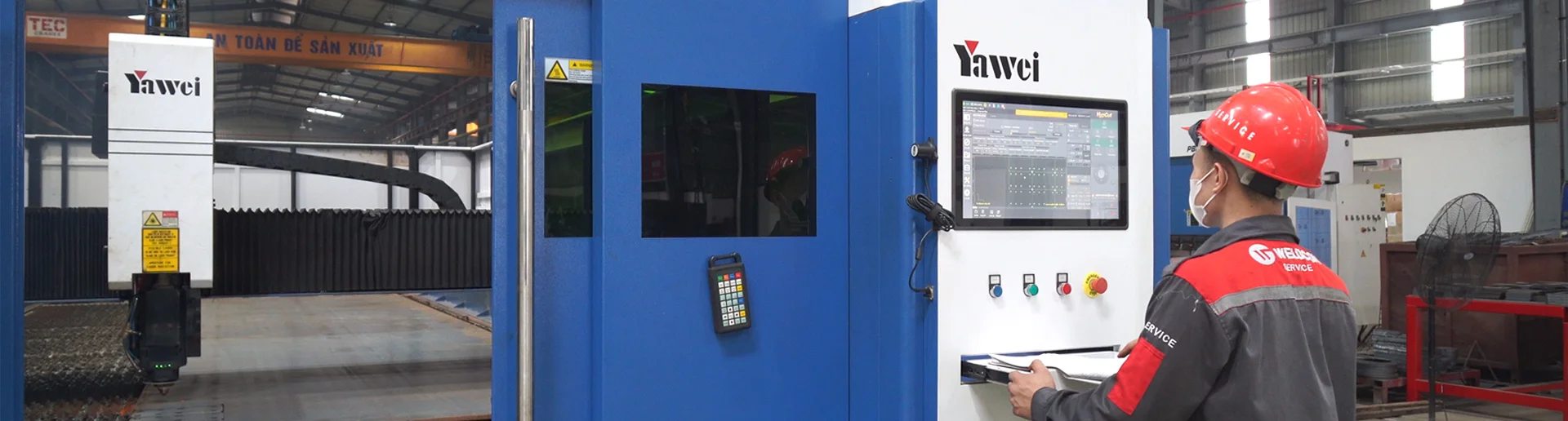
CNC Cutting Machines
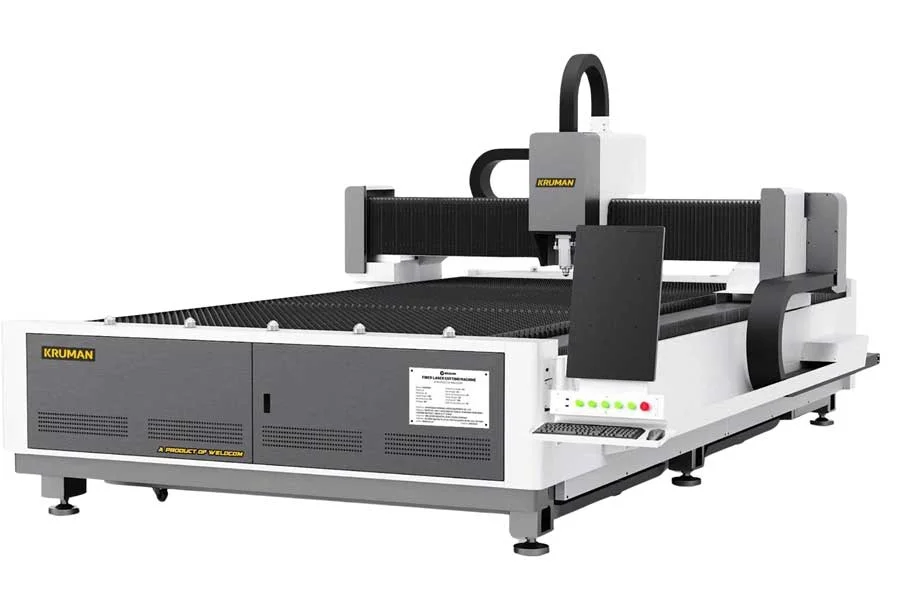
The KRUMAN KSL fiber laser cutting machine is designed for high-speed, stable precision, and cost-effective thin sheet processing needs. An optimal investment cost solution, helping businesses access ...
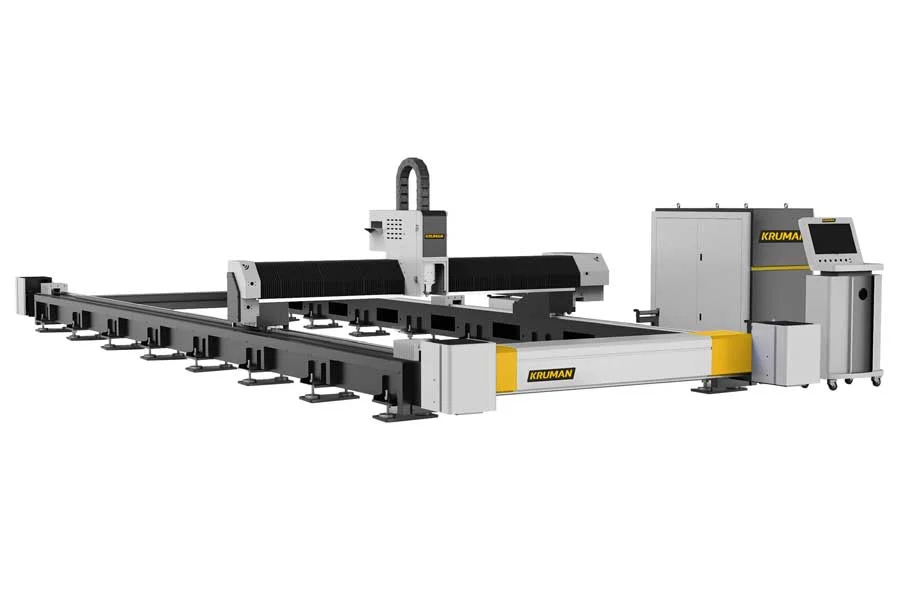
The KRUMAN KSM fiber laser cutting machine is a sheet metal processing device aimed at applications requiring the cutting of thick plates, templates, and critical components in steel structures. Open ...
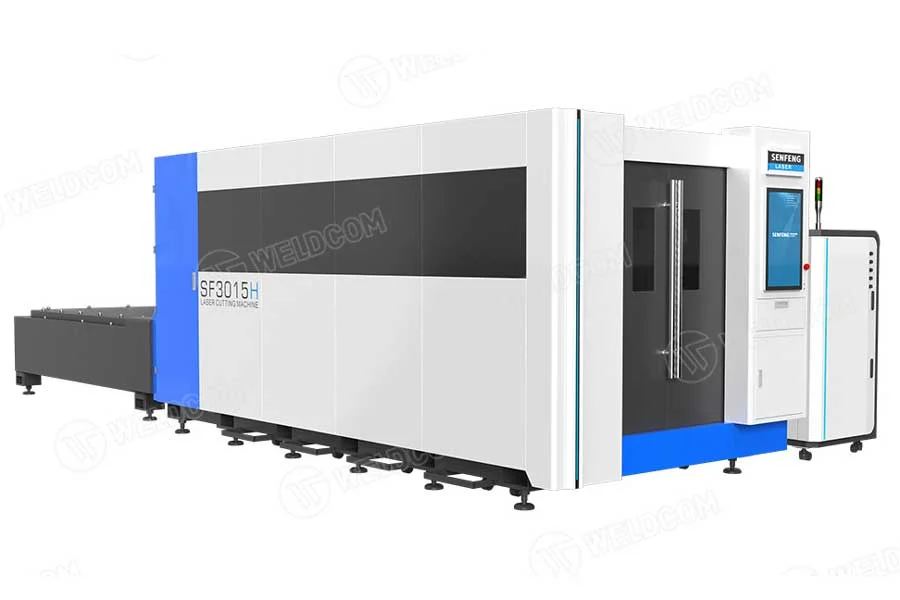
The SF3015H dual-table fiber laser cutter with a protective frame is a good choice for customers in the standard segment. The machine has the ability to cut steel, stainless steel, and other types of ...
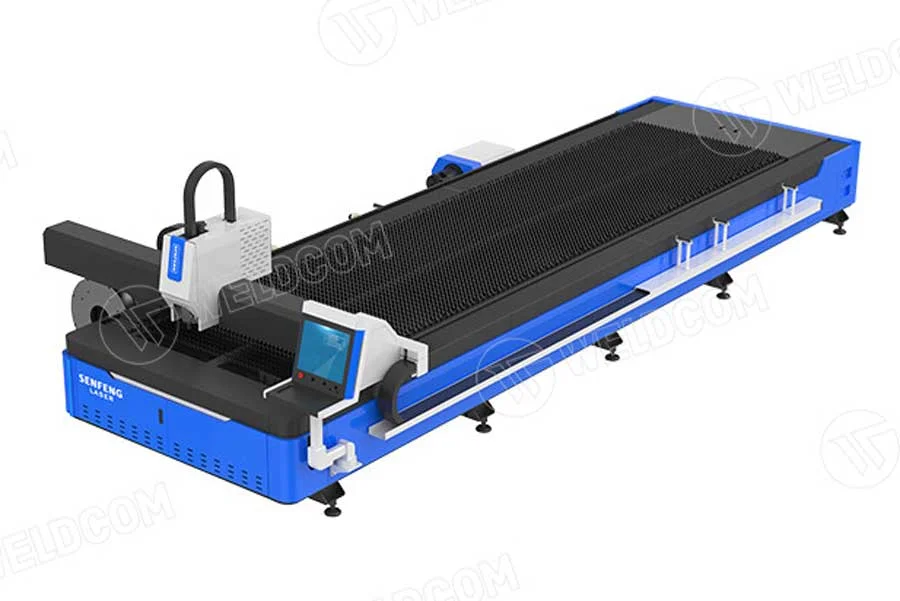
The SF6020M fiber laser cutting machine is the best choice for customers in the metal processing industry. The machine is used to cut mild steel up to 16mm. The frame has a honeycomb carbon structure, ...
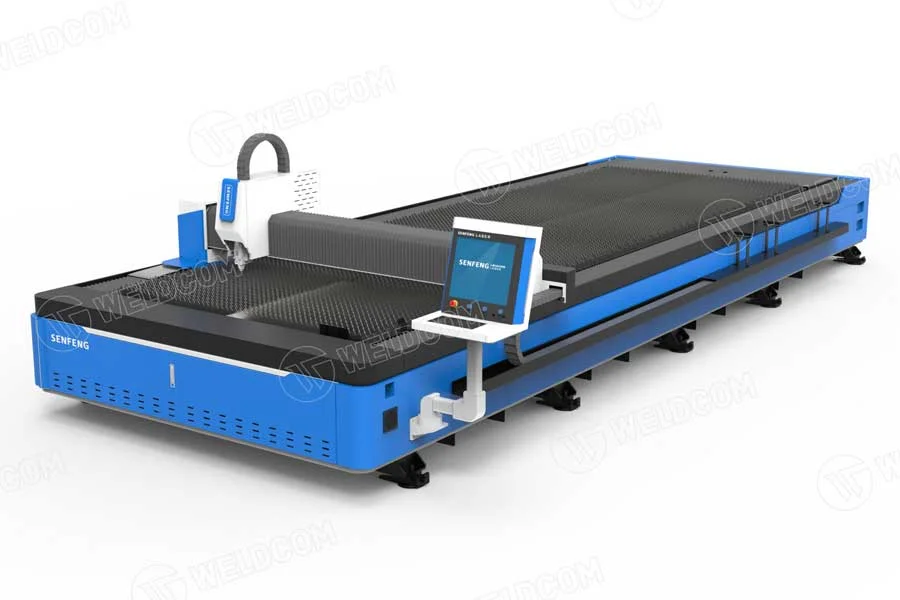
The SF6020G fiber laser cutting machine is the optimal choice for customers in the standard segment as it offers the ability to cut steel, stainless steel, aluminum alloys, and other types of steel; ...
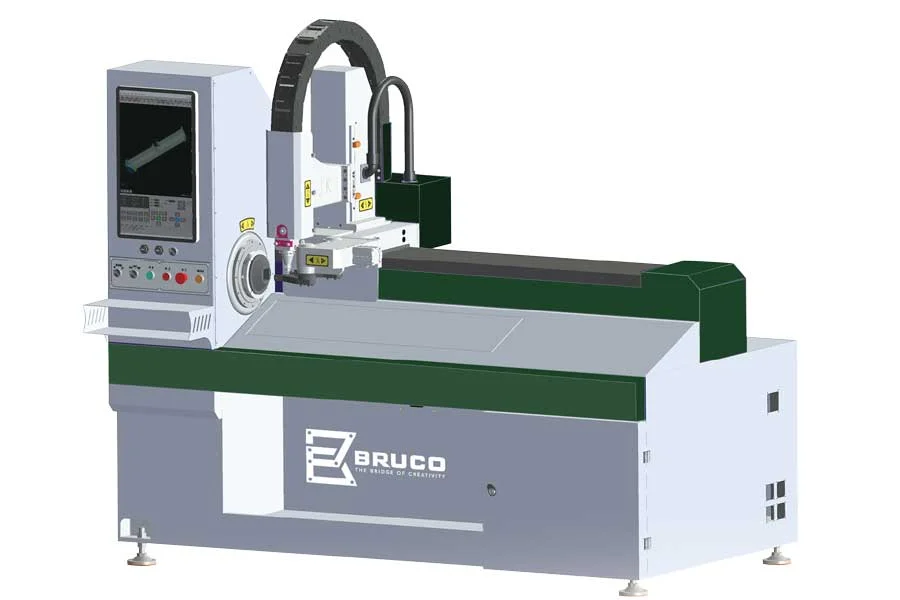
Suitable for cutting medium and small pipes. Efficient cutting with high precision Optimized investment cost Compact machine size, saving factory space 2-year warranty
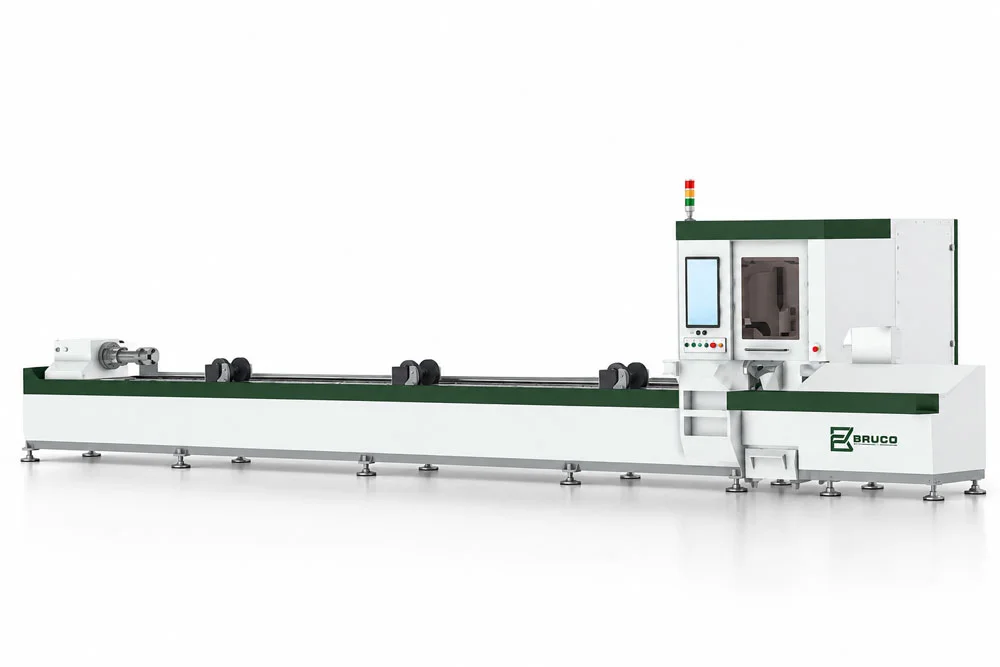
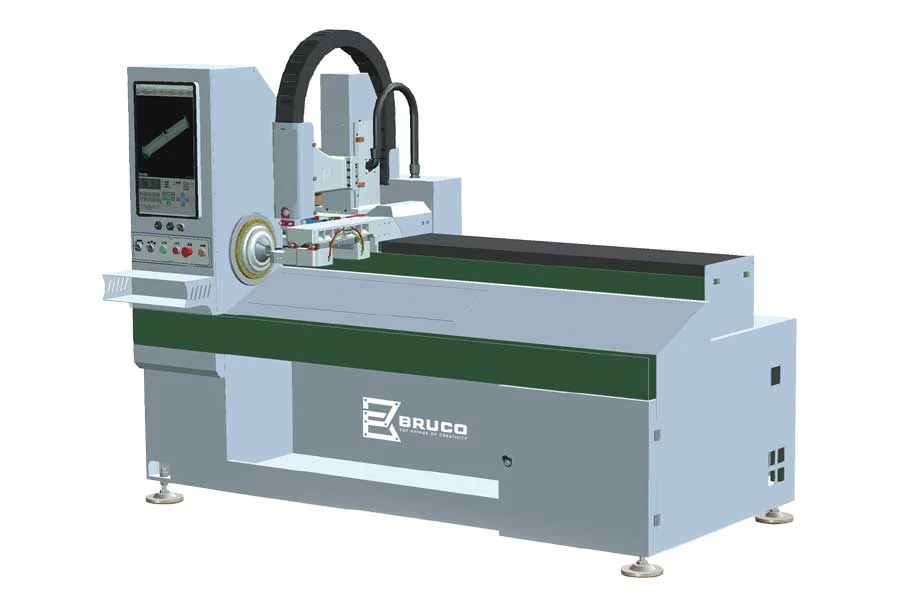
Suitable for cutting medium and small pipes. Pipe centering clamp function, performs full cutting, reduces the amount of material pulled Efficient cutting, high precision 2-year warranty
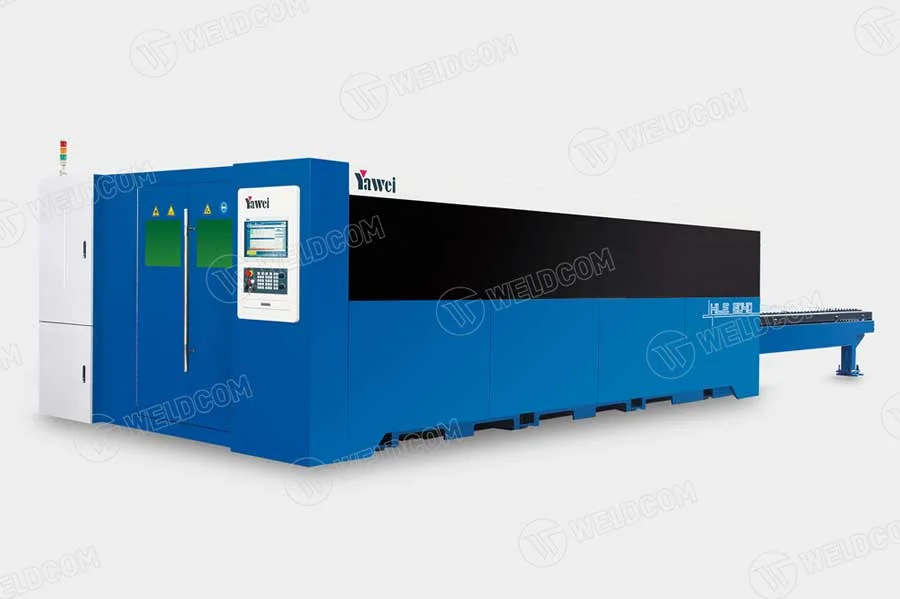
Portal structure with two parallel moving rails, two worktables that switch to enhance productivity, high speed with an acceleration of 2.1G. Protective chamber for the main cutting area, reducing ...
CNC cutting machine is a metal processing solution that helps businesses improve accuracy, increase productivity, and automate the production process. Currently, popular types of CNC metal cutting machines include Plasma cutters, Oxy Gas cutters, CNC cutters, Laser cutters, disc cutters, and hydraulic cutters from many reputable brands worldwide, officially distributed by Weldcom in Vietnam.
1. What is a metal CNC cutting machine?
- CNC stands for Computer Numerical Control, which is computer-controlled automatic technology. Thanks to this control system, CNC cutting machines can operate according to pre-established cutting paths, helping to reduce errors, increase repeatability, and limit dependence on manual operations.
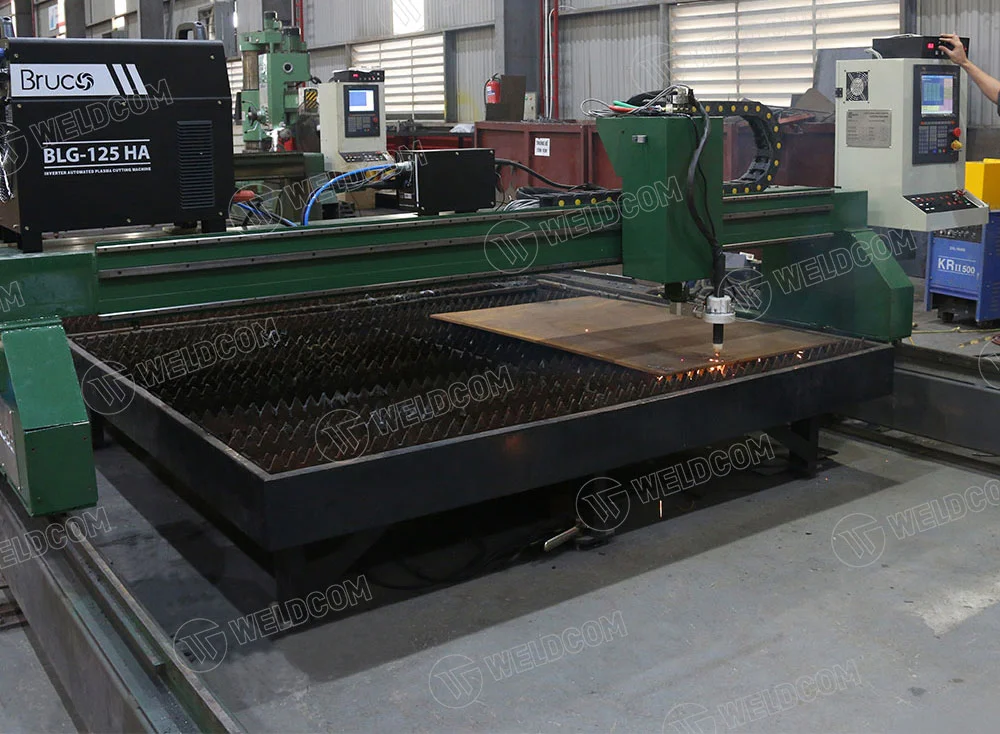
- CNC cutting machine is a device that uses CNC technology to perform cuts according to drawings or pre-programmed programs. Depending on processing needs, the machine can combine with various cutting technologies such as plasma, oxy-gas, or laser to process materials with high precision and stability.
- Currently, CNC cutting machines are widely applied in the metalworking and manufacturing industries in Vietnam, mainly used to cut metal materials such as stainless steel, sheet iron, steel, aluminum, and many other materials. Thanks to good automation capabilities, the machine helps businesses improve productivity, reduce errors, and optimize production efficiency.
See more: What is CNC cutting?
2. What does the structure of a CNC cutting machine include?
Metal CNC cutting machines usually consist of main components such as the control unit, machine table, drive system, axis motors, cutting head, and cooling system. Depending on the machine model and cutting technology, the equipment may be integrated with additional hydraulic systems, pneumatic systems, or other operational support assemblies.
2.1. Control unit
This is the control center for the entire operation of the CNC cutting machine. This unit receives data from drawings or pre-programmed programs, then controls the machine to move according to the required cutting path.
2.2. Machine table
The machine table is where the material is placed and fixed during processing. The size and structure of the machine table directly affect the ability to cut materials of different sizes and the stability during operation.
2.3. Axis motors
Each moving axis of the CNC cutting machine is controlled by a separate motor, usually a servo motor or step motor. This system helps the cutting head move accurately along the X, Y axes, and in some cases, the Z axis.
2.4. Cutting tool or cutting head
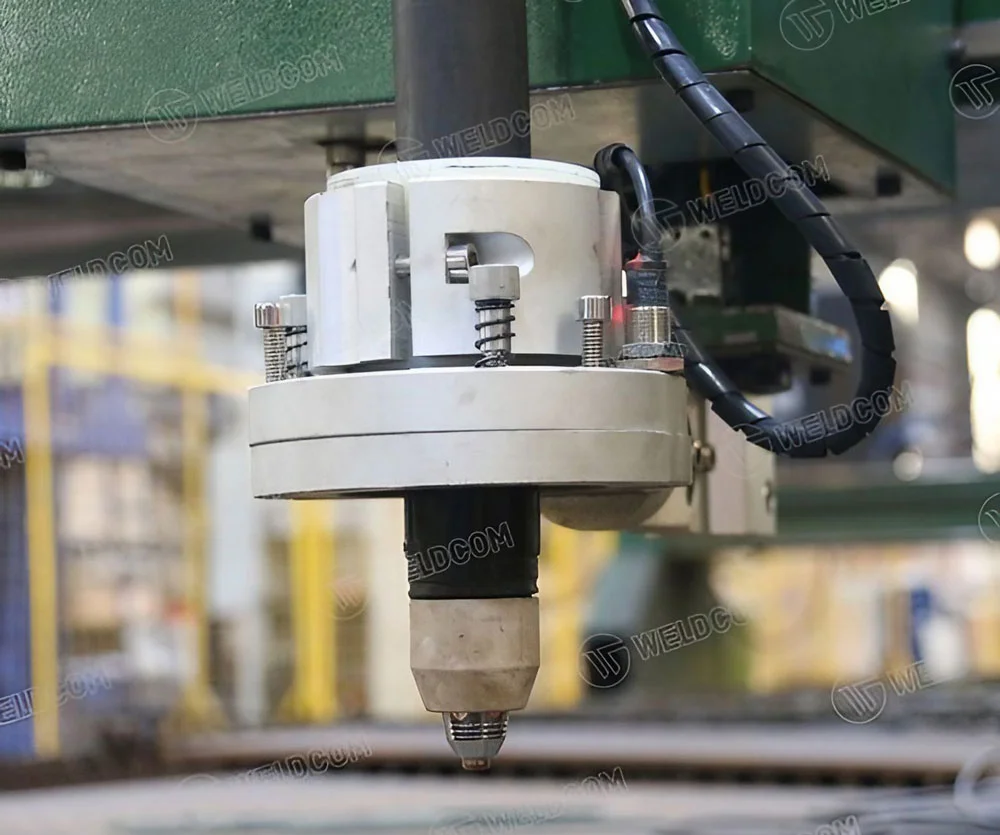
Depending on the processing technology, CNC cutting machines can use plasma cutting heads, oxy-gas cutting heads, laser cutting heads, or mechanical cutting tools. This is the part that directly impacts the material to create cuts according to the design.
2.5. Cooling system
The cooling system is responsible for reducing heat during operation, helping to protect components and maintain the machine's stability. In some CNC cutting machines, this system is particularly important to extend the lifespan of the cutting head and cutting source.
2.6. Hydraulic system
The hydraulic system is not a mandatory component on every CNC cutting machine but often appears in certain machine models or generations. This part supports operational mechanisms related to lifting, clamping, or driving depending on the design of each machine.
3. Popular types of metal CNC cutting machines today
CNC cutting machines are currently classified mainly by cutting technology and processing material. Some popular models on the market include CNC plasma cutting machines, CNC laser cutting machines, CNC oxy/gas cutting machines, CNC hydraulic cutting machines, and CNC water jet cutting machines, each suitable for different production needs.
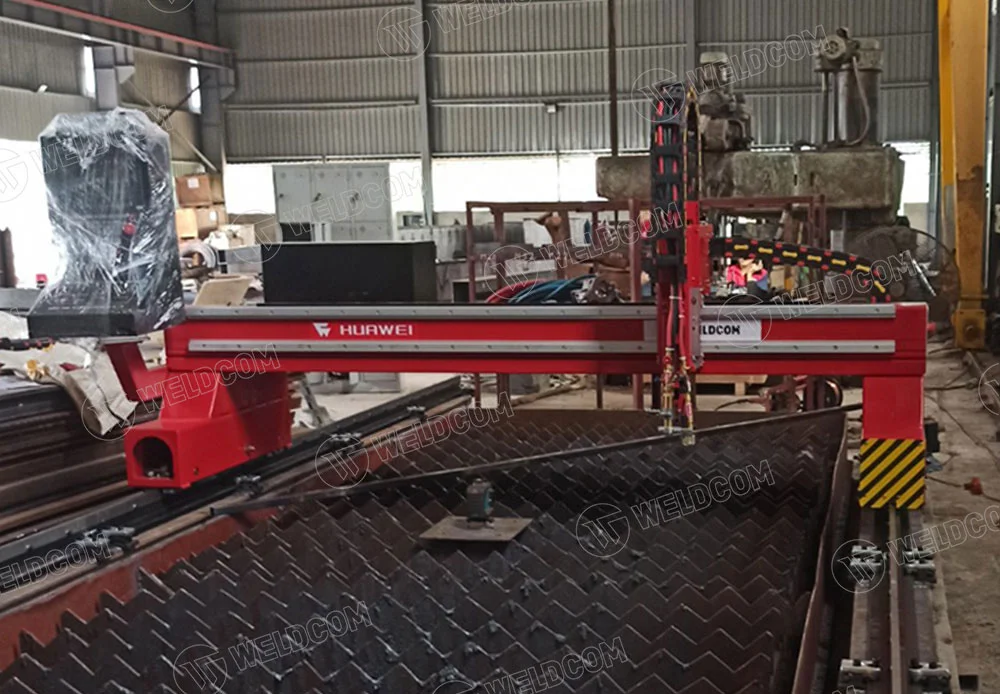
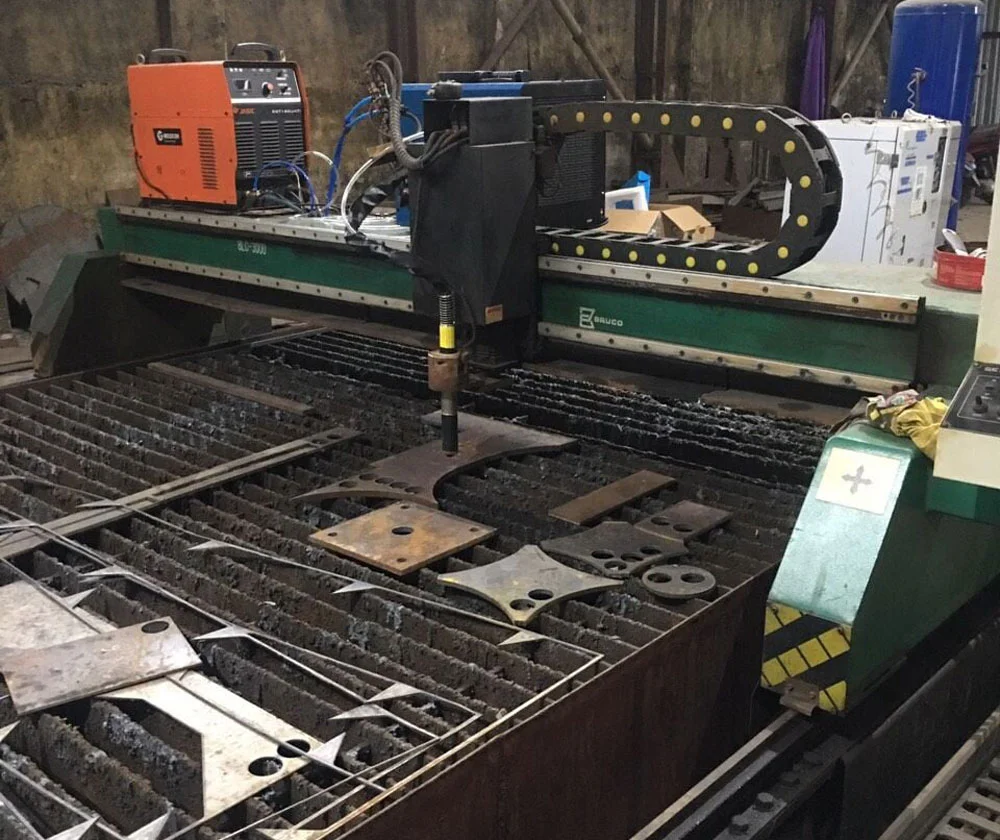
3.1. CNC plasma metal cutting machine
- CNC plasma cutting machine uses a plasma arc to cut conductive metal materials such as steel, stainless steel, aluminum, and sheet iron.
- This machine model is quite popular due to its good cutting speed, reasonable investment cost, and suitability for many metal processing workshops.
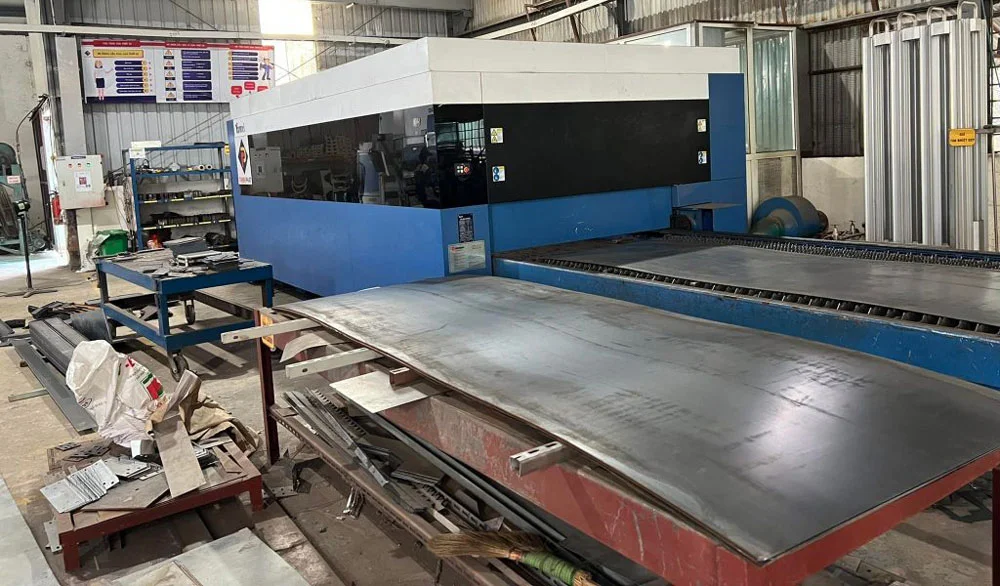
3.2. CNC laser metal cutting machine
- CNC Laser Cutting Machine uses a focused laser beam to create cuts with high precision, beautiful edges, and minimal burrs.
- This machine model is suitable for businesses that need to process sheet metal with high surface quality and aesthetic requirements.
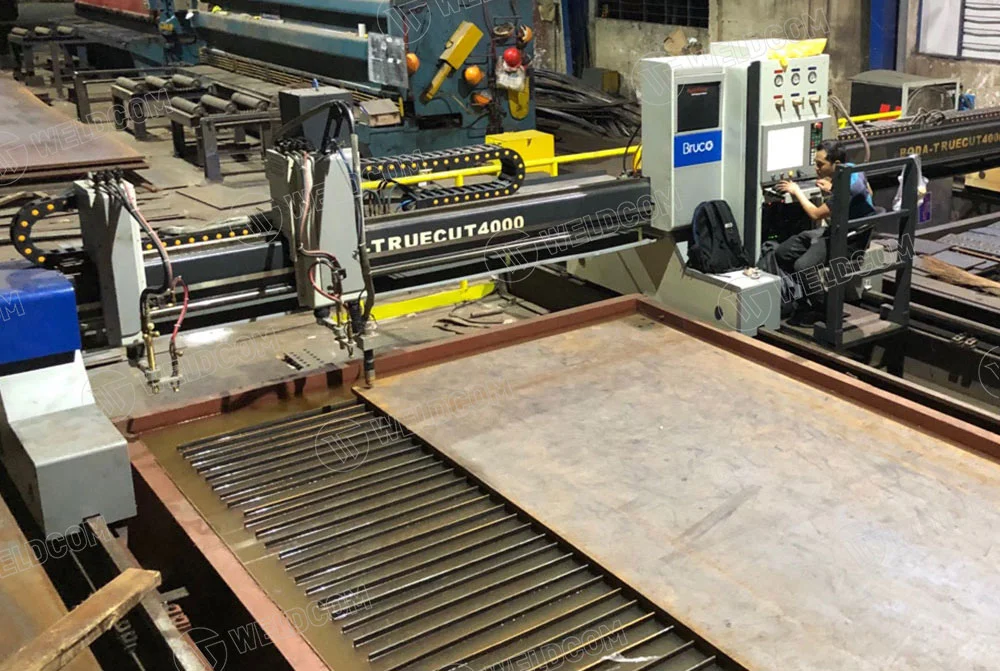
3.3. CNC oxy/gas cutting machine
- CNC oxy/gas cutting machine is a specialized solution for cutting thick carbon steel, particularly suitable for cutting plates or thick steel structure details.
- Compared to laser or plasma, this machine model has a slower speed but is still a suitable choice for applications cutting thick materials.
3.4. CNC hydraulic cutting machine
- CNC hydraulic cutting machines use a hydraulic system combined with CNC control to perform the cutting process.
- This machine model is often suitable for applications requiring large cutting forces, stable operation, and good control of the cutting path in some specialized processing tasks.
3.5. CNC water jet cutting machine
- CNC water jet cutting machines use high-pressure water jets, which can be combined with abrasives to cut materials.
- This technology has the advantage of not creating a heat-affected zone, but in Vietnam, it is still less used due to relatively high investment and operating costs.
Depending on the material, thickness, cutting quality requirements, and investment budget, businesses can choose CNC cutting machines with suitable technology. In practice, plasma, laser, and oxy/gas are still the three most commonly used machine groups in metal processing today. Specifically, these three machine groups have the following differences:
| Criteria | CNC laser cutting machine | CNC plasma cutting machine | CNC oxy-gas cutting machine |
| Cutting technology | Uses focused laser beam | Uses plasma arc | Uses oxy-gas flame |
| Suitable materials | Stainless steel, steel, aluminum, thin to medium sheet metal | Conductive metals such as iron, steel, stainless steel, aluminum | Mainly thick carbon steel |
| Precision | High | Fair | Medium |
| Cut quality | Smooth, beautiful, minimal burrs | Relatively beautiful, may have slag | Rougher, requires more rework |
| Cutting speed | Fast on thin and medium sheets | Fast, suitable for general processing | Slower |
| Ability to cut thick materials | Depends on machine power | Good | Very suitable for thick steel |
| Investment cost | High | Medium | Lower |
| Common applications | Precision mechanics, furniture, electrical cabinets, advertising | Mechanical processing, steel structures, metal cutting workshops | Cutting plates, thick steel structures, shipbuilding |
4. What are the advantages of metal CNC cutting machines?
CNC cutting machines have outstanding advantages in accuracy, automation capability, flexibility in processing, and stable production efficiency. Thanks to computer control, the machine can process batches with consistent quality, reduce machine adjustment time, and optimize better than traditional metal cutting methods.
4.1. High precision and good consistency
One of the biggest advantages of CNC cutting machines is the ability to perform cuts according to pre-programmed drawings. As a result, the product after processing has high precision, low error, and maintains consistency between details in the same production batch.
4.2. Flexibility in programming and processing
CNC technology allows operators to easily change drawings, sizes, and cutting profiles according to each production requirement. Thanks to this flexibility, CNC cutting machines can process many types of materials and various detail styles without taking too much time to adjust the machine.
4.3. Shorten preparation and processing time
Compared to manual cutting methods or traditional machines, CNC cutting machines significantly reduce the time for adjustment before operation. Once the cutting program is set up, the machine can run stably and continuously, thereby shortening the product completion time.
4.4. Metal CNC cutting machines optimize production costs
Thanks to precise cutting capabilities, error reduction, and material waste reduction, CNC cutting machines help businesses optimize production costs in the long term. At the same time, the high level of automation also contributes to reducing dependence on many manual stages.
4.5. Stable operation, reducing technical errors
When installed with the correct configuration and operated according to the correct process, CNC cutting machines can operate stably for a long time. This helps businesses limit errors during processing, reduce machine downtime, and maintain better production progress.
4.6. Suitable for mass production
CNC cutting machines are particularly suitable for businesses that need to process large quantities while still ensuring the accuracy and uniformity of the product. This is a very clear advantage compared to many traditional metal cutting methods, which rely more on manual operations.
Thanks to advantages in accuracy, speed, flexibility, and automation capability, metal CNC cutting machines are becoming a solution chosen by many businesses in modern metal processing. This is also why this technology is considered superior to many traditional cutting methods under the same production conditions.
5. What are the disadvantages of CNC cutting machines?
Besides many advantages, CNC cutting machines still have some limitations such as relatively high initial investment costs, requiring operators to have technical knowledge, and needing regular maintenance to maintain accuracy. Additionally, the processing efficiency of the machine also depends on cutting technology, equipment configuration, and suitability for each type of material.
- High initial investment cost: Compared to manual cutting methods or traditional machines, CNC cutting machines often require higher investment levels in equipment, software, and auxiliary systems.
- Operational technical requirements: To effectively utilize CNC cutting machines, operators need to understand programming, parameter setting, and basic error handling during use.
- Need for regular maintenance: Machines need to be regularly checked and maintained to ensure stability, accuracy, and limit issues arising during operation.
6. In which industries are CNC cutting machines applied?
Metal CNC cutting machines are widely applied in many production industries thanks to their precise cutting capabilities, good automation, and ability to process complex-shaped details. Fields that use many CNC cutting machines include manufacturing, sheet metal processing, steel structures, shipbuilding, electrical cabinet production, advertising, and many other supporting industries.
6.1. Mechanical and manufacturing industries
In the mechanical field, CNC cutting machines are used to process machine parts, plates, flanges, supports, machine shells, and many other metal products. Thanks to high precision, products after cutting can be easily transferred to bending, welding, or assembly stages.
6.2. Sheet metal processing industry
This is one of the most common application fields of CNC cutting machines. The equipment is often used to cut stainless steel, steel, aluminum, and sheet iron for the production of electrical cabinets, equipment shells, cable trays, metal tables and chairs, and many other industrial details.
6.3. Steel structure and construction industry
In the steel structure industry, CNC cutting machines are used to cut plates, connection details, sheet steel, and components for construction projects. For thick materials, CNC oxy-gas cutting machines are often used quite a lot.
6.4. Shipbuilding industry
The shipbuilding industry requires processing large quantities of large-sized and complex-shaped steel plate details. Metal CNC cutting machines help increase processing speed, reduce errors, and improve efficiency in the production of ship hulls and related structures.
6.5. Electrical, electrical cabinet, and industrial equipment industry
Many businesses producing electrical cabinets, cable trays, cabinet shells, machine shells, and industrial equipment use CNC cutting machines to ensure the accuracy and uniformity of products. This is an application group with high aesthetic and repeatability requirements between details.
6.6. Advertising and metal decoration industry
In the advertising and decoration field, CNC cutting machines are used to cut raised letters, signs, patterned walls, railings, gates, and metal decorative details. The ability to cut complex profiles makes this technology suitable for products requiring high sophistication.
7. What materials are CNC cutting machines suitable for?
CNC cutting machines can process many different types of materials, depending on the cutting technology integrated into the machine such as plasma, oxy-gas, laser, or hydraulic. In the field of metal processing, CNC cutting machines are often used to cut materials such as stainless steel, iron, carbon steel, stainless steel, aluminum, and some other metals.
- Stainless steel: Stainless steel is a material commonly processed by CNC cutting machines, especially with laser or plasma machines. This technology helps create cuts with high precision and is suitable for products requiring aesthetics.
- Iron and carbon steel: Sheet iron and carbon steel are very common materials in mechanics, steel structures, and industrial processing. Depending on the material thickness, businesses can choose CNC plasma, oxy-gas, or laser cutting machines to achieve suitable efficiency.
- Stainless steel: Stainless steel requires good cutting quality and more stable cutting edges, so CNC laser cutting machines are often prioritized in many applications. This is a common material in the food, medical, furniture, and industrial equipment industries.
- Aluminum: Aluminum is a material with lightweight characteristics and is widely used in modern industry. When processing aluminum with CNC cutting machines, businesses need to choose suitable cutting technology and parameters to ensure cut quality.
- Other metal materials: Besides the common materials mentioned above, CNC cutting machines can also process some other metals depending on the machine configuration and accompanying cutting technology. Therefore, when investing in machines, businesses should clearly identify the main material group to choose suitable equipment.
Depending on the type of material, thickness, and quality requirements of the finished product, businesses need to choose the right CNC cutting machine technology to achieve the best processing efficiency. This is an important factor in optimizing both productivity and production costs.
8. Experience in choosing suitable CNC cutting machines
When choosing CNC cutting machines, businesses should pay attention to the following criteria:
- Choose according to the material to be cut: clearly identify the main material as stainless steel, steel, sheet iron, aluminum, or carbon steel to choose the right cutting technology.
- Choose according to material thickness: thin, medium, or thick materials will be suitable for different machine models such as laser, plasma, or oxy-gas.
- Choose according to cutting quality requirements: if beautiful cuts with minimal burrs and high precision are needed, prioritize technology suitable for the finished product requirements.
- Choose CNC cutting machines according to processing output: businesses need to determine whether production needs are small, medium, or large to choose the appropriate machine configuration and automation level.
- Choose according to cutting table size: the cutting table needs to be suitable for the size of the workpiece and the type of product being processed.
- Choose according to stability and technical service: prioritize suppliers with good installation, maintenance, and technical support capabilities to ensure long-term machine operation.
In general, a suitable CNC cutting machine not only meets current processing needs but also needs to optimize investment efficiency and be easy to operate in actual production.
9. How much does a CNC cutting machine cost today?
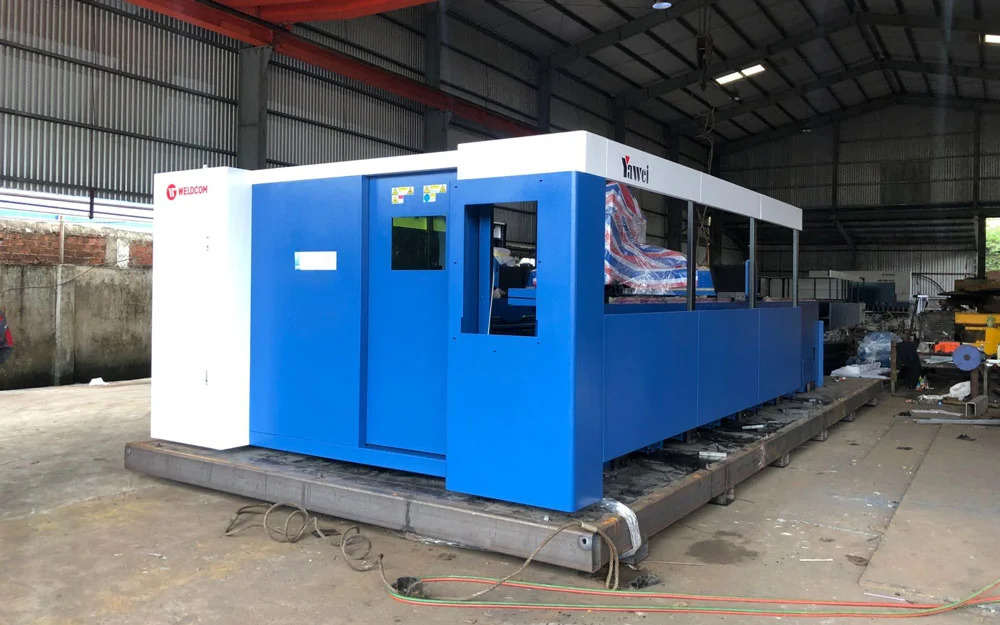
The price of CNC cutting machines on the market varies significantly, depending on cutting technology, machine configuration, equipment origin, automation level, and accompanying service quality. In reality, each machine segment will be suitable for different groups of businesses and production needs.
- Common segment: some domestic units produce metal CNC cutting machines at relatively low prices, usually ranging around 100 - 500 million VND . This machine group is suitable for small businesses or processing workshops with moderate initial investment needs.
- Mid-range and near-high-end segment: CNC cutting machines with better configurations, clear component origins, full technical services, and after-sales support usually range around 200 - 800 million VND . This segment is suitable for many businesses needing stable and long-term machine operation.
- High-end segment: for large businesses or heavy industries, the price of CNC cutting machines can range from 1 billion VND to over 10 billion VND , depending on configuration, power, cutting table size, and automation level. This machine group often targets very large productivity requirements and continuous operation capability in industrial production environments.
- Extremely high productivity segment: this is a specialized equipment group, often from some major global brands like JQ, RUIJIE, Senfeng, Yawei... and suitable for large-scale investment projects, requiring high operational efficiency and synchronized production lines.
In general, when evaluating the price of CNC cutting machines, businesses should not only look at the initial purchase price but also consider stability, component quality, technical services, and long-term operating costs. These are the factors that determine actual investment efficiency. Weldcom currently distributes many lines of metal CNC cutting machines from reputable global brands, meeting diverse needs from processing workshops to large-scale production businesses. If businesses need advice on choosing a CNC cutting machine suitable for actual production needs, please contact Weldcom via hotline 1900 9410 or visit the website weldcom.vn for detailed technical support.