
Oil and gas pipe welding solution

Solution Introduction
The development of the energy, oil, and petrochemical industries has led to an increasing demand for large-sized steel structures with high thickness and harsh working conditions. From wind power towers, power plant structures; equipment support frames, pipe racks, skids, and technology modules; to steel structures serving oil and petrochemical projects, each product group imposes strict requirements on manufacturing precision, load-bearing capacity, welding joint quality, and operational stability.
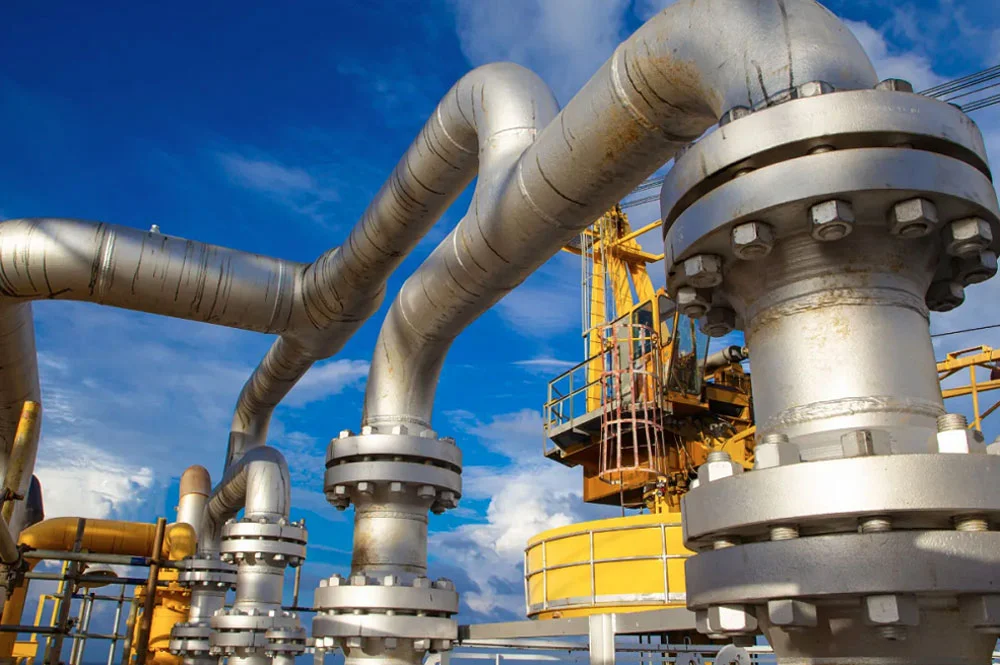
In particular, many components in this field use thick steel plates, large sizes, long welding lengths, and high load-bearing weld ratios. Therefore, manufacturing quality depends not only on individual equipment but also on the ability to control the entire process synchronously from preparing the workpiece, cutting and edge preparation, assembly, welding, surface treatment to production data management.
Weldcom provides an ecosystem of solutions serving the production of steel structures in the energy and oil and gas sectors in that direction, combining processing equipment, high-productivity welding technology, robots, and automation to simultaneously meet the requirements of quality, output, and project schedule.
Diverse structure production for various energy sub-sectors
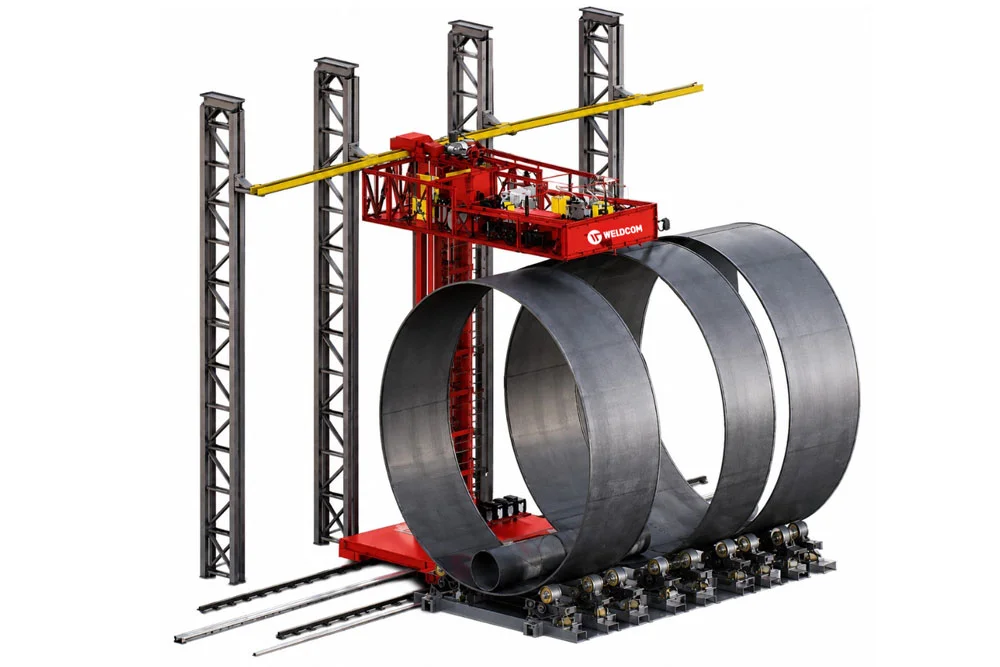
Unlike production lines specializing in a highly repetitive group of components, the energy and oil and gas sectors include many different types of structures in terms of size, cross-section, and manufacturing methods: heavy beams and columns, box structures, equipment support frames, pipe racks, skids, structural modules, tubular structures, and auxiliary steel components.
Specifically, in the wind power sector, tubular components with large diameters require specialized welding equipment, the ability to adapt to workpiece diameters, and stable control of long welds. Bruco has developed specialized welding gantries for handling tubular workpieces with diameters from 4,000 to 14,000 mm.
Therefore, Weldcom's solution is designed to be flexible in terms of workpiece size, material thickness, component profile, and welding technology, helping businesses organize the production of multiple product groups on the same technological platform.
Precision machining of thick steel plates and standardizing connections from the start
In energy and oil and gas structures, the quality of the weld depends greatly on the precision of the workpiece and the connection preparation process. Dimensional deviations, bevel angles, or assembly gaps right from the cutting stage will increase the time for adjustment, the amount of filler metal, welding distortion, and the processing workload in subsequent stages.
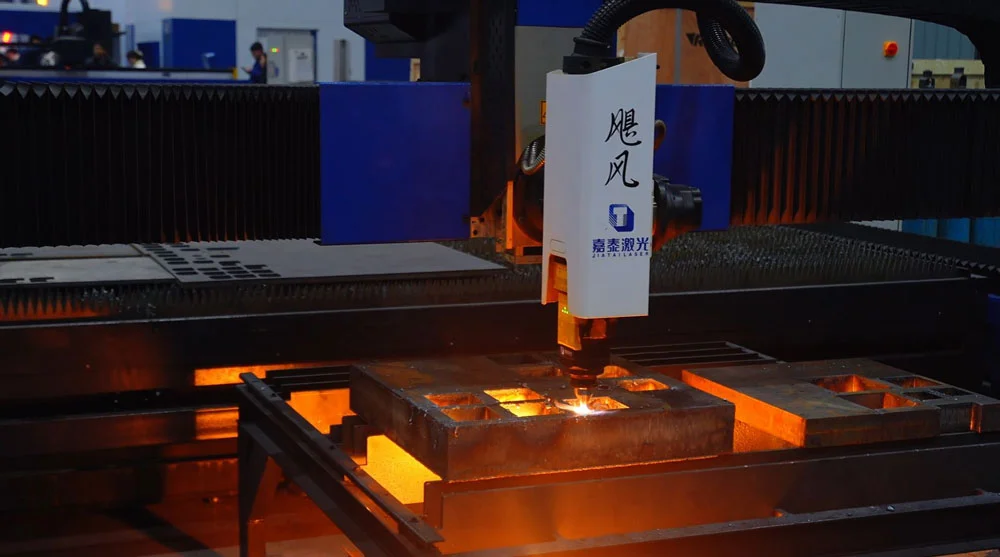
Weldcom provides steel plate processing solutions from CNC cutting to high-power laser cutting, serving thick and ultra-thick materials. Bevel cutting head configurations support various edge forms V, I, X, Y, K, with bevel cutting angles up to 45°, combined with machine vision alignment and automatic deviation compensation.
Accurate control of detailed geometry and connection edges from the start helps stabilize the assembly process, control weld gaps, and lay the foundation for subsequent automatic welding technologies.
High-productivity welding technology for large structures and thick steel
Welding is one of the decisive stages in the productivity of energy and oil and gas structure manufacturing plants. Heavy beams, box structures, and components with large thicknesses often concentrate a large amount of filler metal, while the requirements for penetration, weld shape, and input heat control are increasingly high.
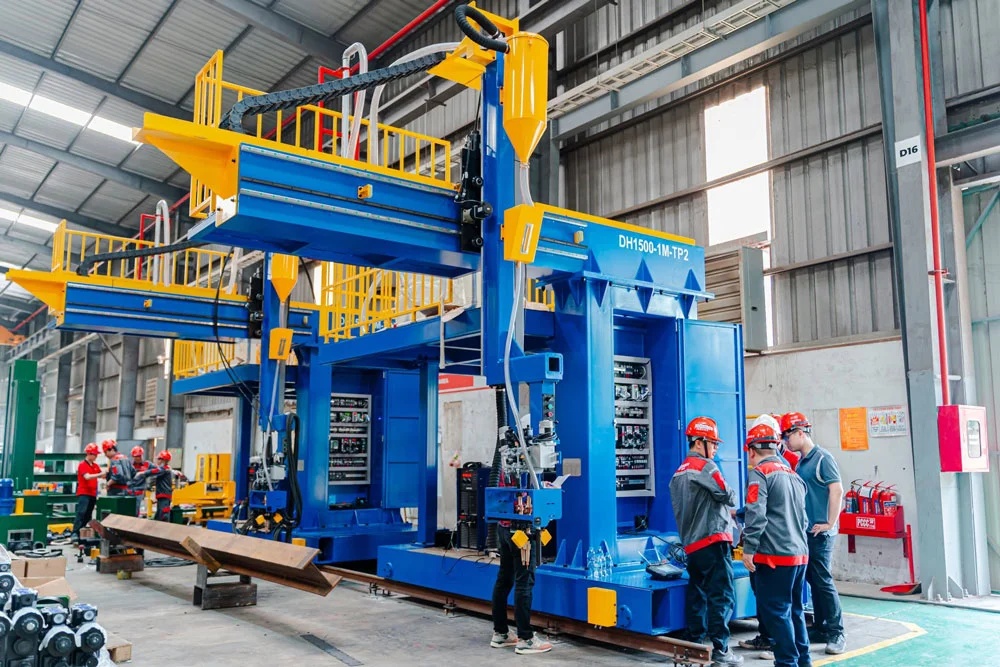
Weldcom deploys automatic SAW solutions, Tandem SAW, Triple Arc, and Tandem ICE suitable for each structural group. In particular, Tandem ICE combines current-carrying welding wire with cold wire feeding to increase speed and deposition productivity while maintaining low line energy.
This technological approach is particularly suitable for components with long welds, large cross-sections, and high thicknesses, where the challenge is not only "welding faster" but also balancing deposition productivity, penetration, input heat, and structural distortion.
Production flow control for projects with high schedule demands
Energy and oil and gas projects often have large fabrication volumes, heavy components, many stages, and delivery requirements by module or erection phase. As scale increases, overall productivity no longer depends solely on the speed of cutting or welding machines but on the ability to coordinate processing, assembly, workpiece transport, welding, and finishing.
Weldcom develops solutions by integrating equipment with transport, flipping, and workpiece transfer systems, while connecting production data with SCADA/MES on suitable devices. Bruco's welding systems have integrated Ethernet/IP to support data monitoring and production management system connectivity.
This approach helps businesses better control equipment status, the progress of each stage, and operational efficiency, while reducing waiting times between steps in the production line.
A technological platform for the energy and oil and gas industry
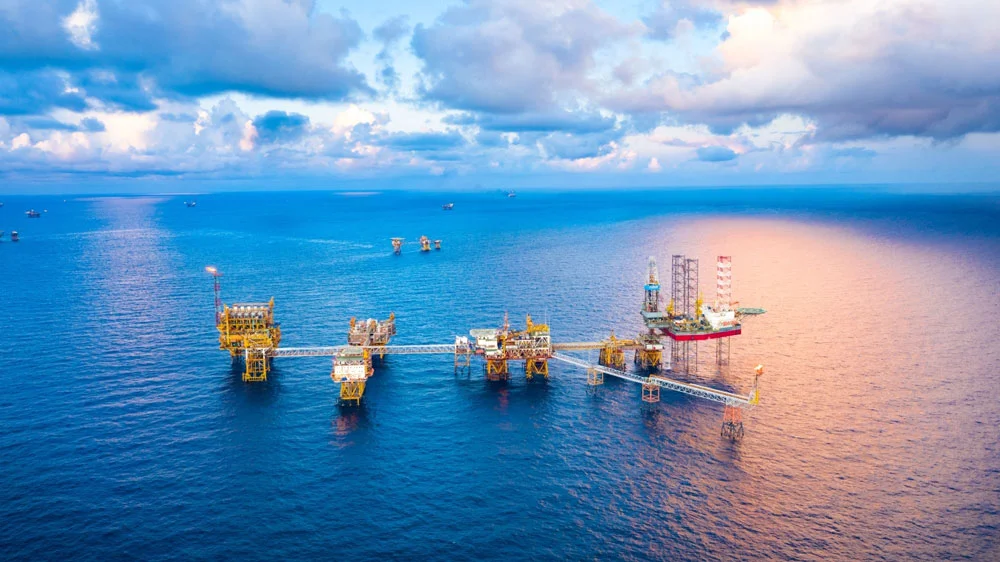
From wind power structures; power plant structures; industrial frames, beams, and modules; to structures serving oil and petrochemical industries, the production challenge converges on four main requirements: precise machining of large-sized materials and thick steel – controlling weld joint quality – enhancing manufacturing productivity – organizing efficient production flow.
Instead of focusing on a single piece of equipment, Weldcom approaches the challenge through the entire technology chain from workpiece preparation → processing → edge connection creation → assembly → automatic/robotic welding → surface treatment → production management.
Through this, steel structure manufacturing enterprises build a technological platform that meets increasingly high technical requirements of projects, while enhancing their capacity to participate more deeply in the supply chain of the energy, wind power, oil, and petrochemical industries.
Customers Implemented